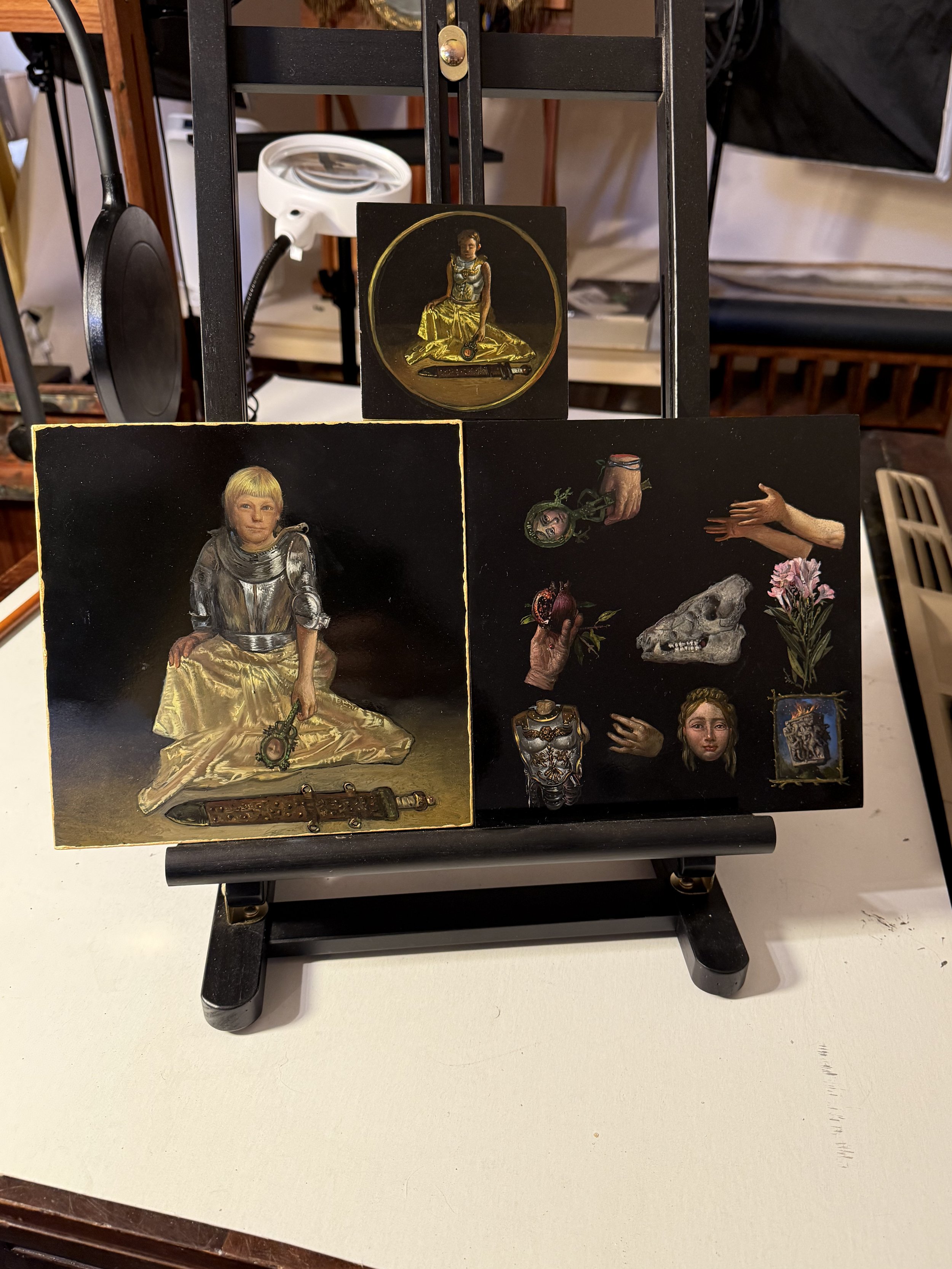
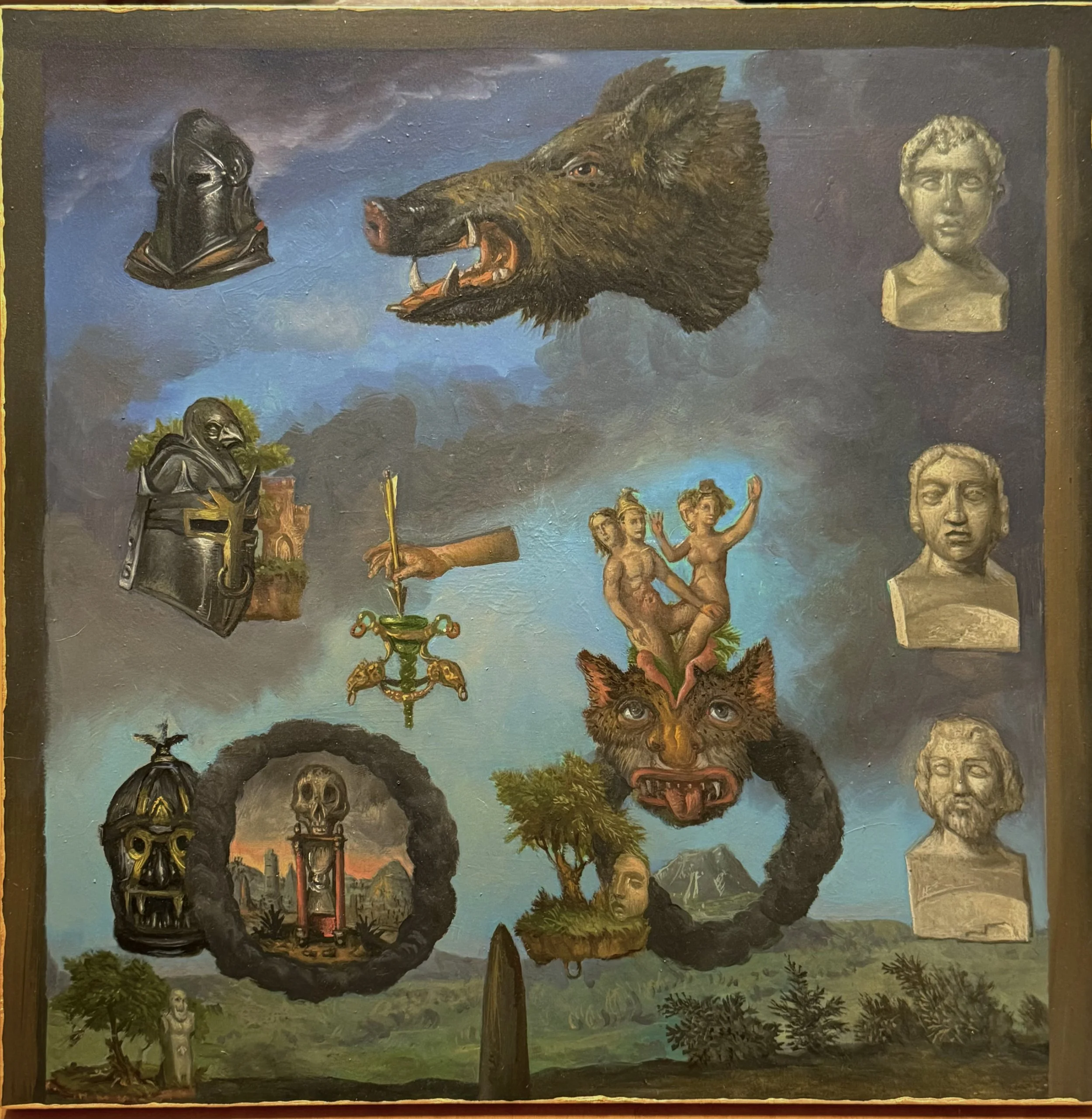
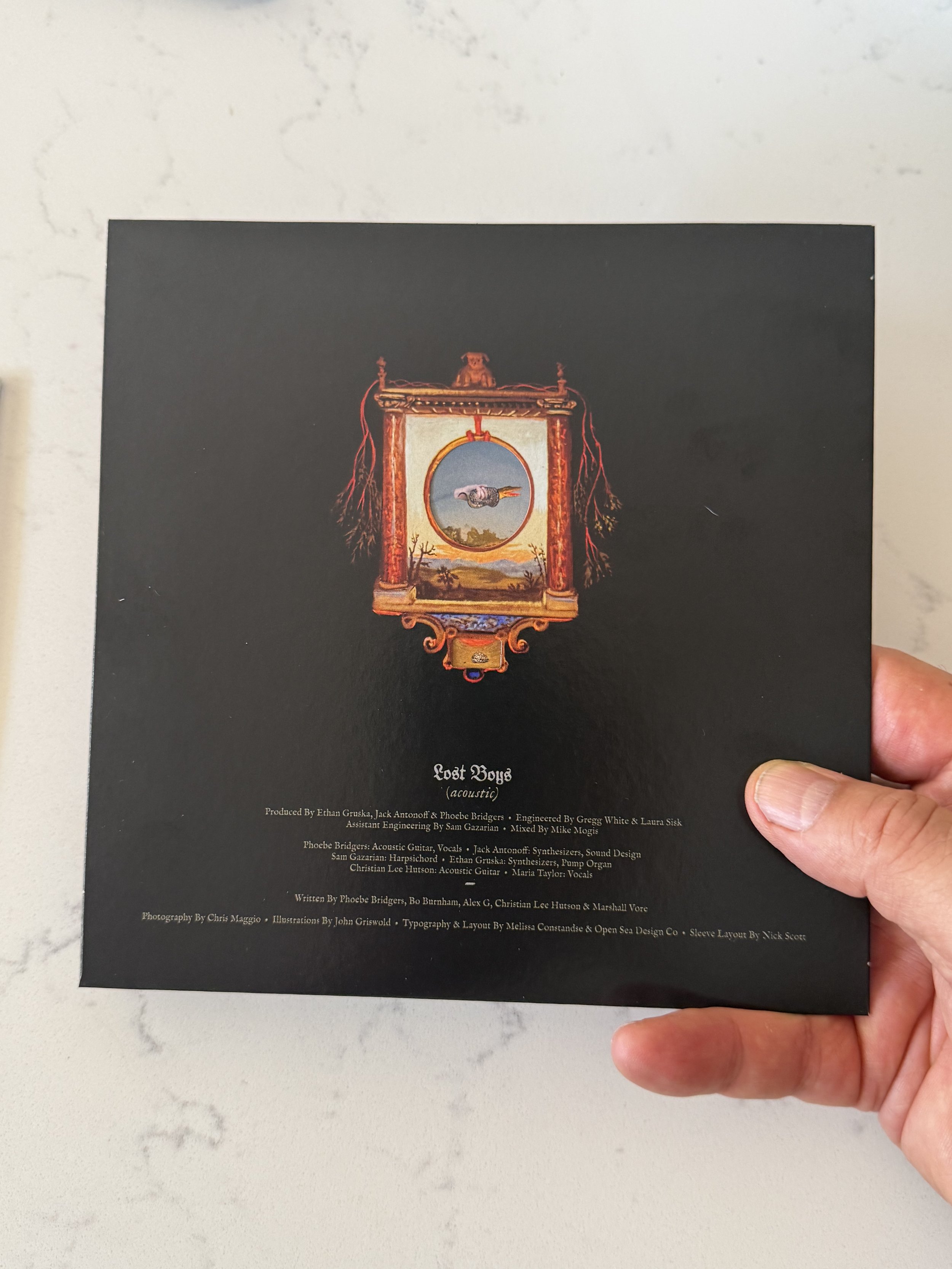
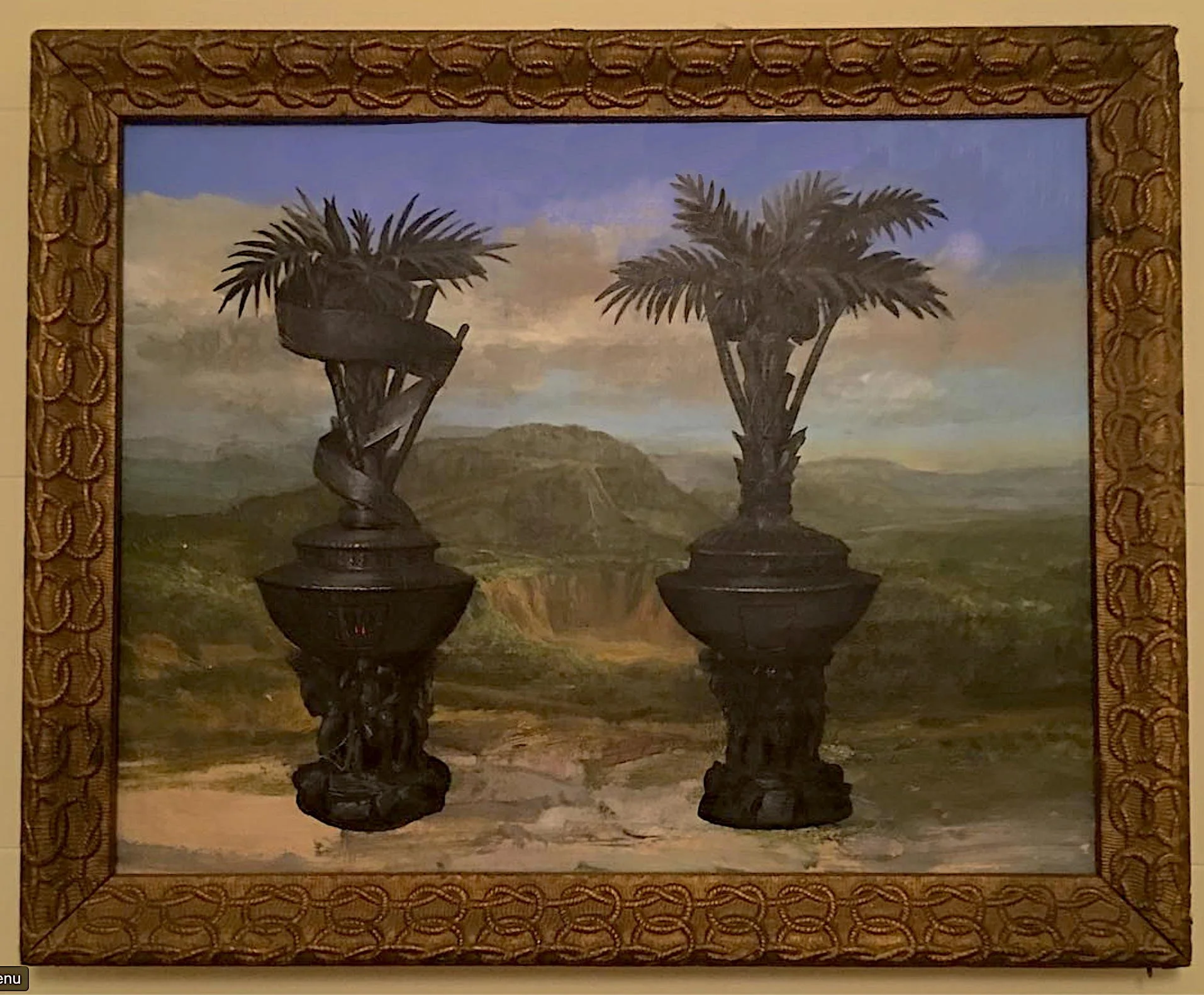
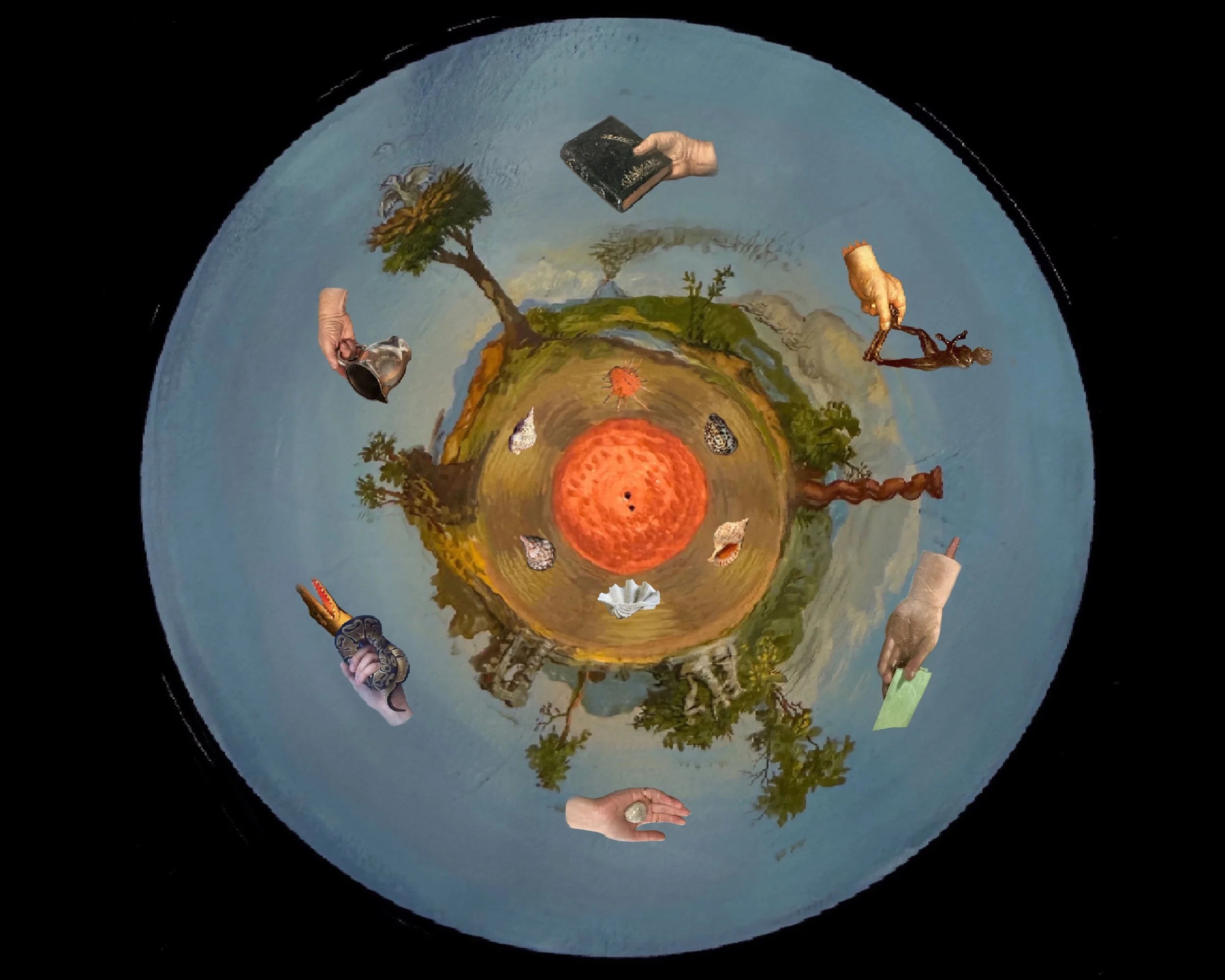
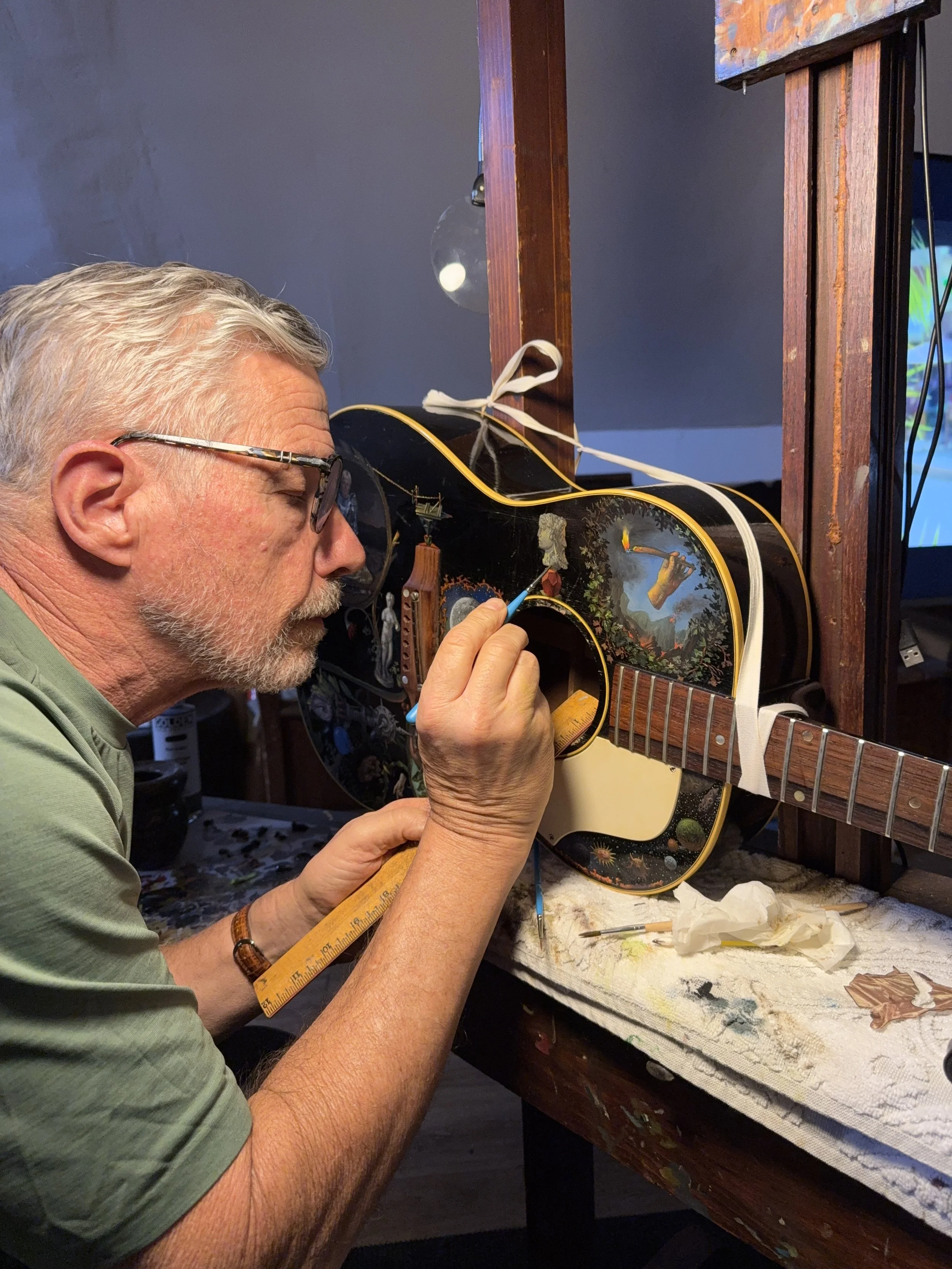
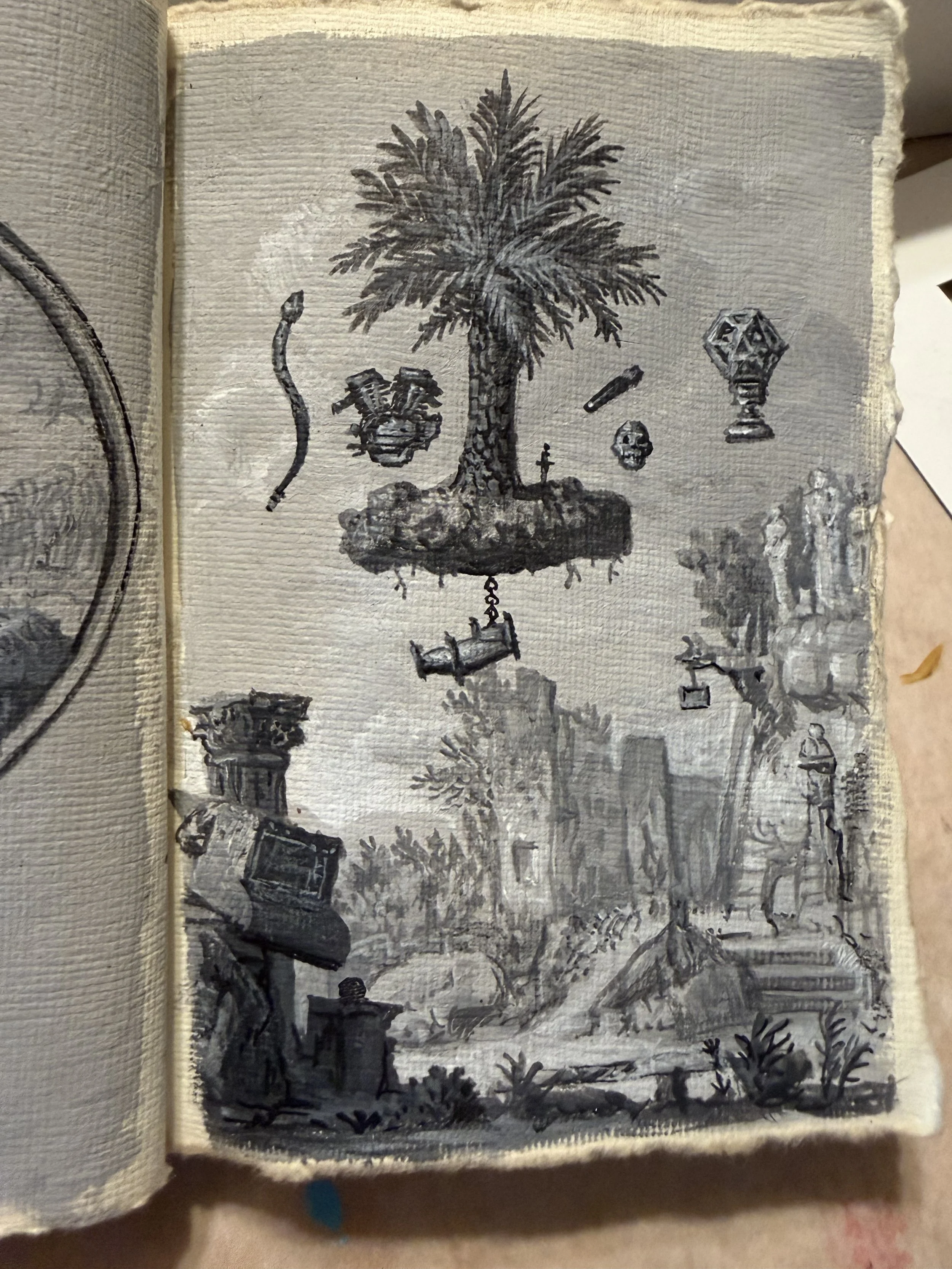
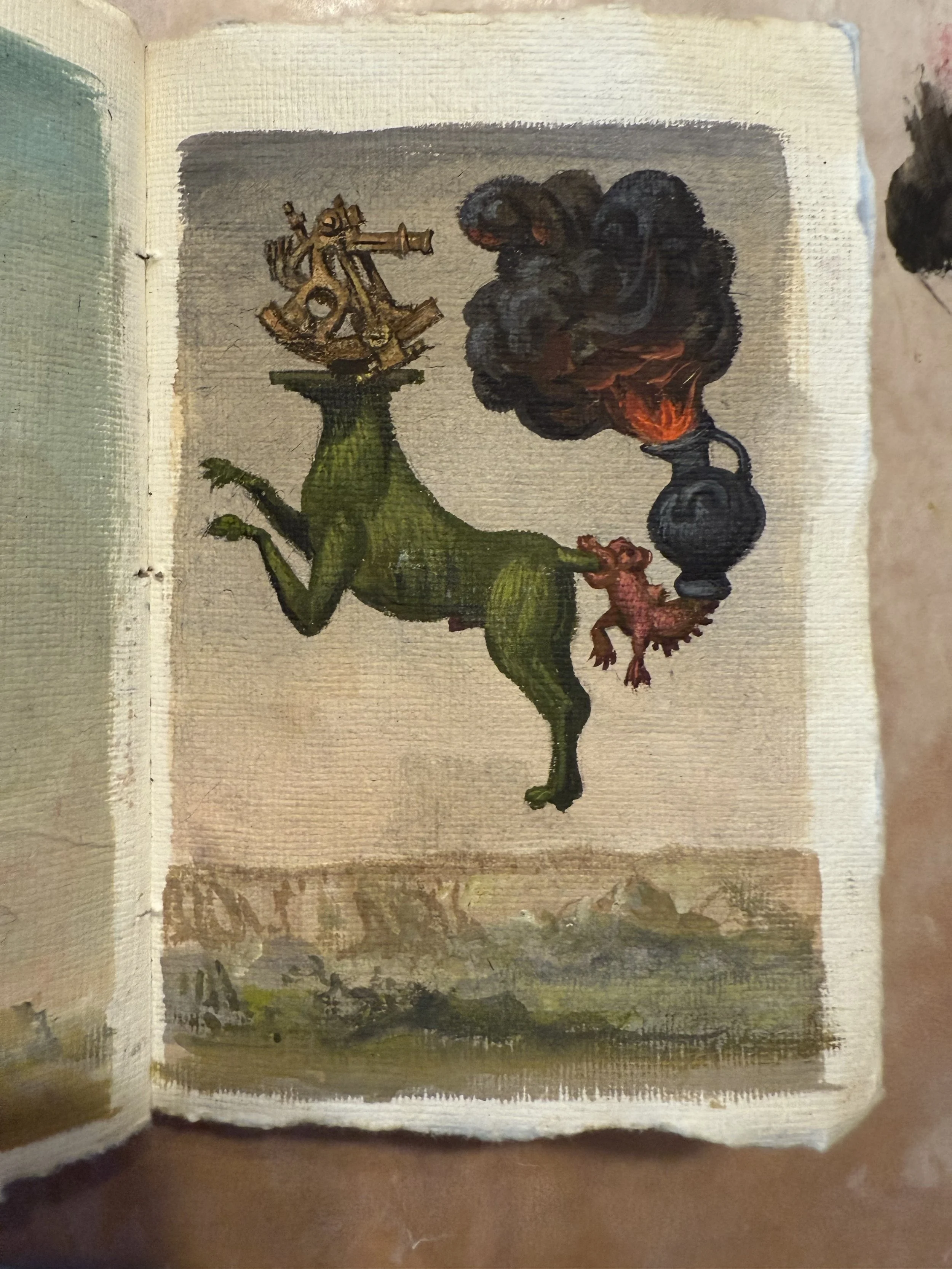
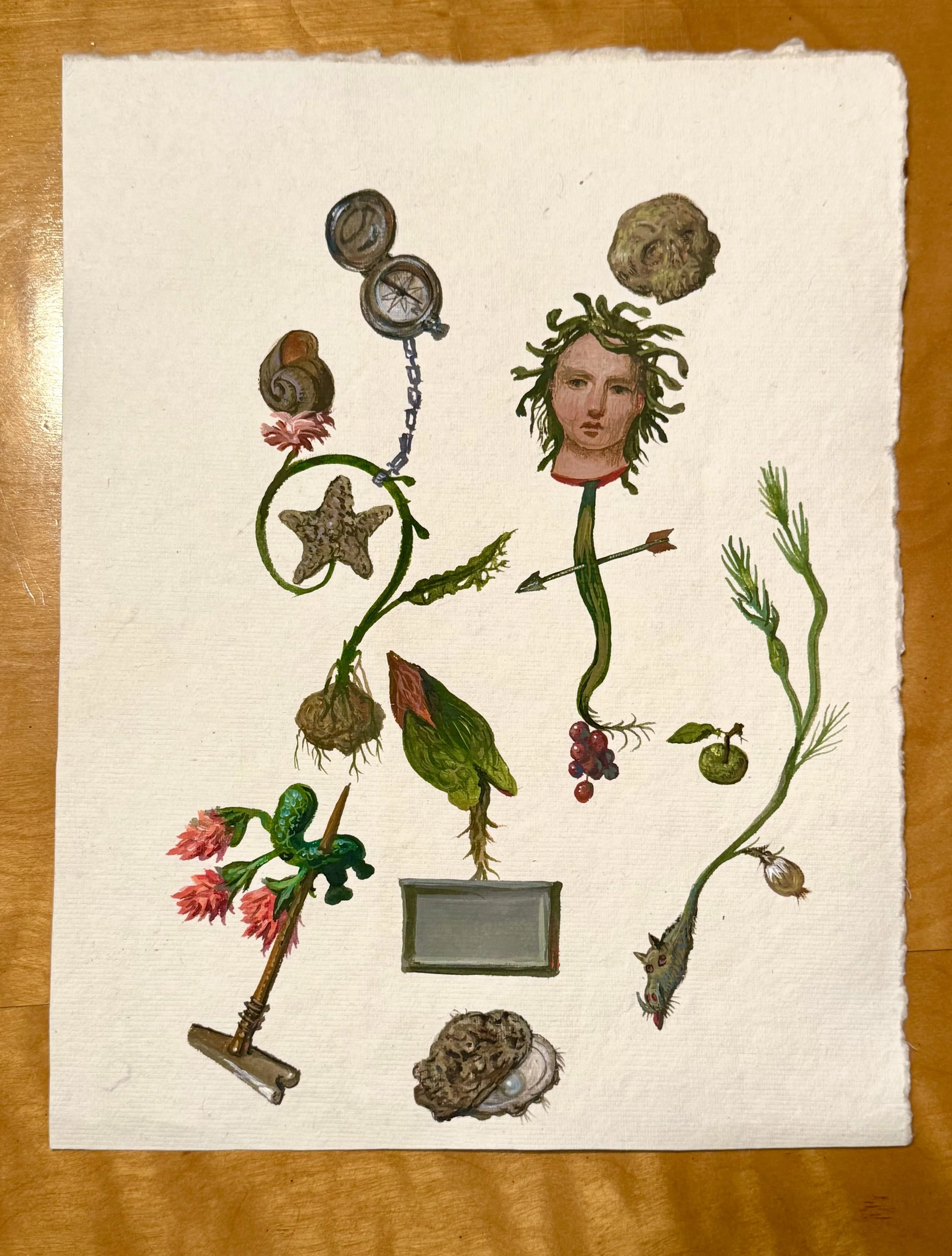
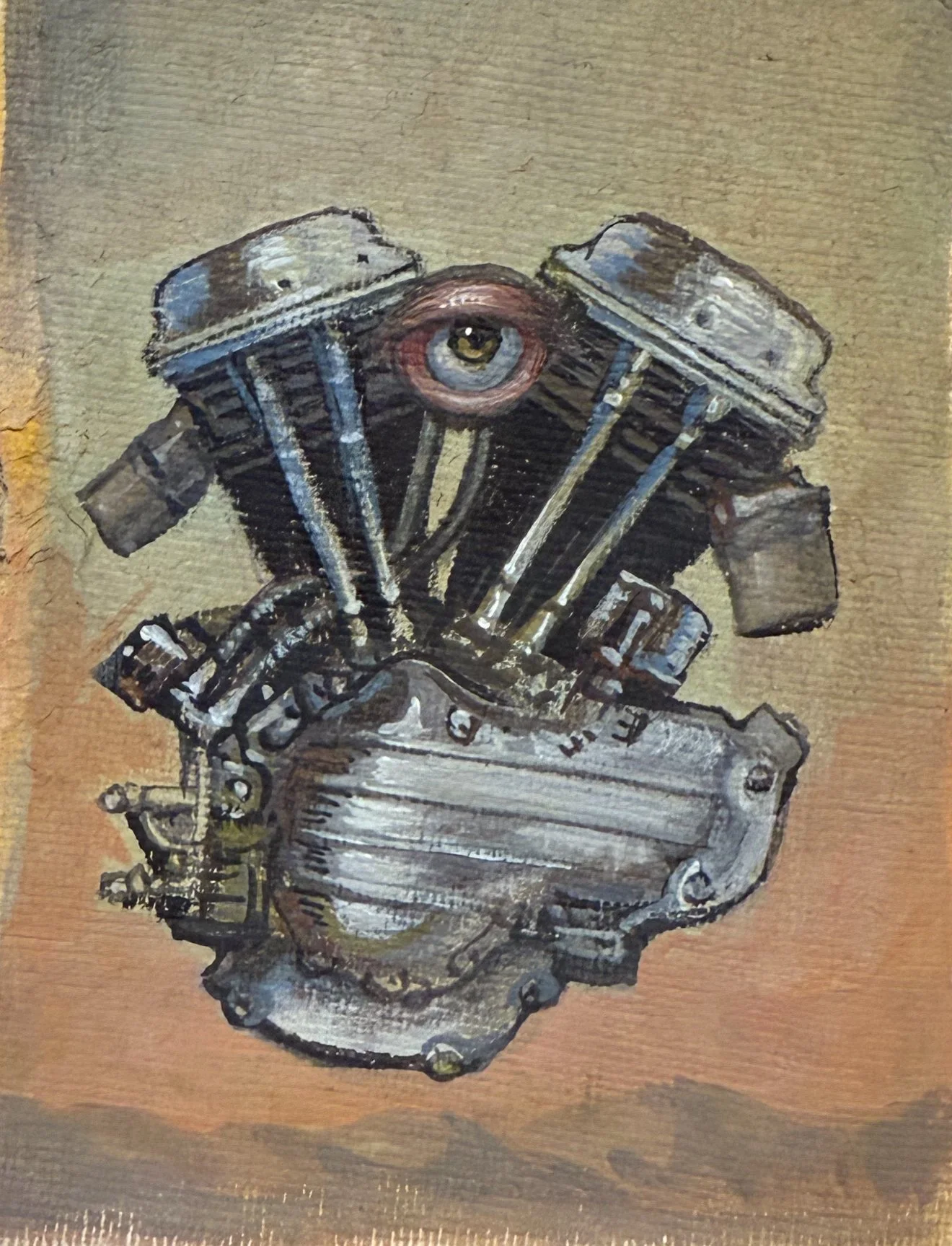
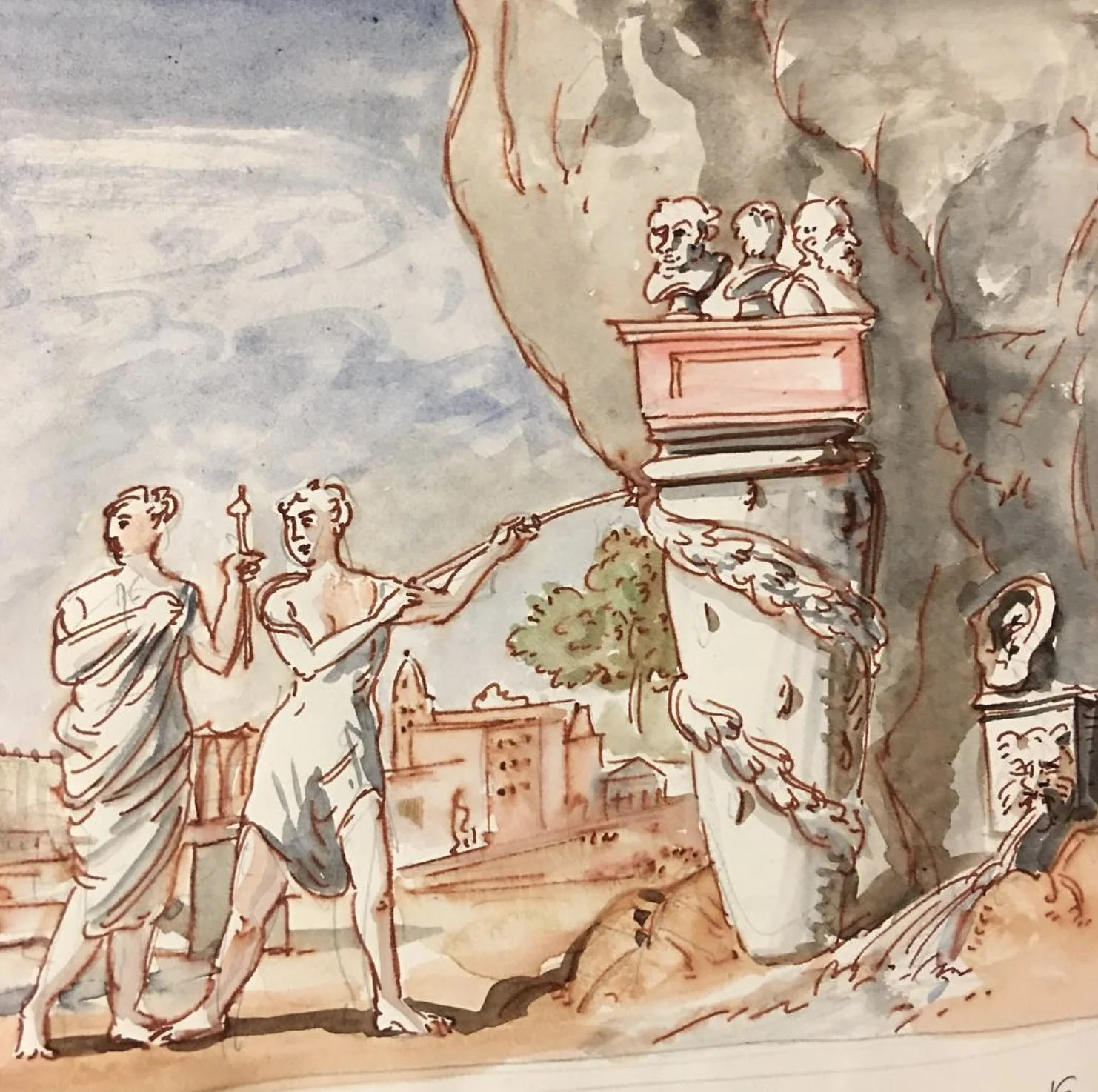
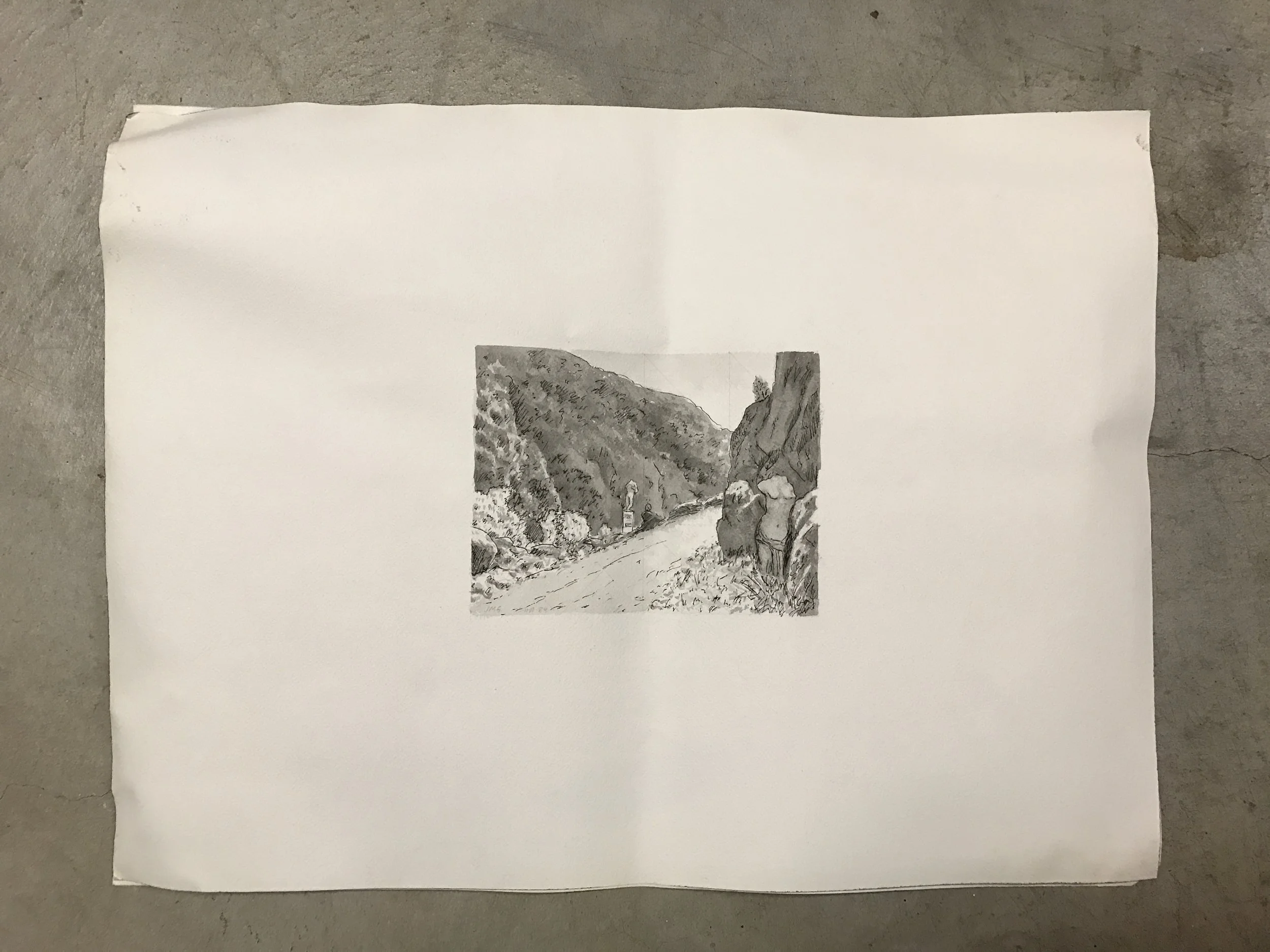
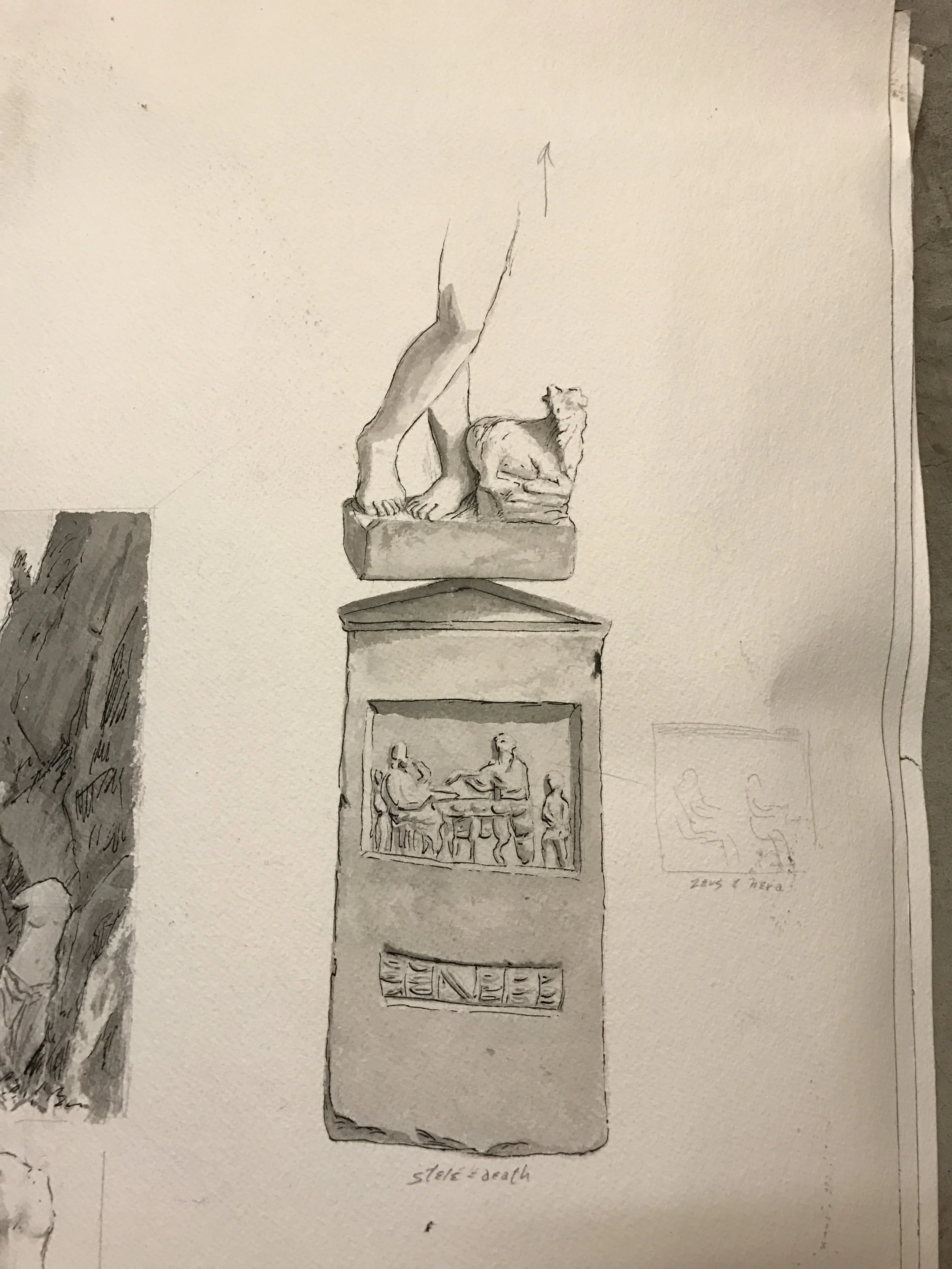
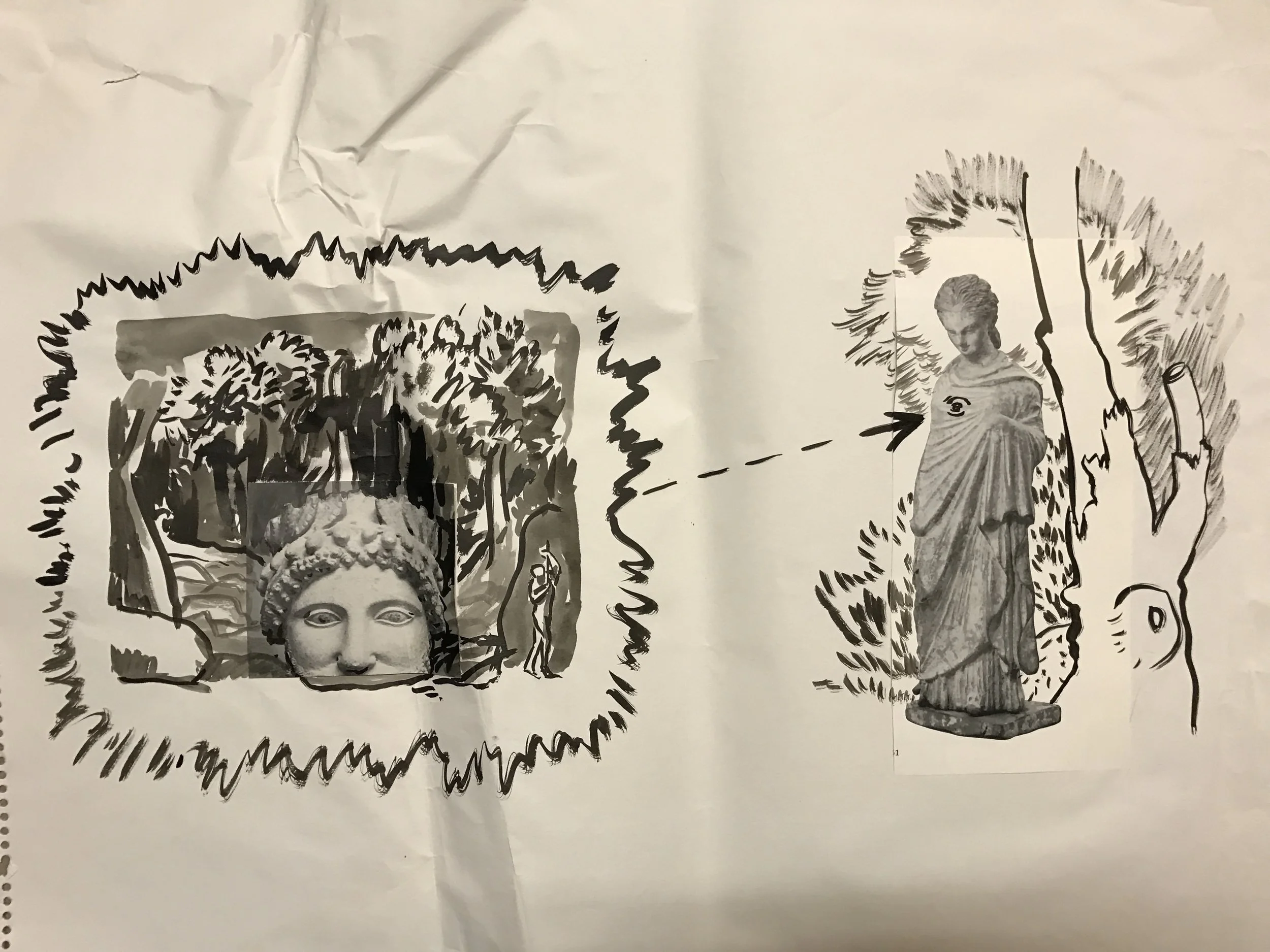
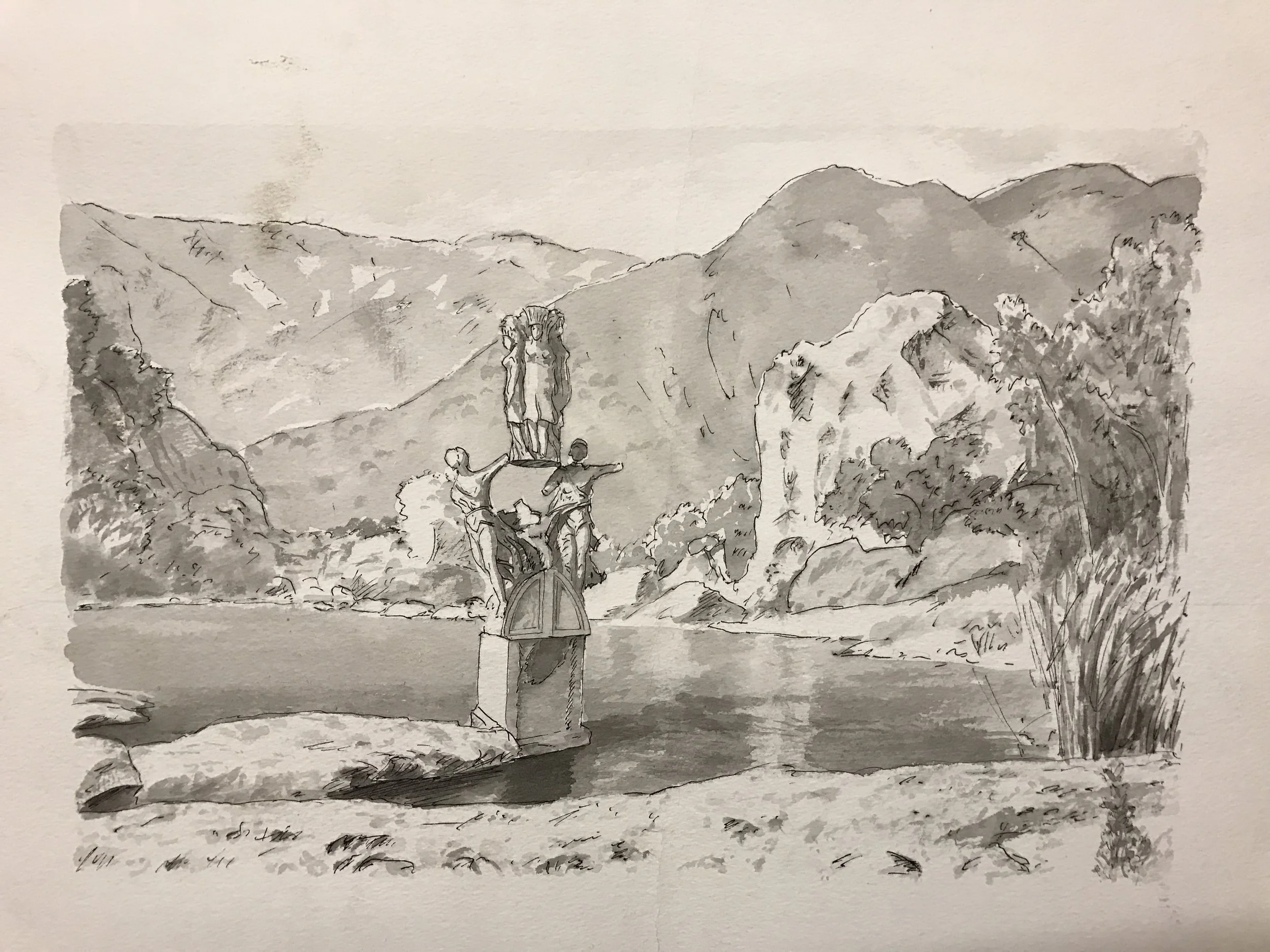
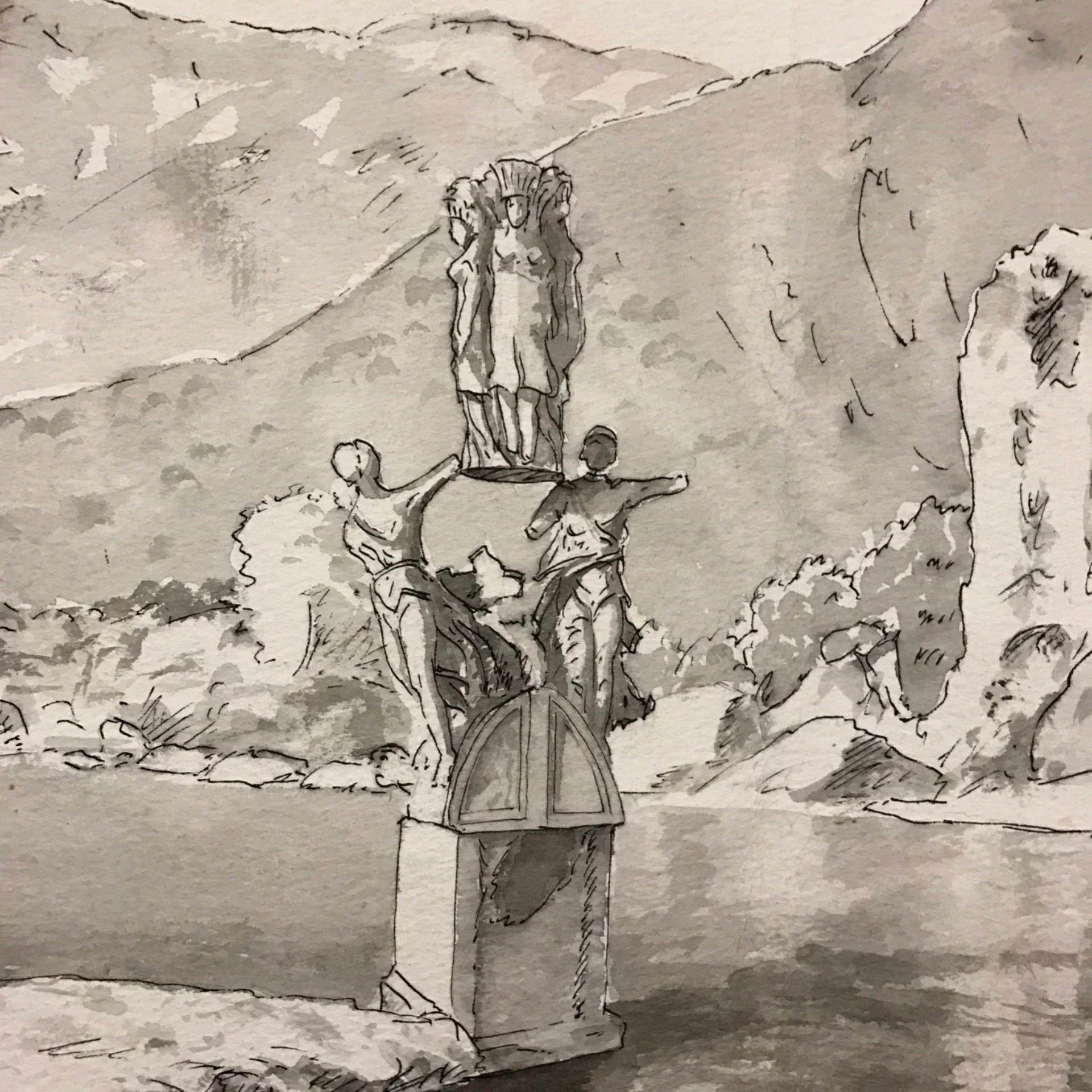
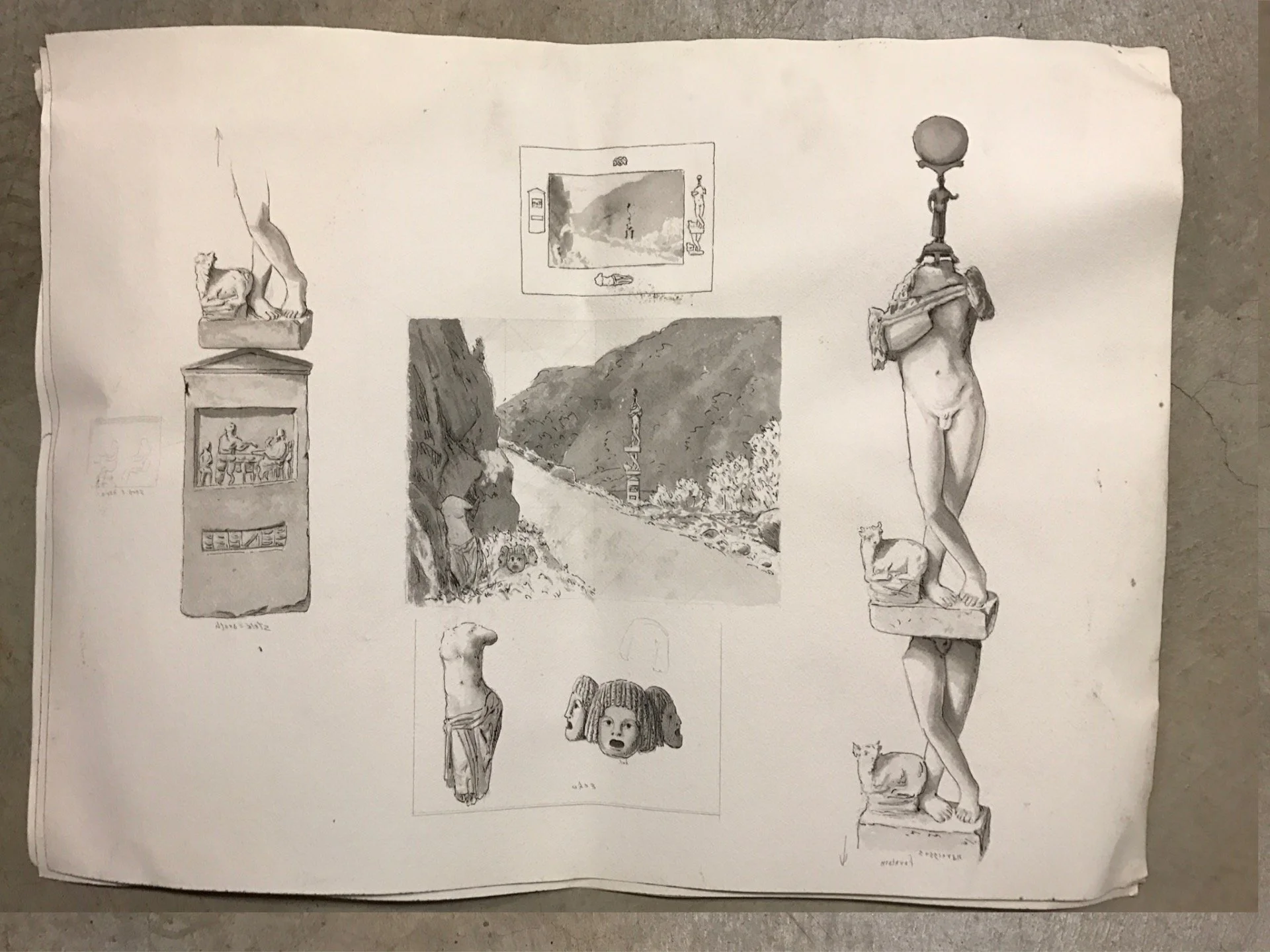
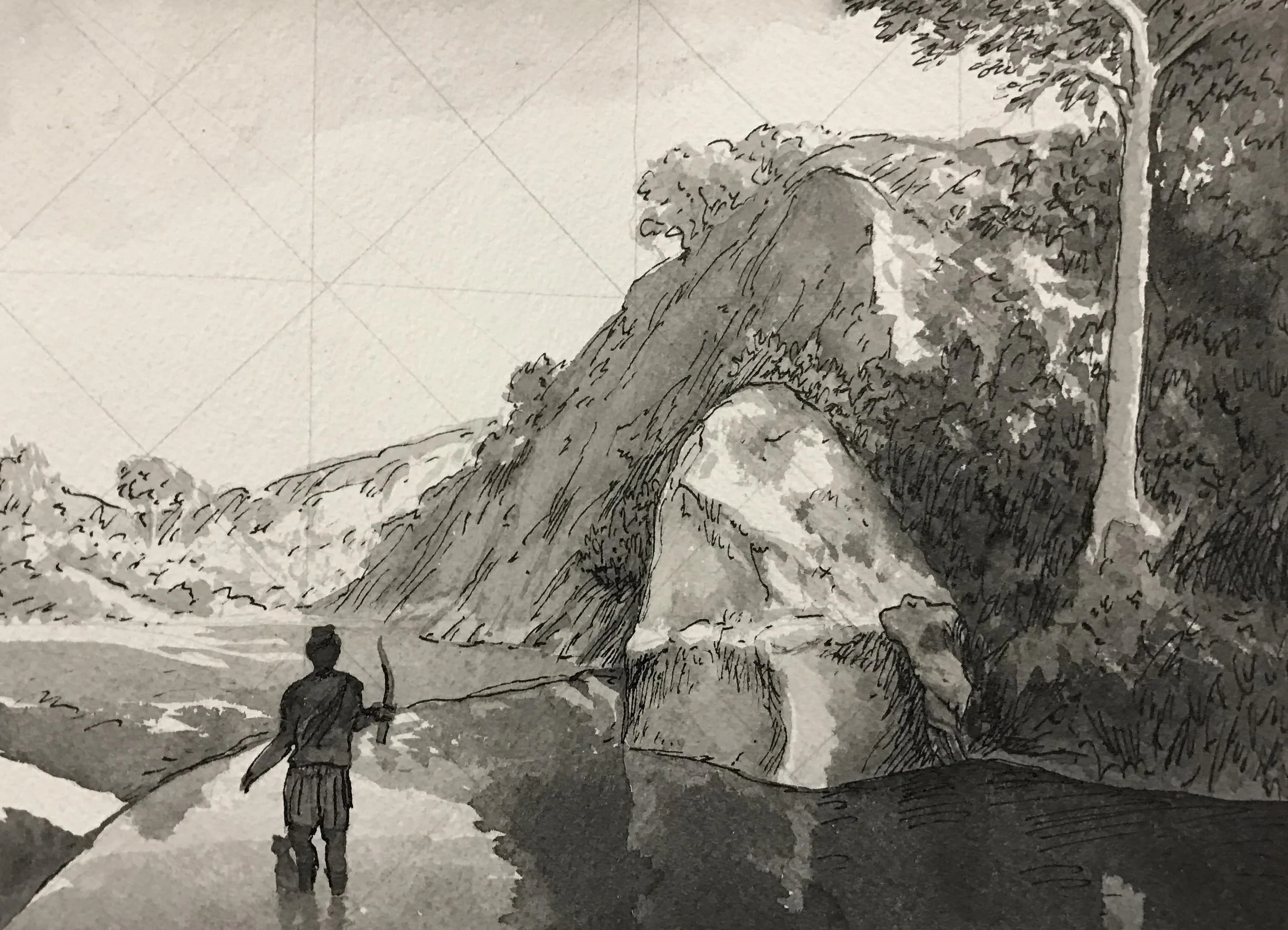
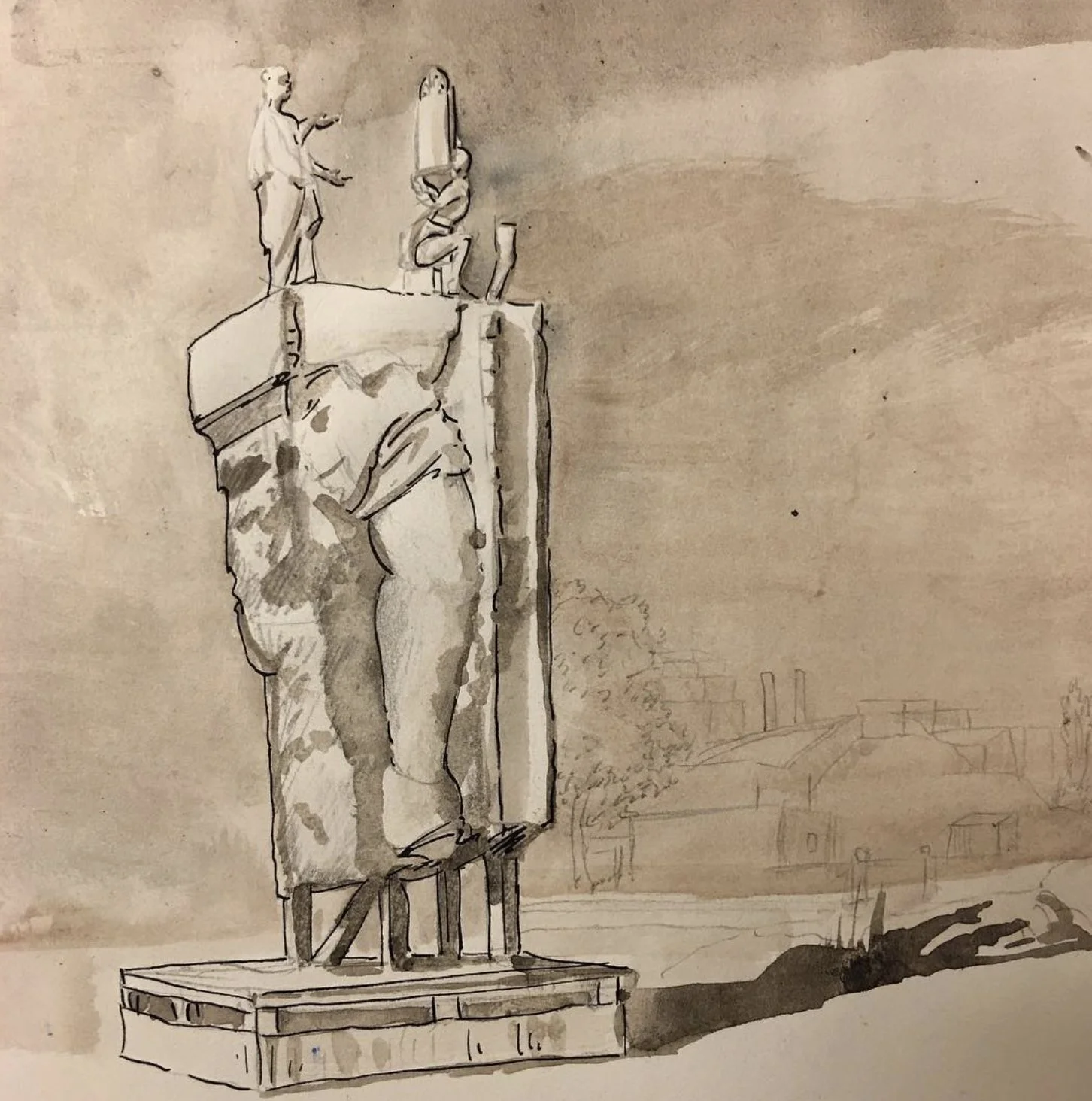
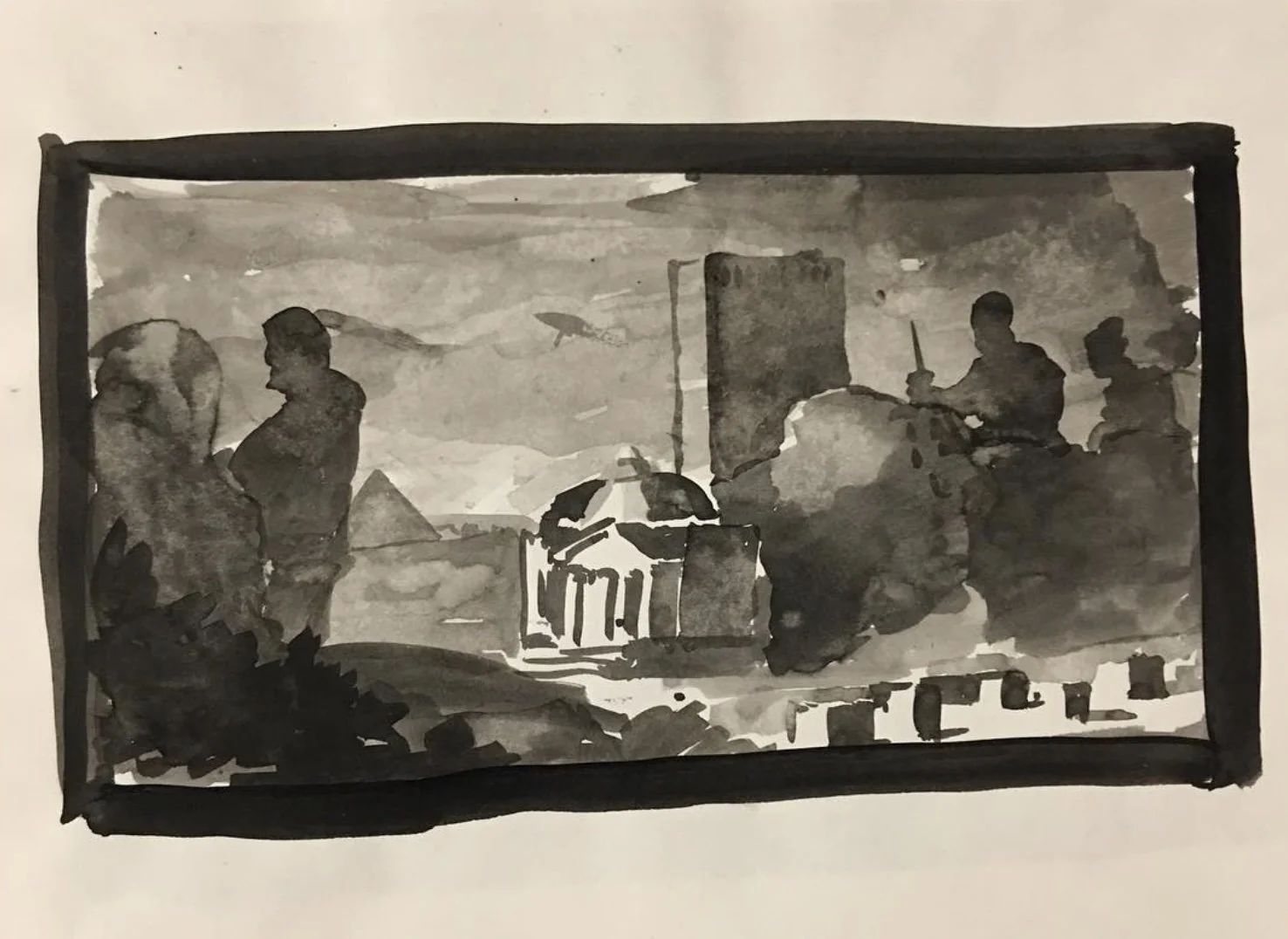
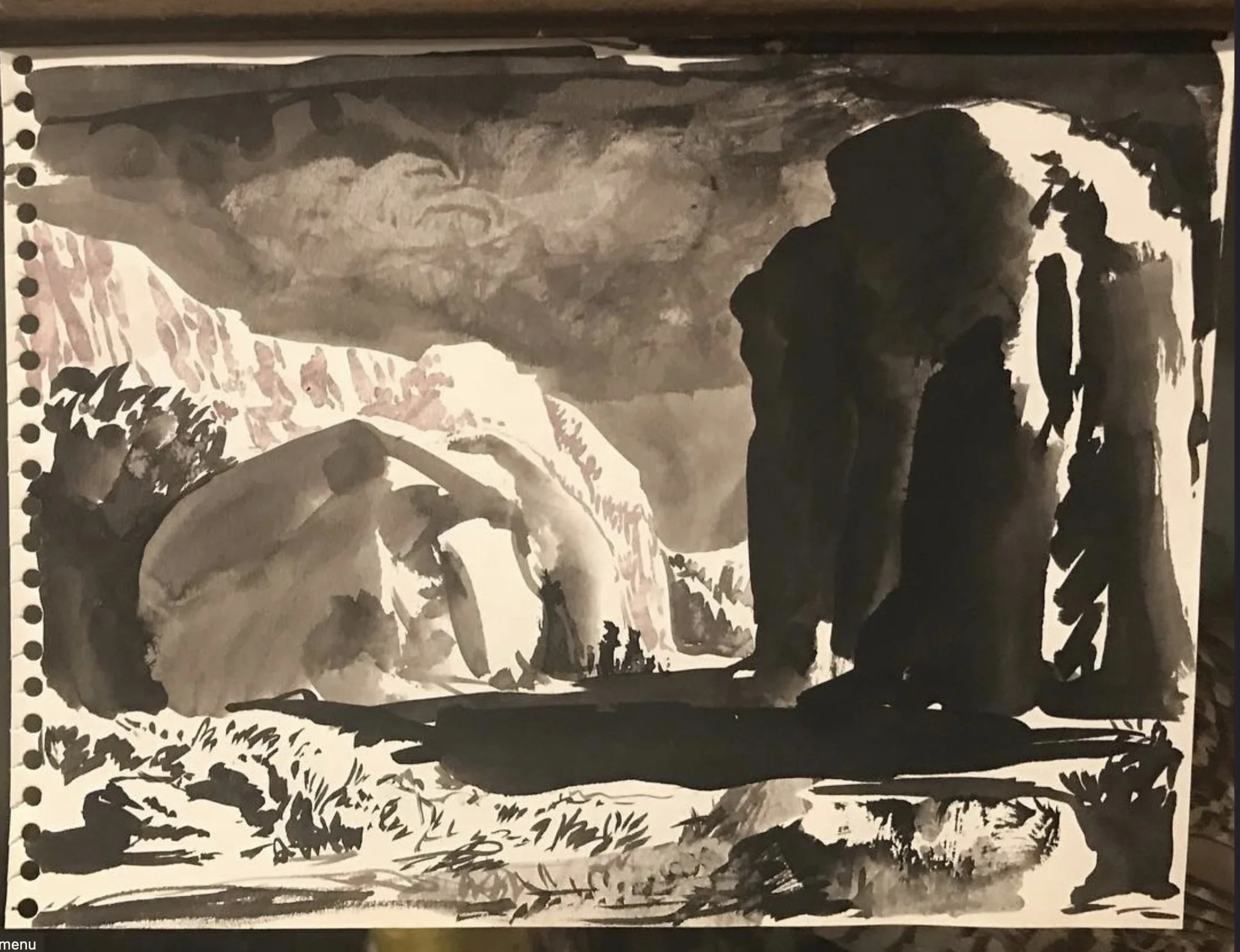
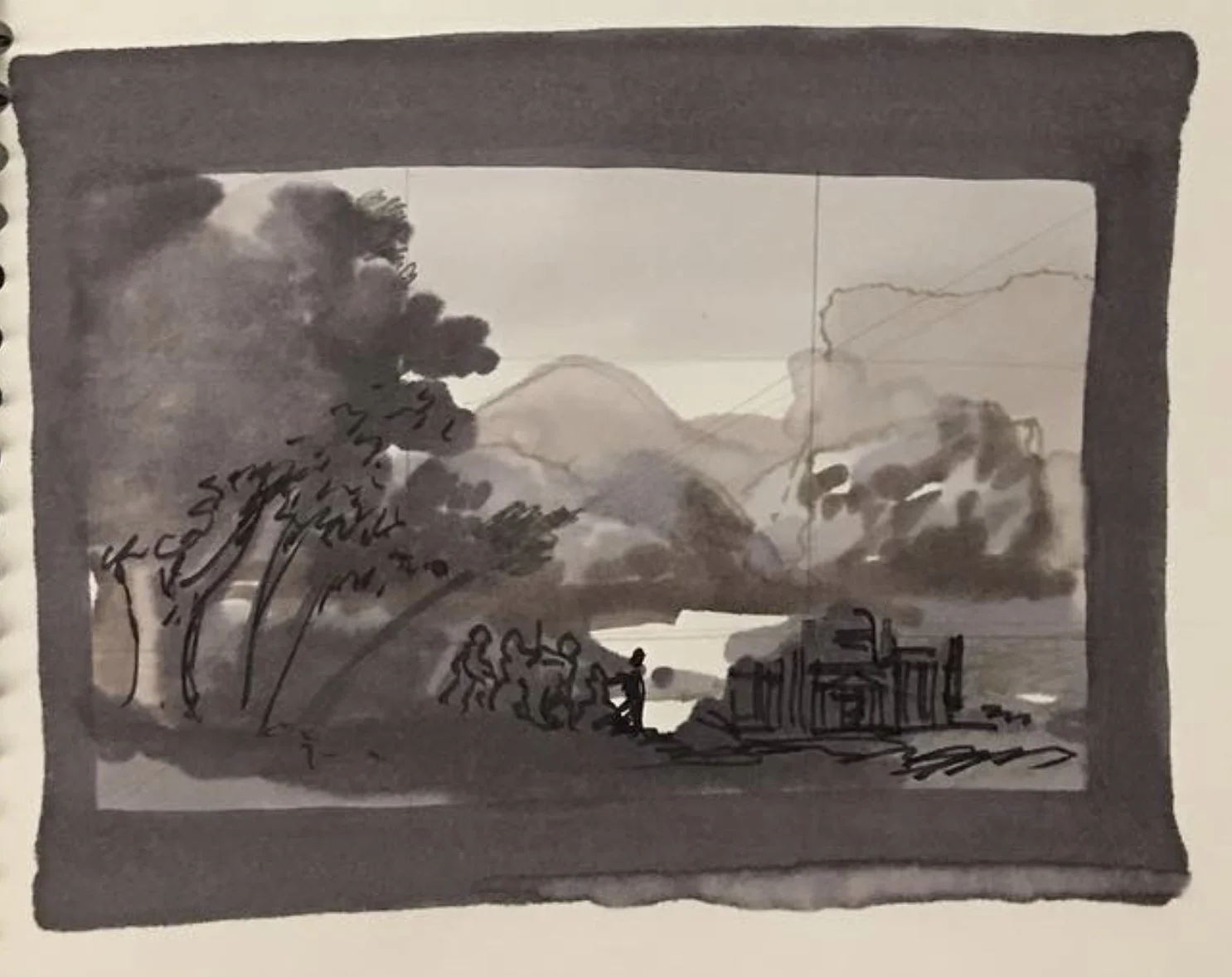
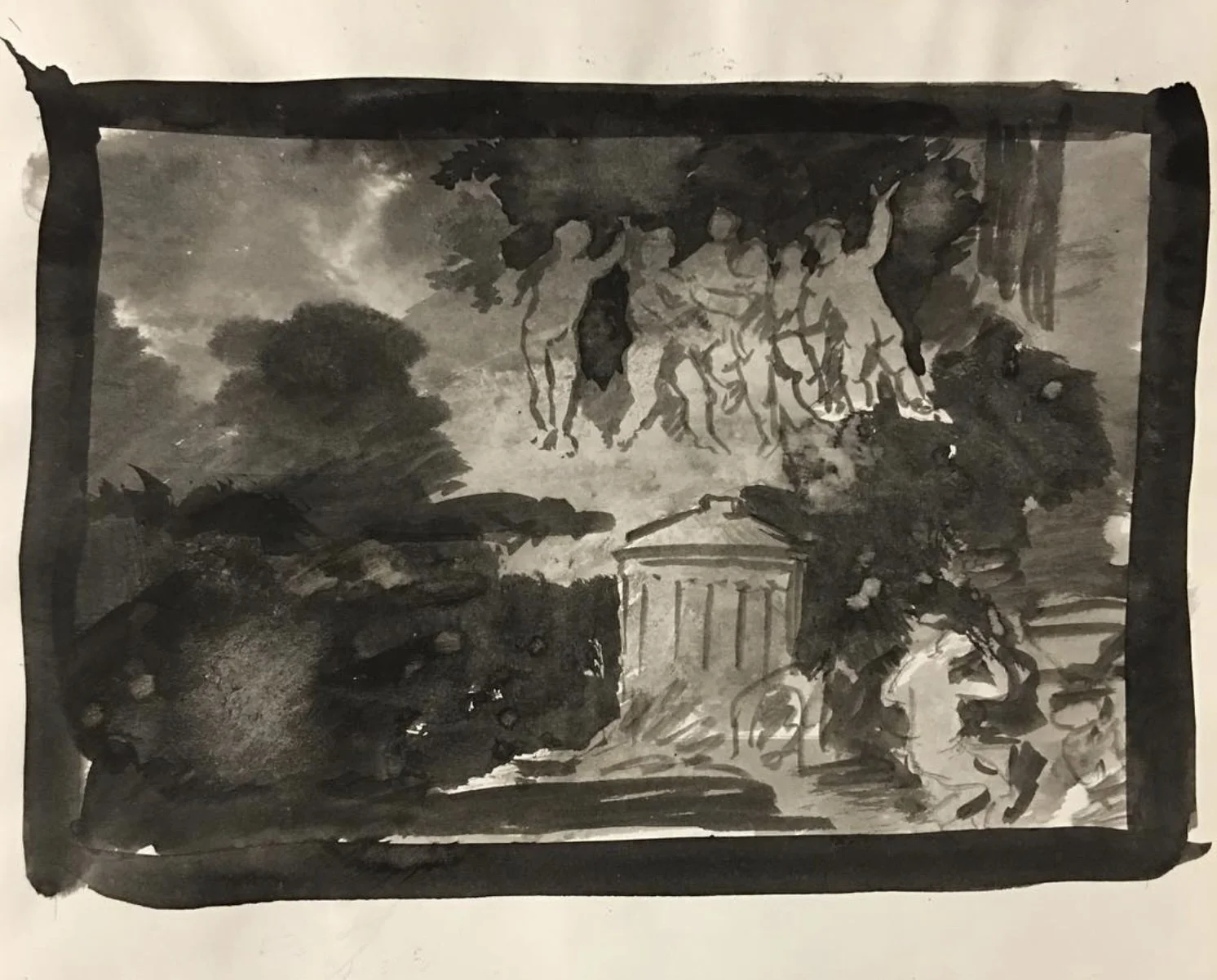
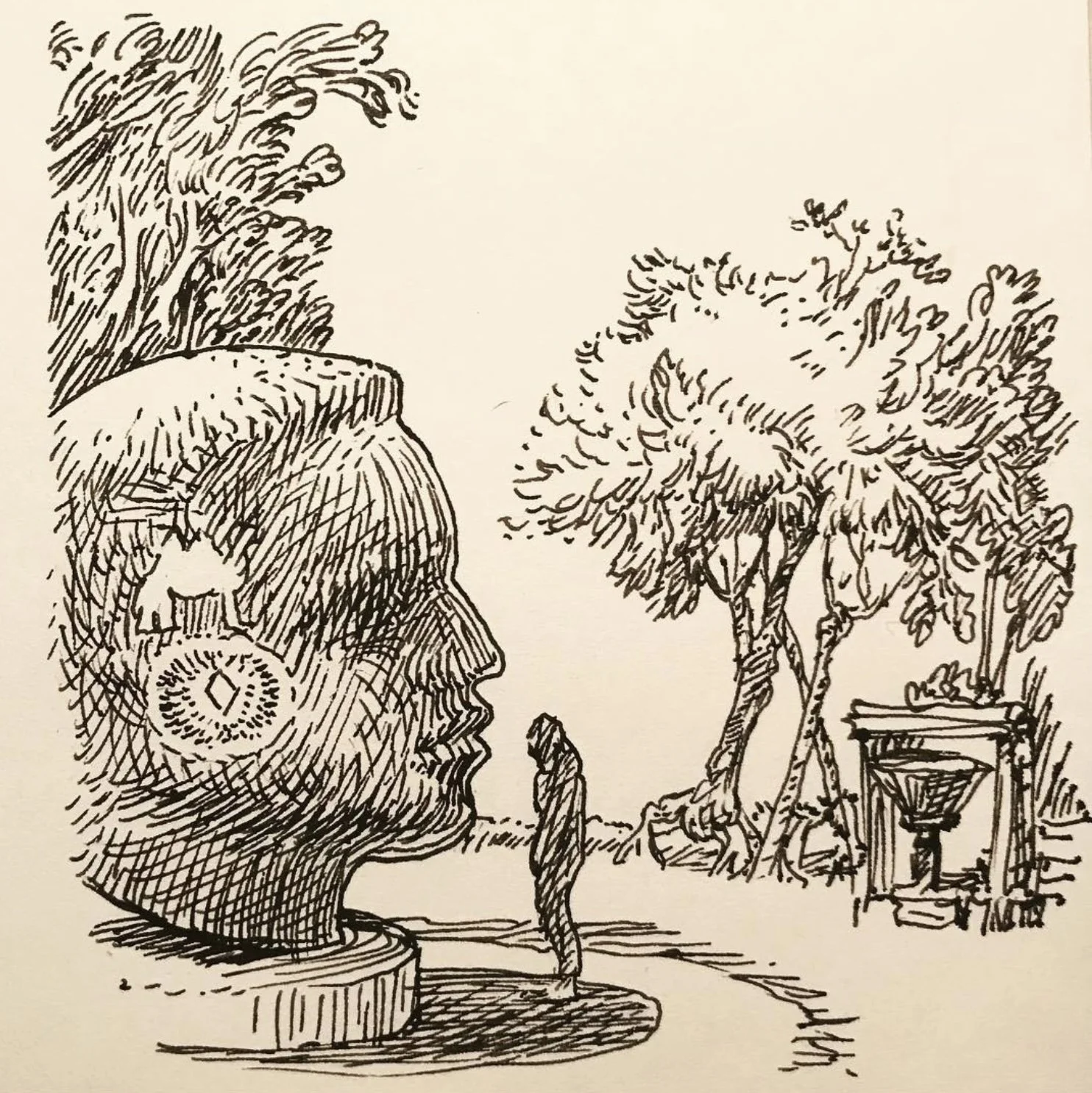
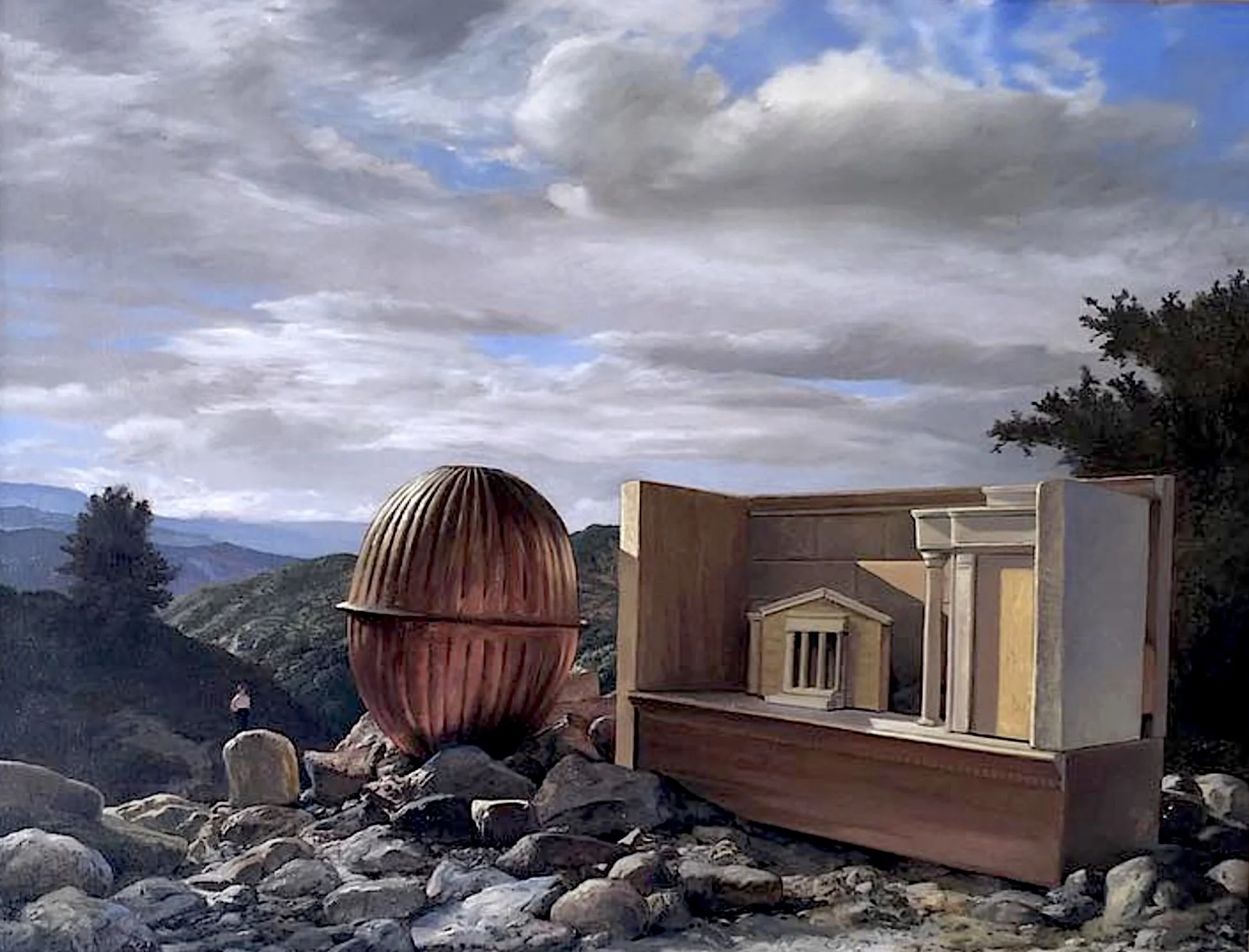
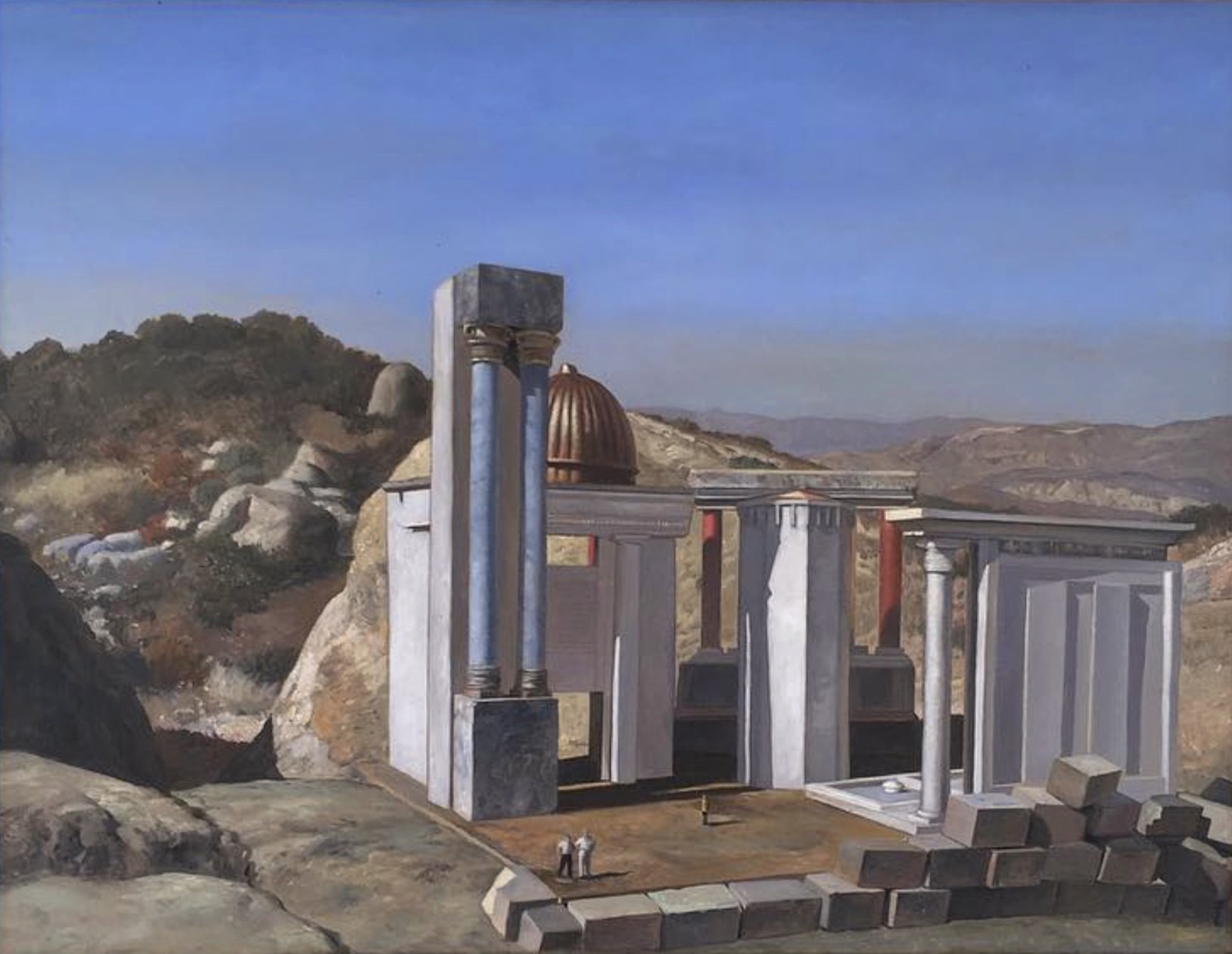
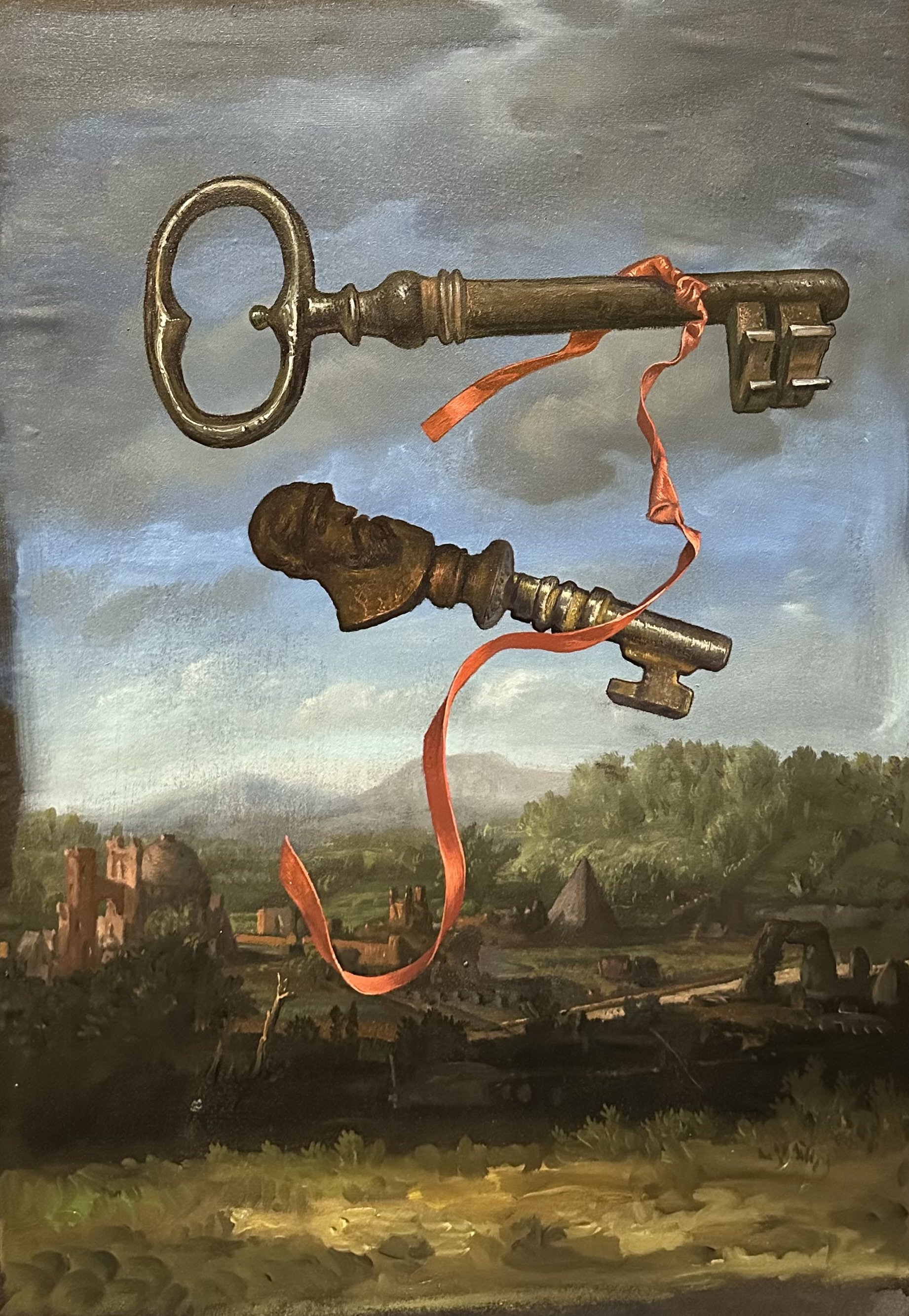
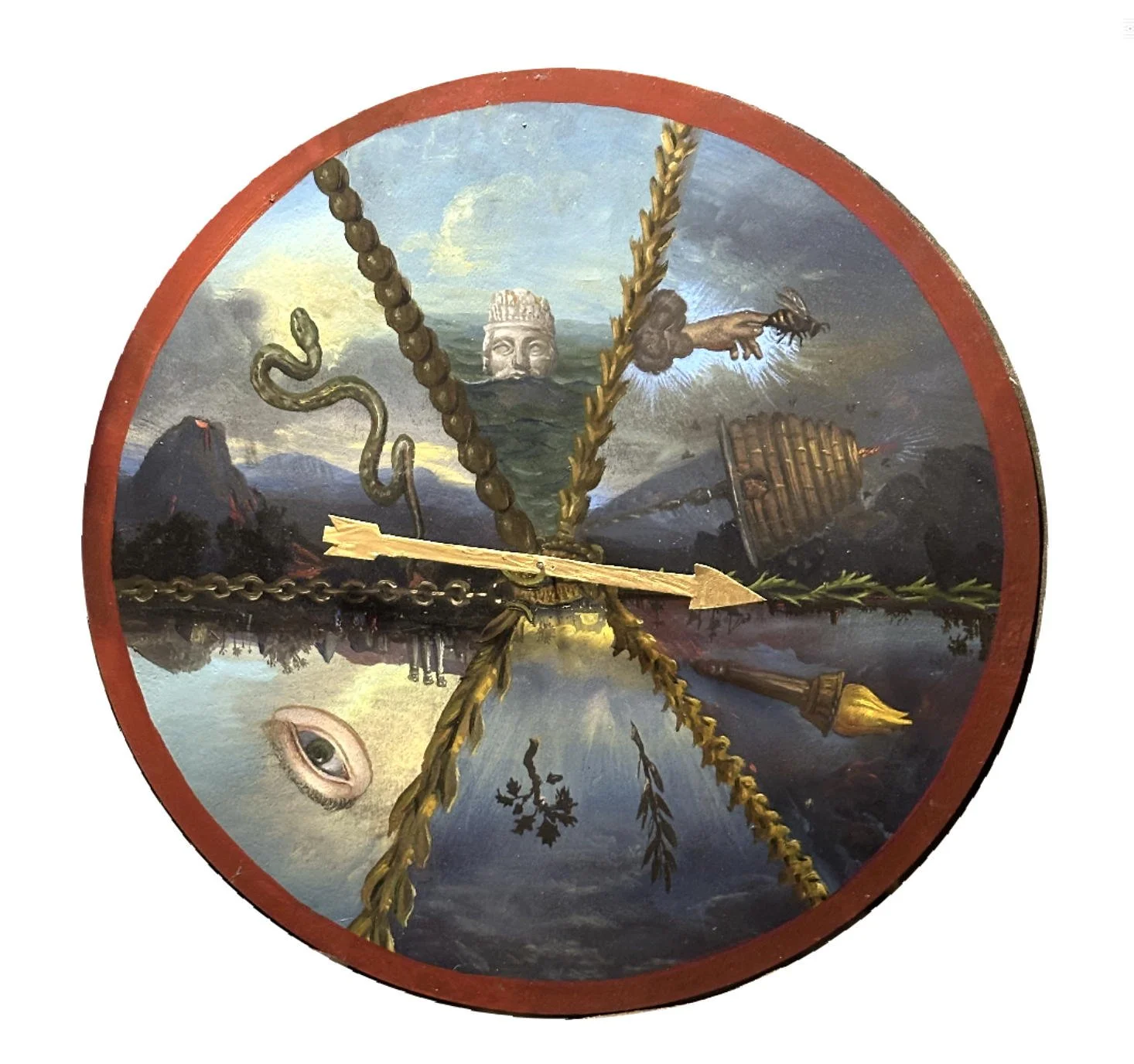
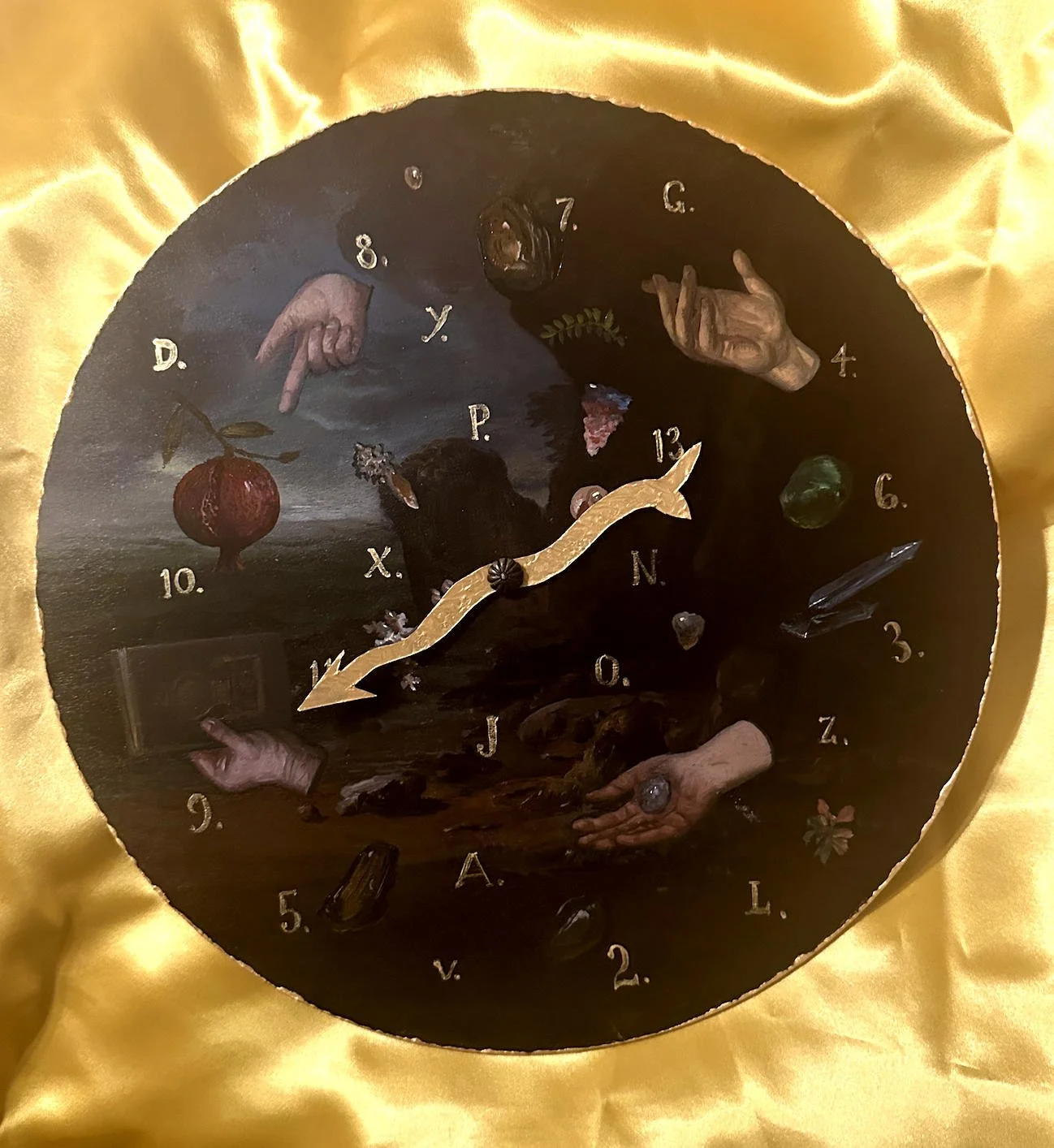
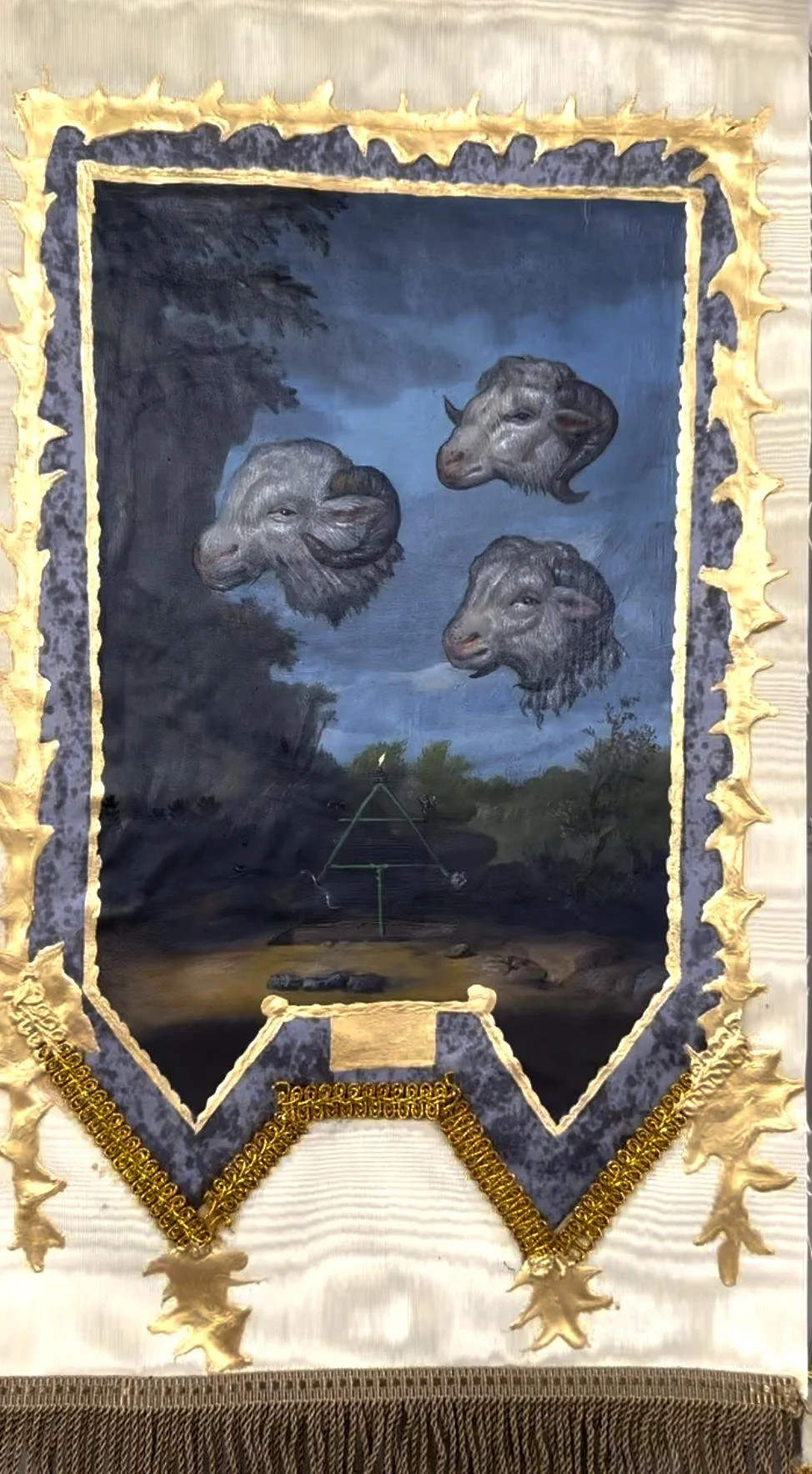
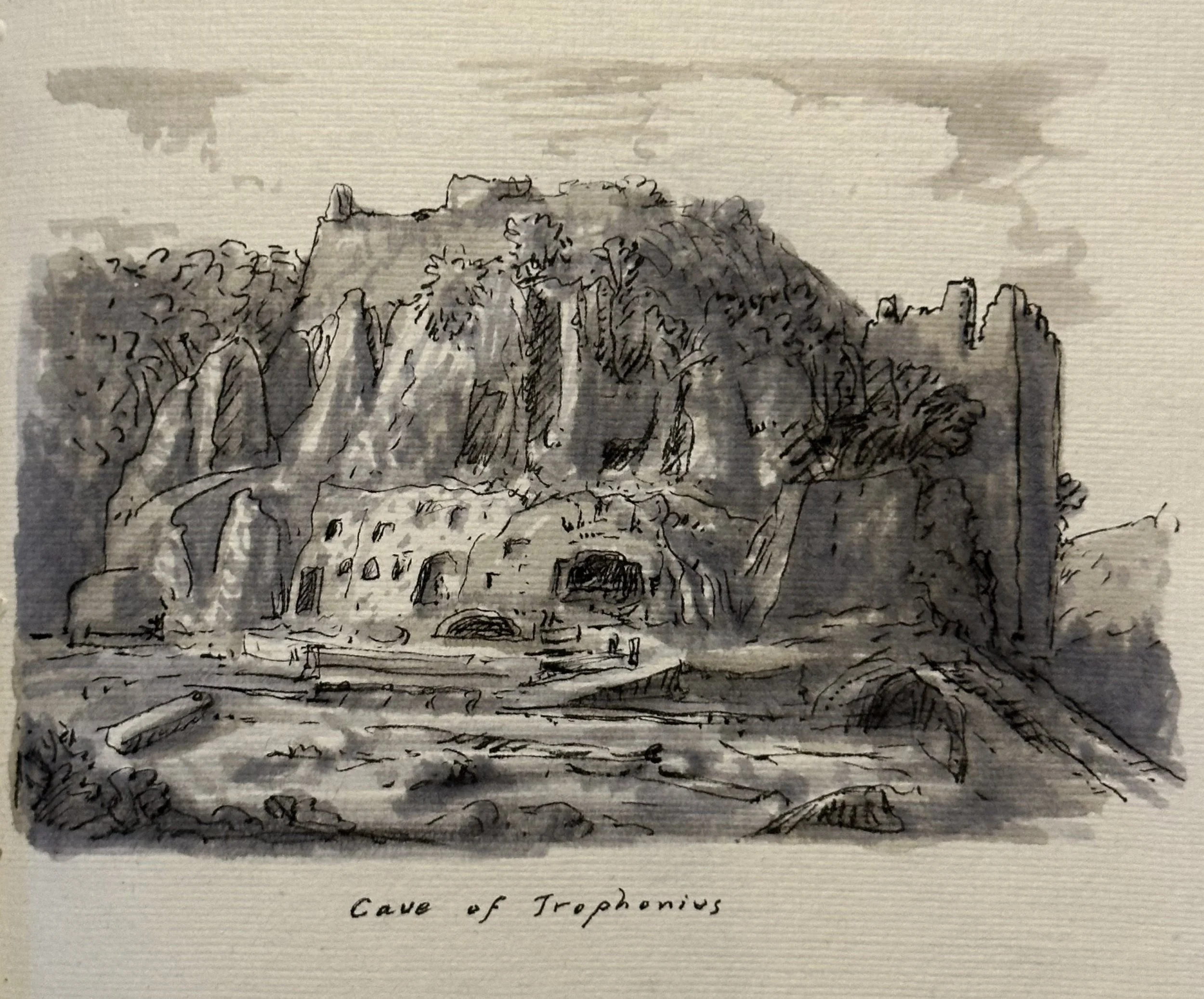
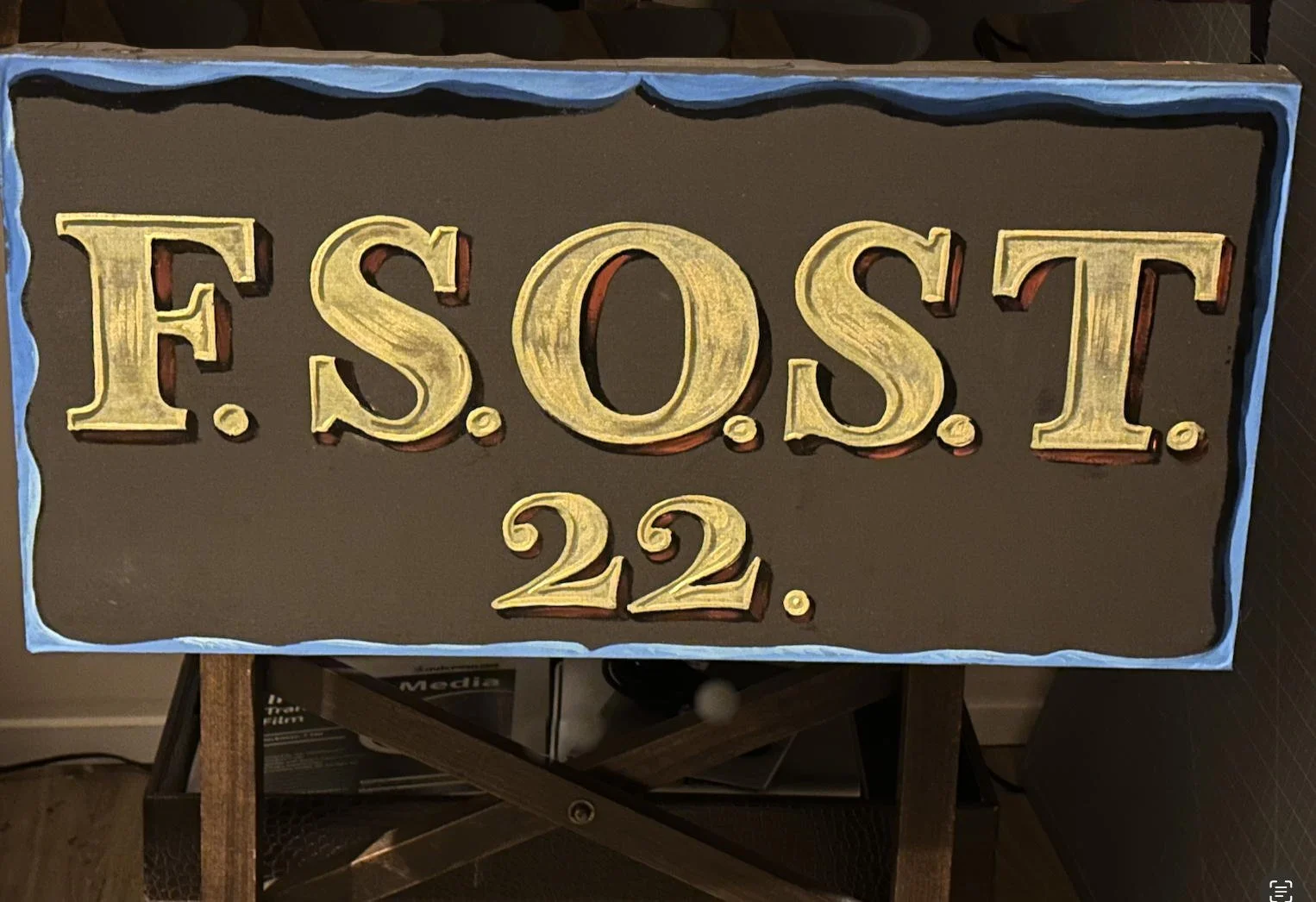
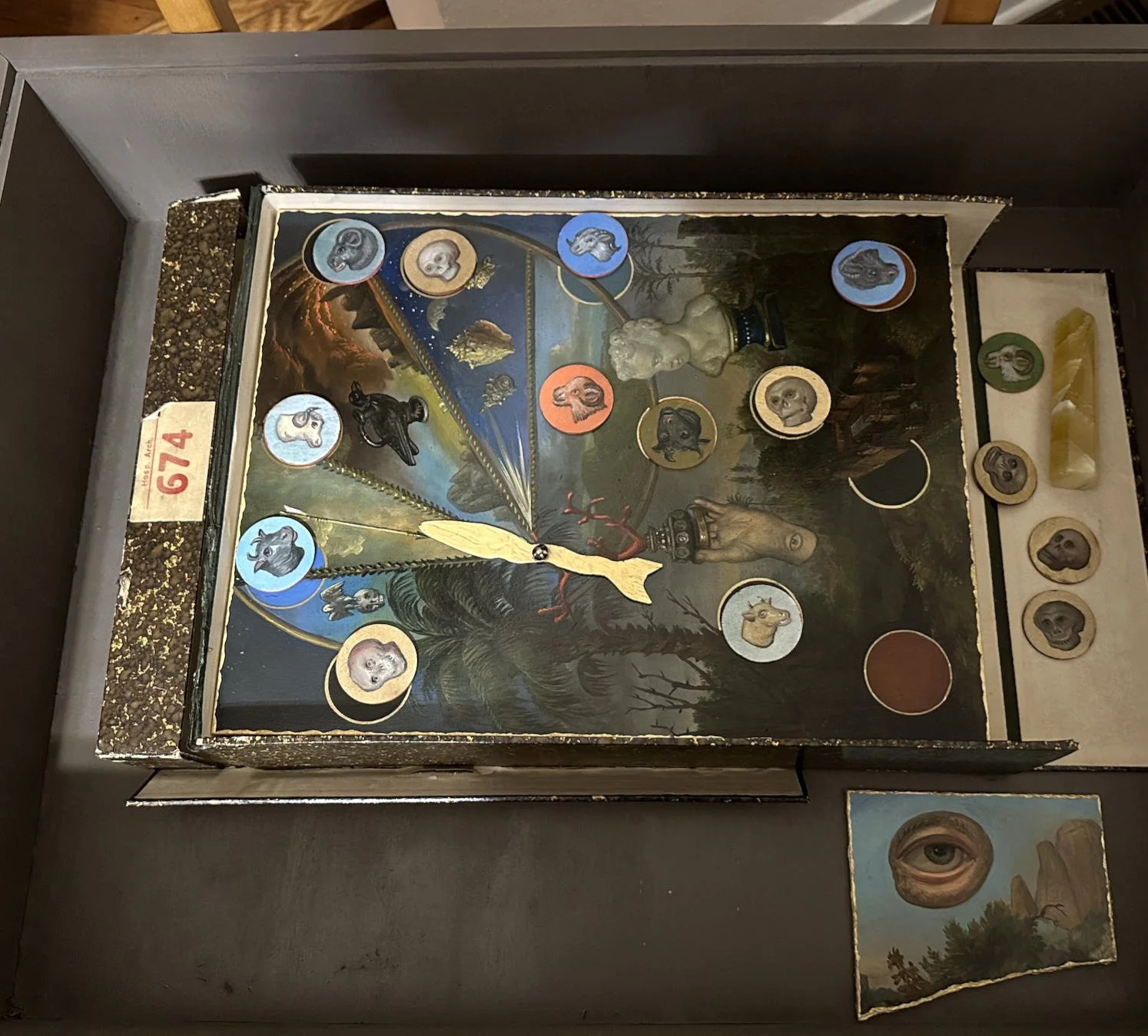
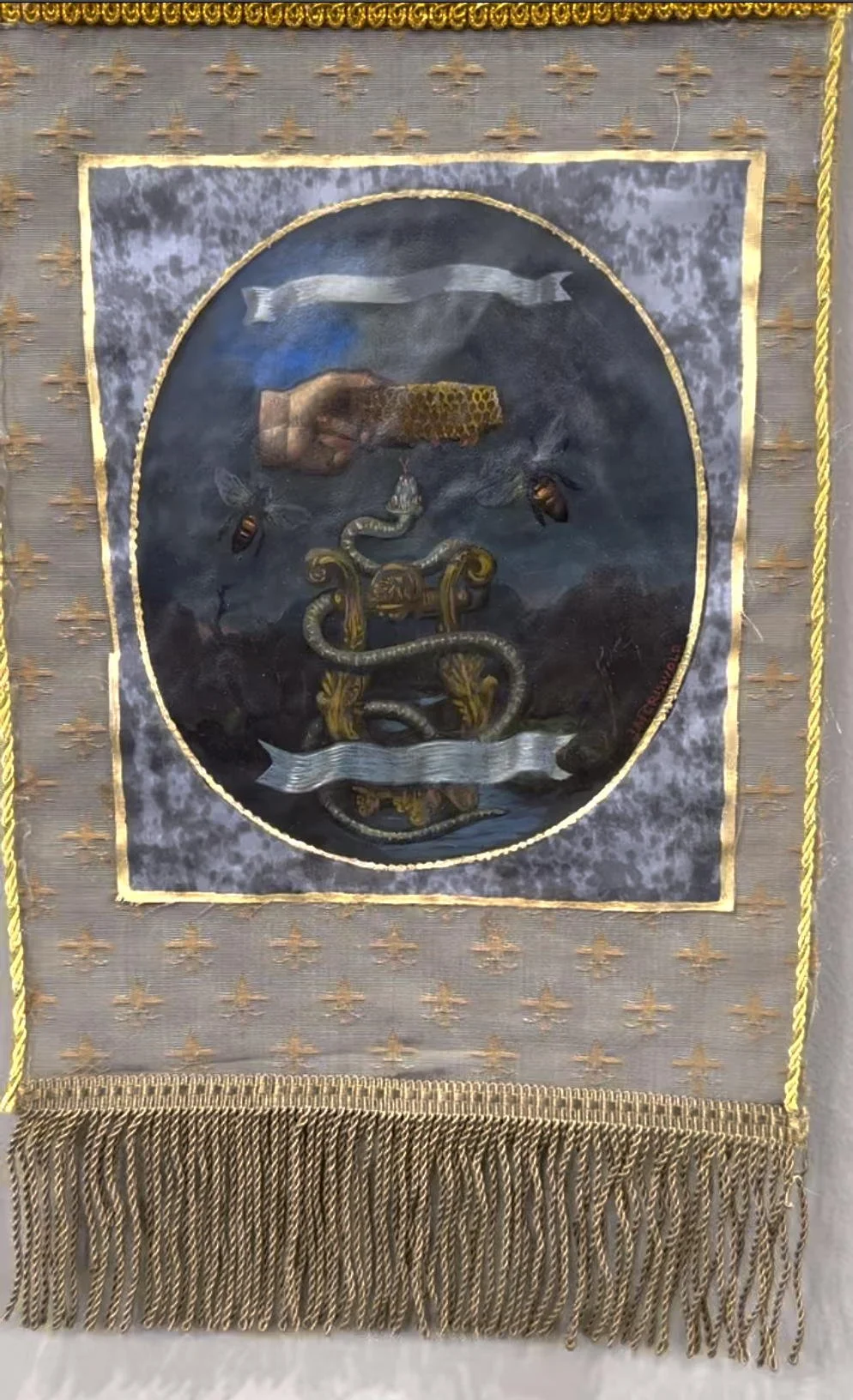
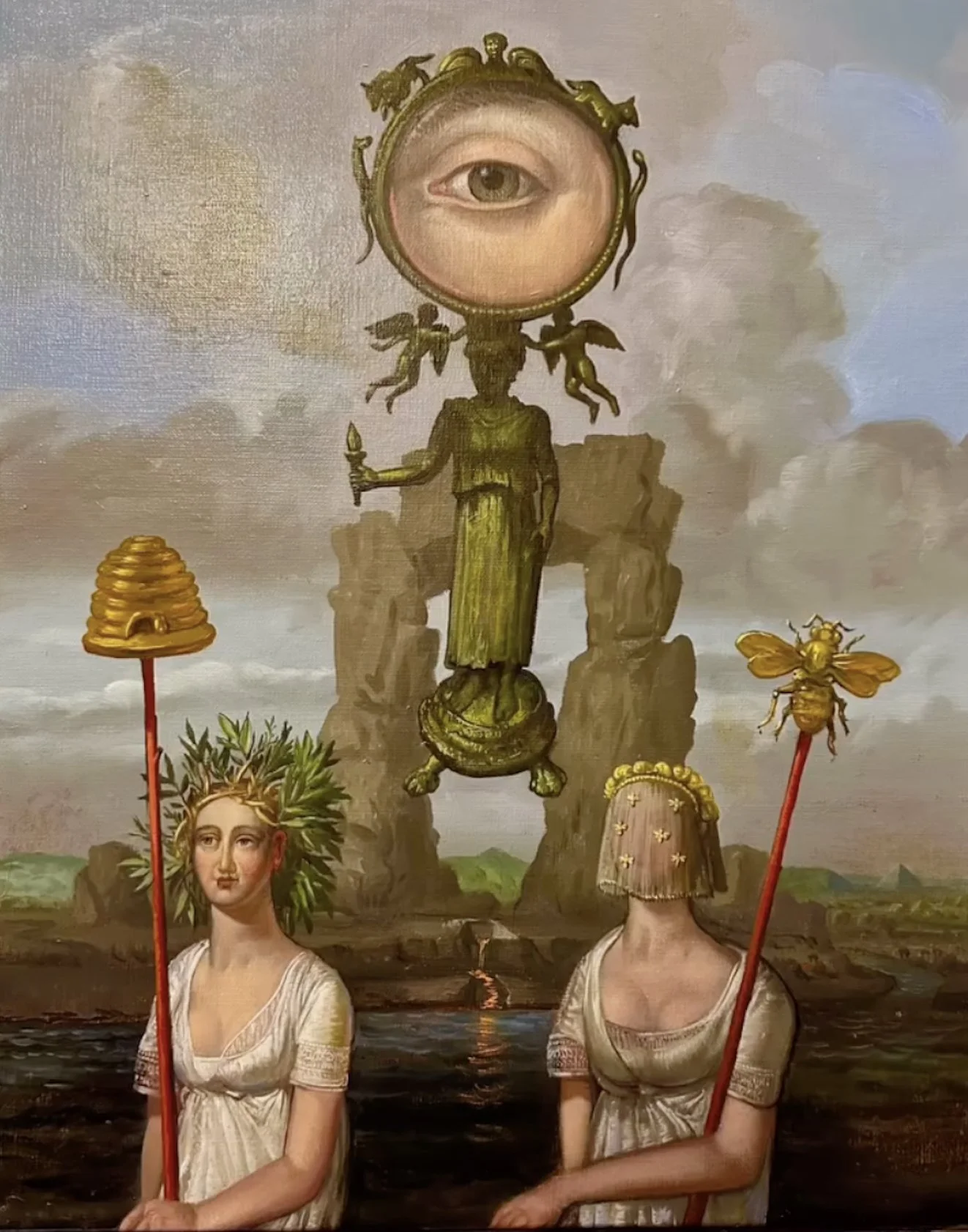
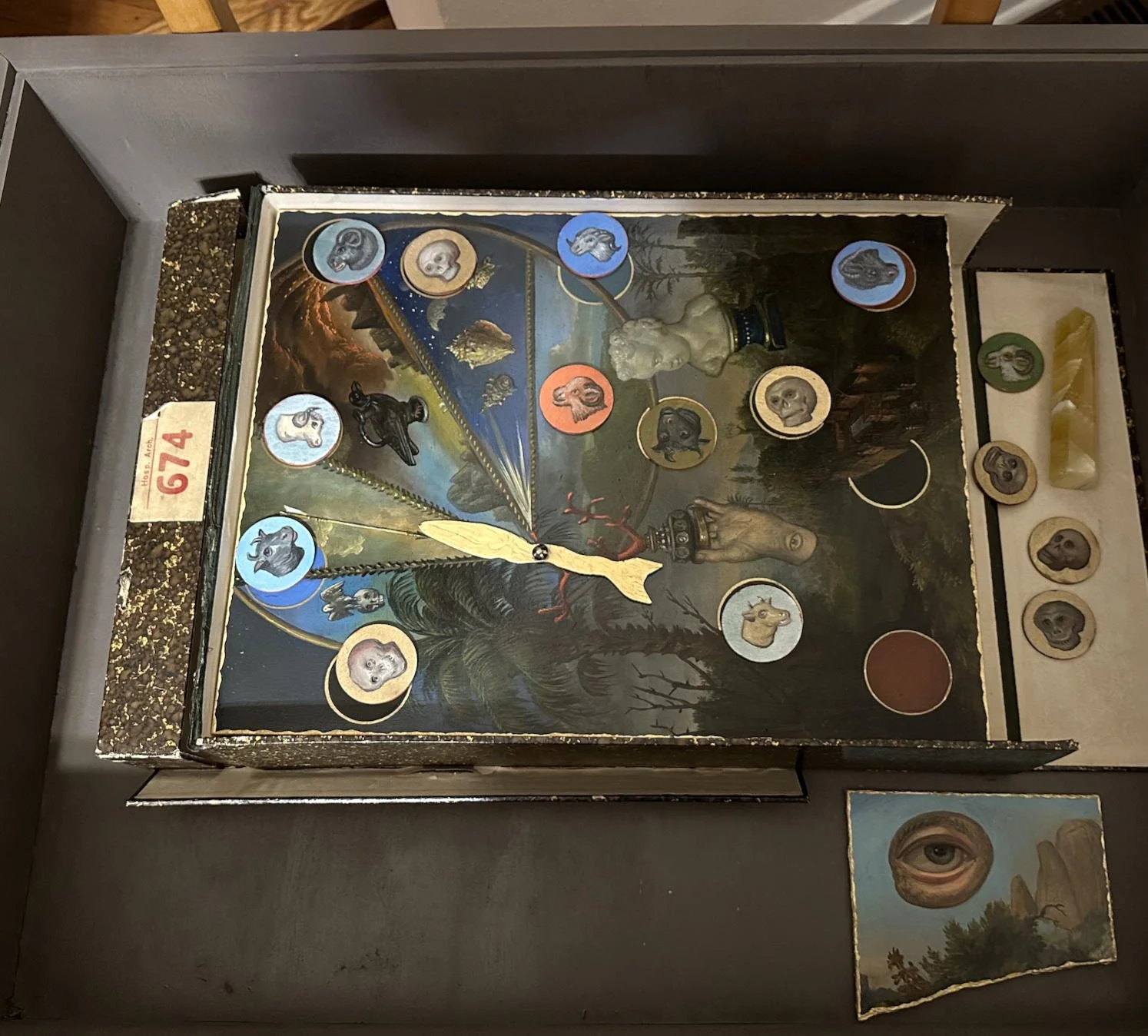
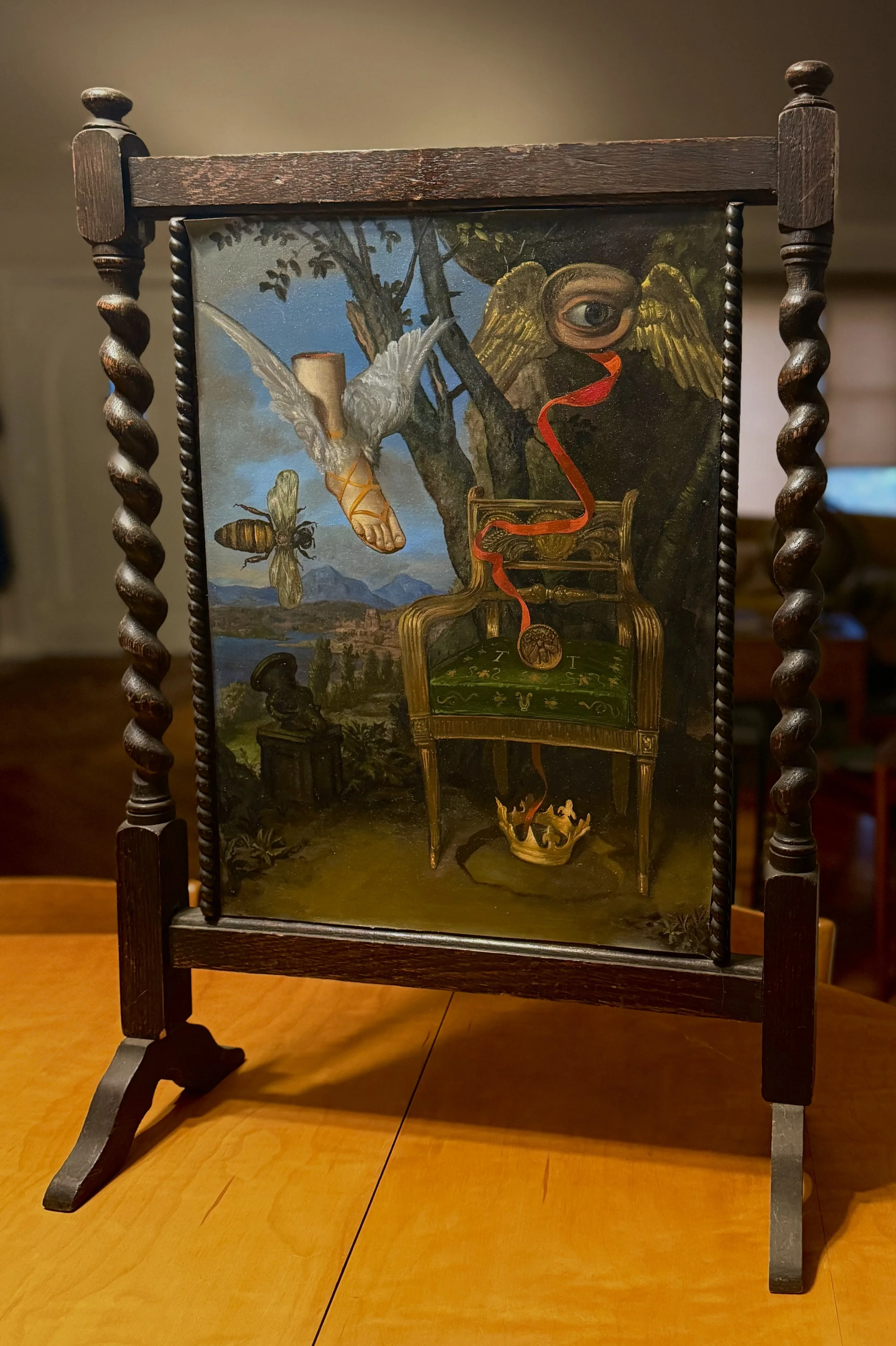
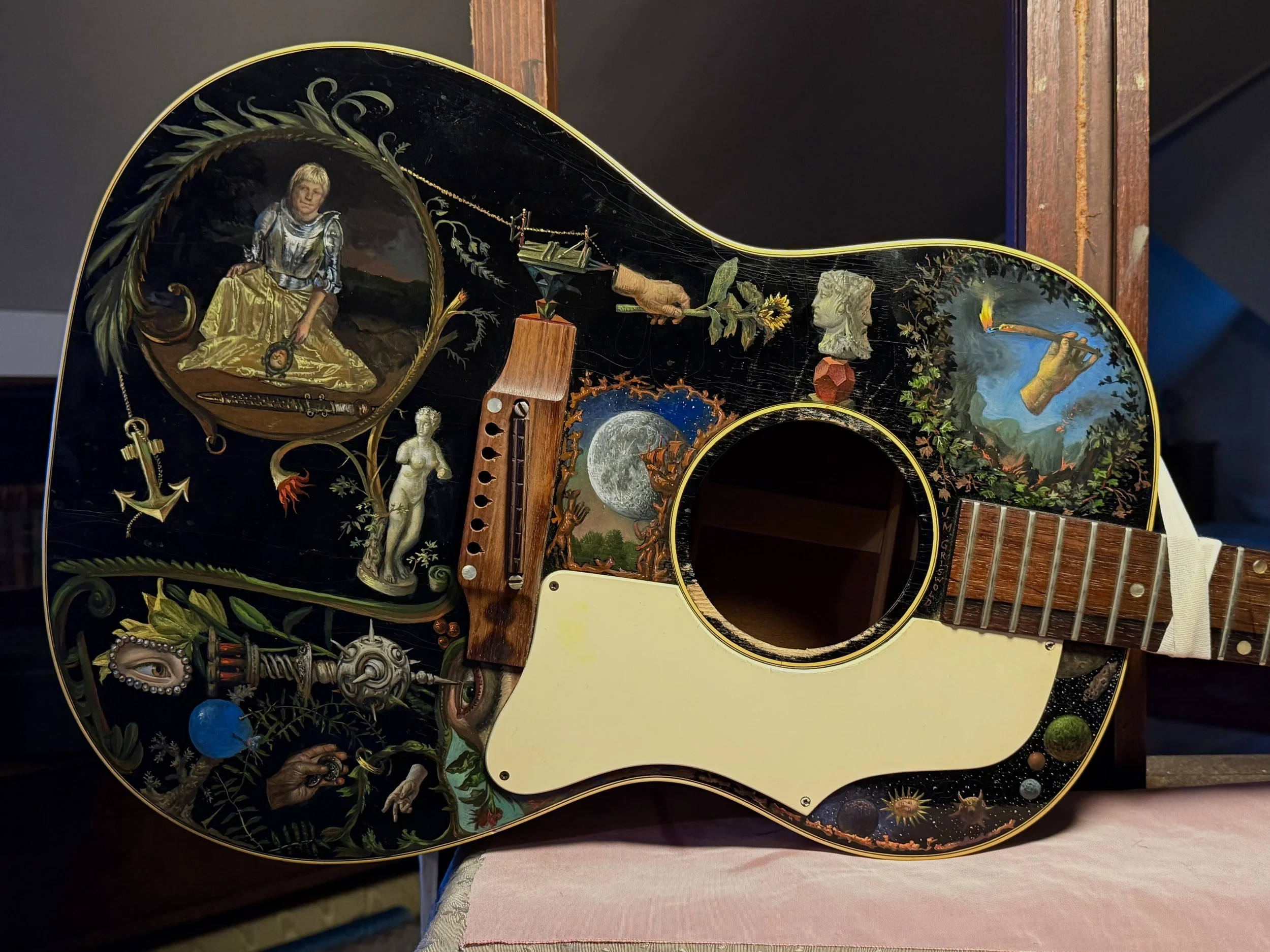
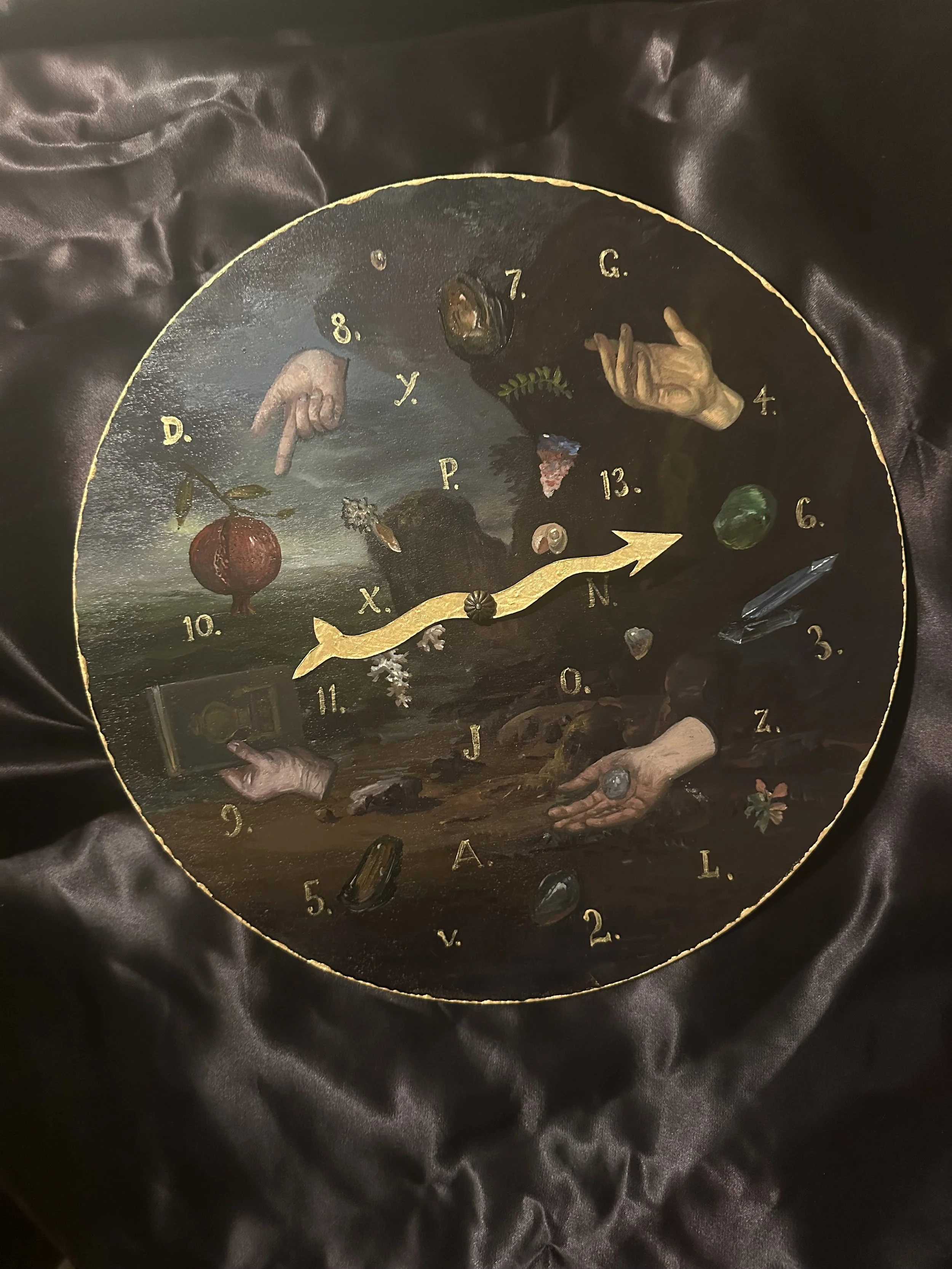
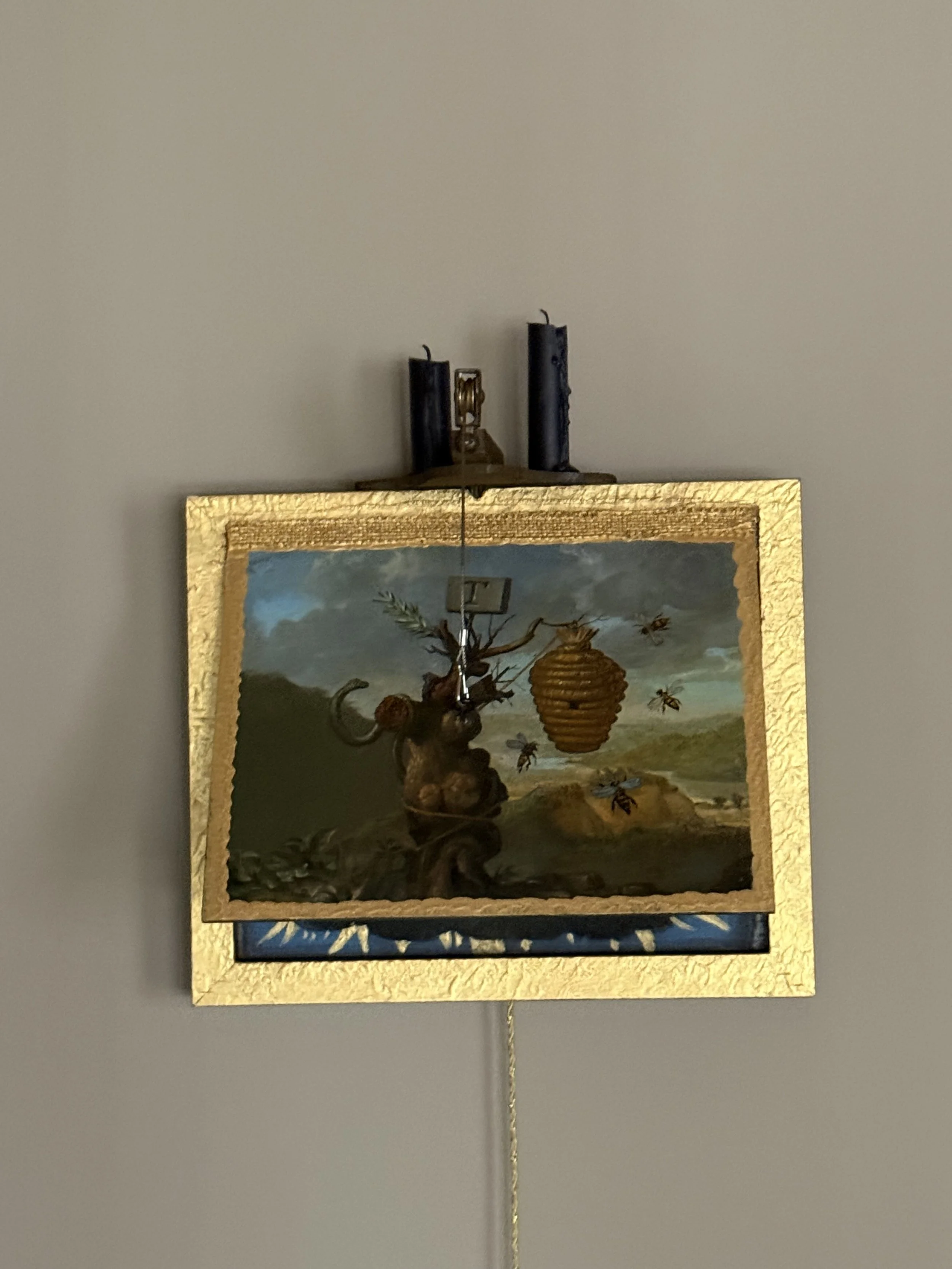
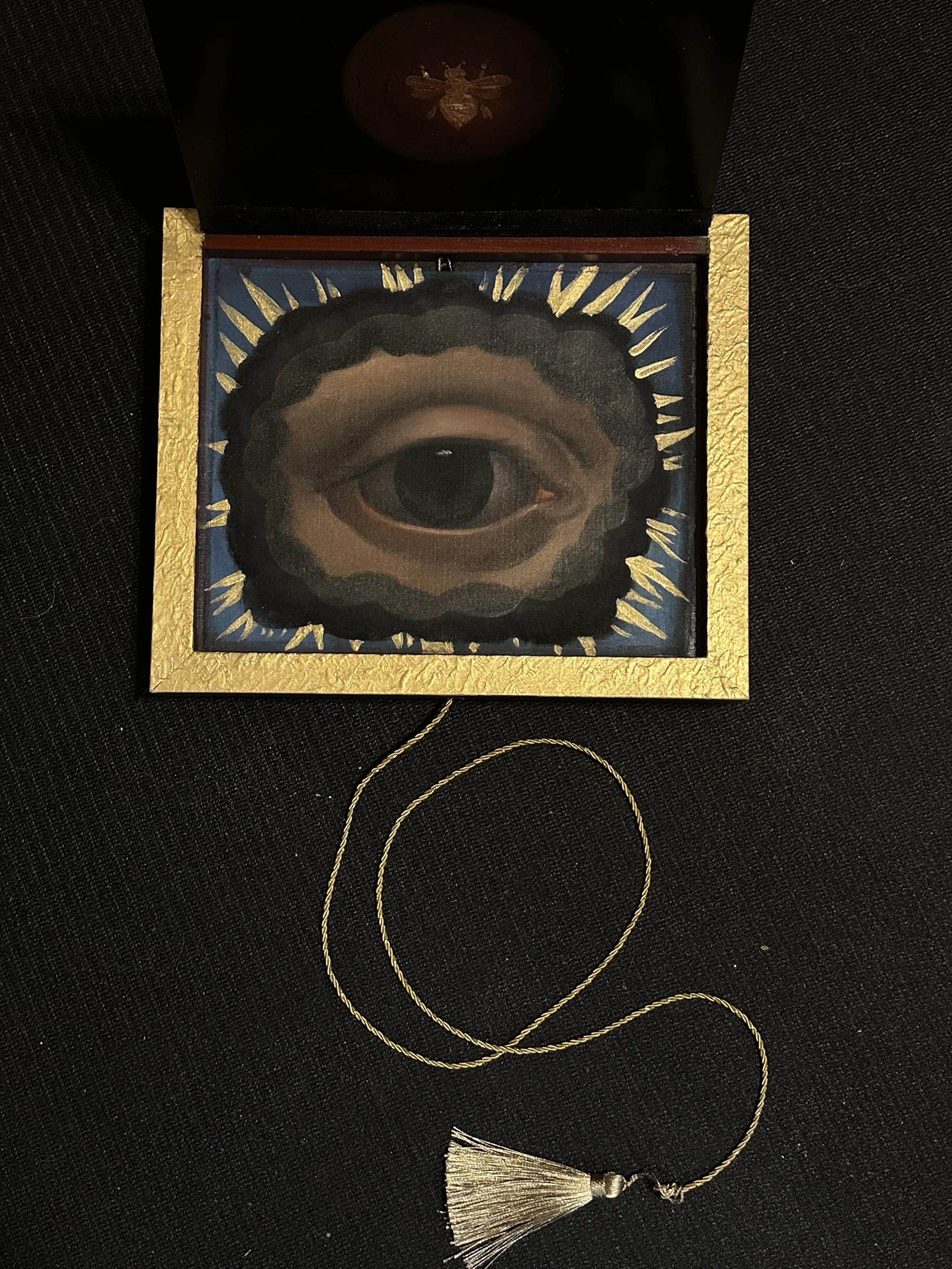
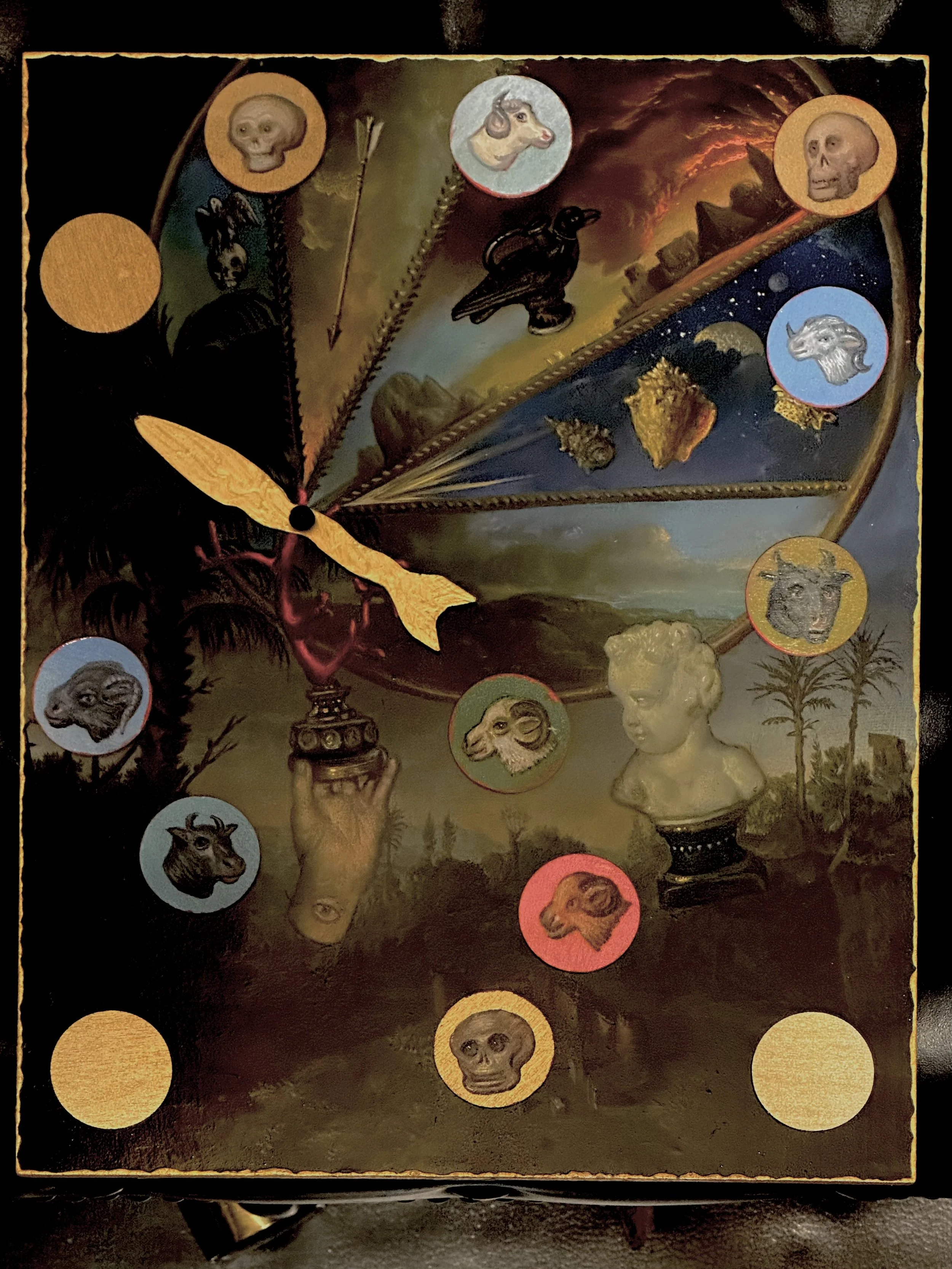
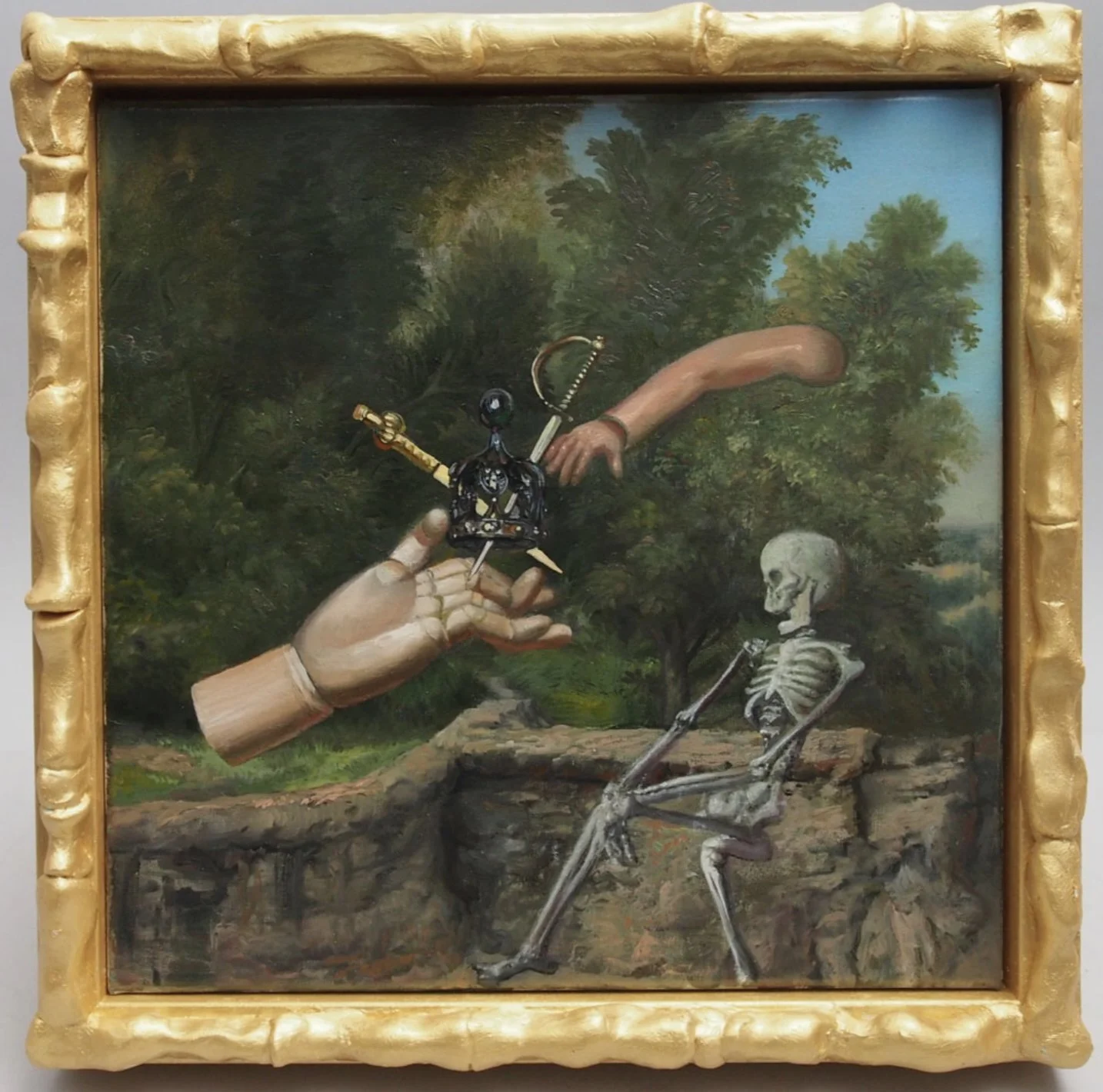
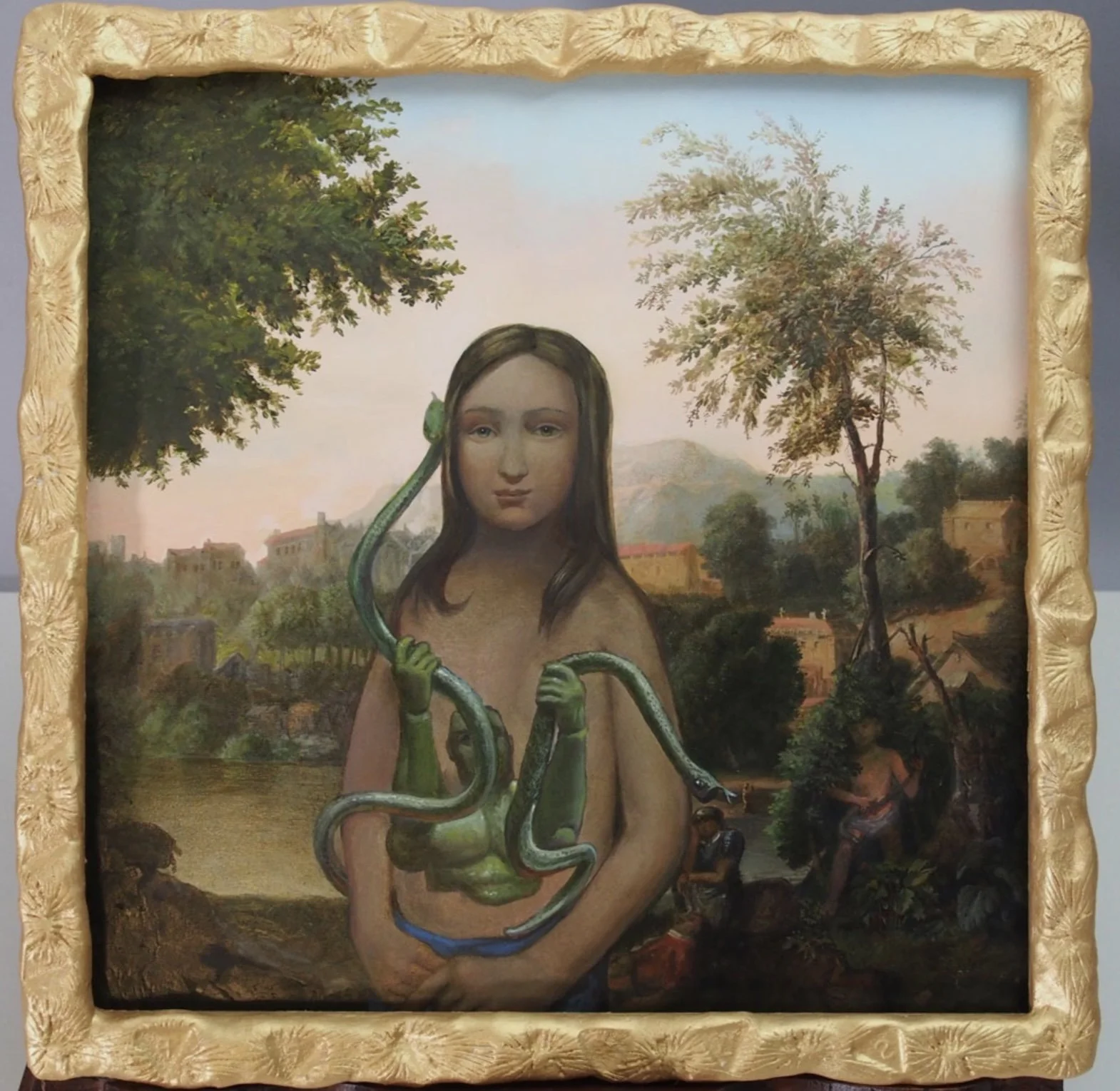
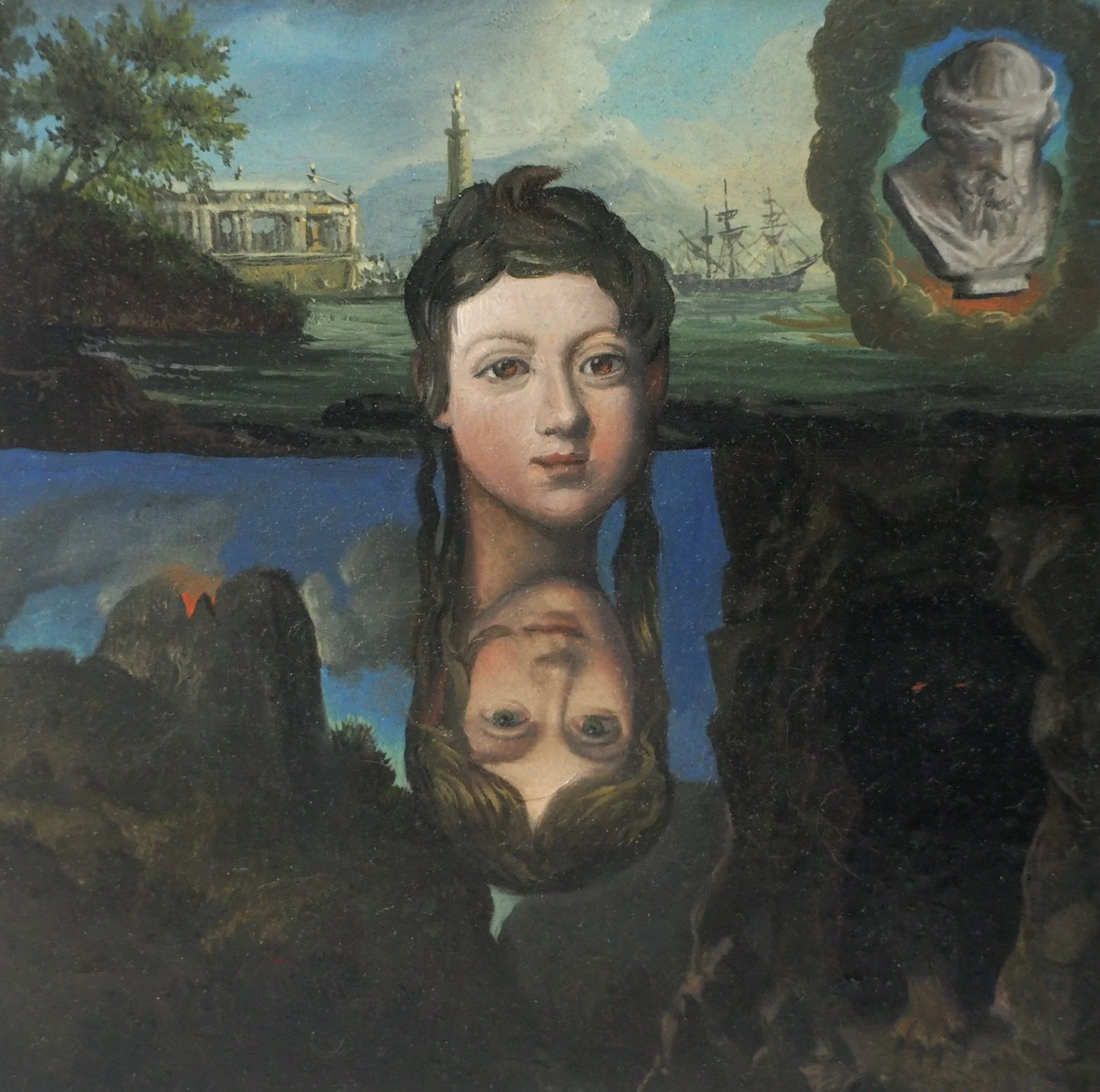
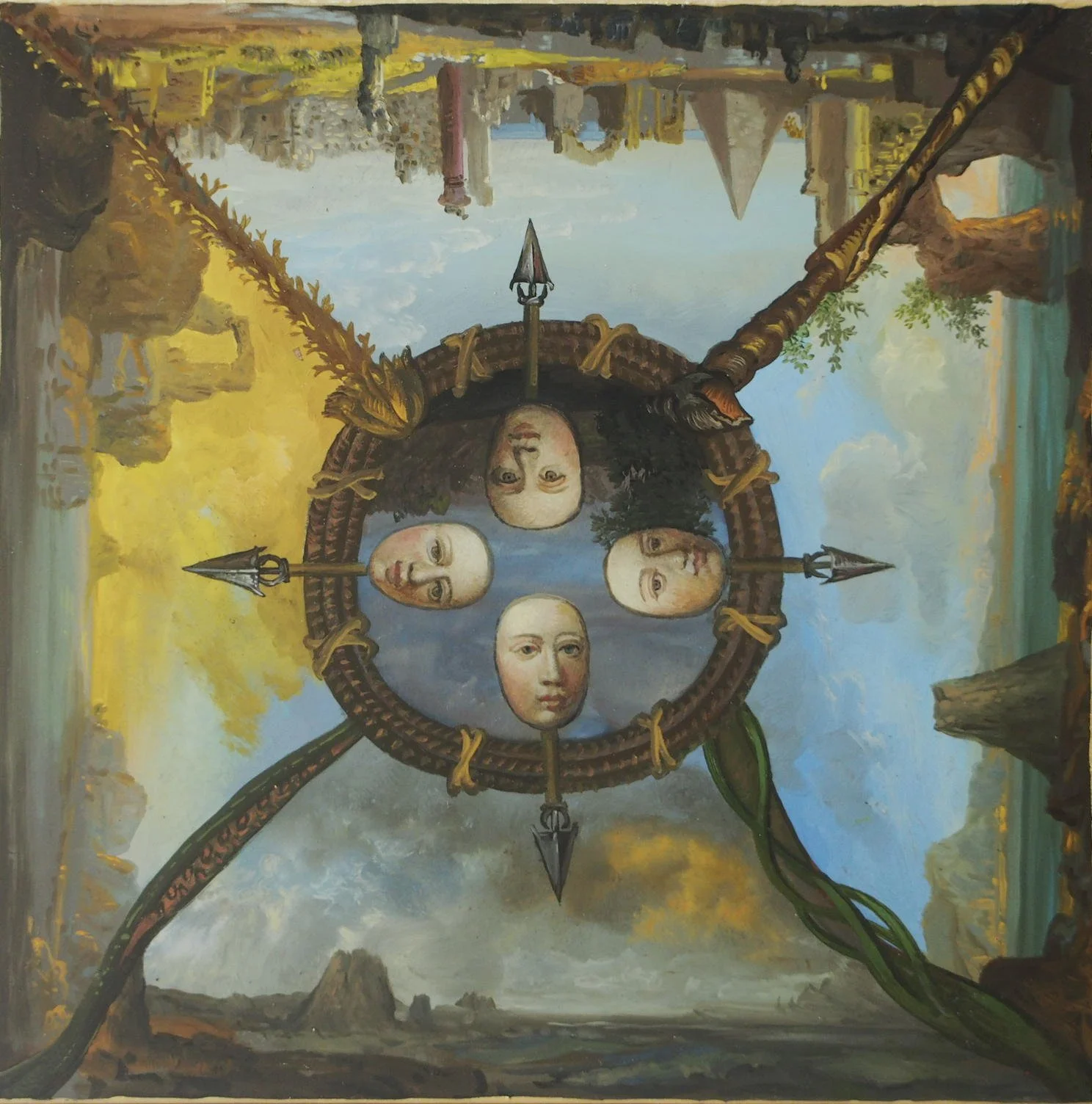
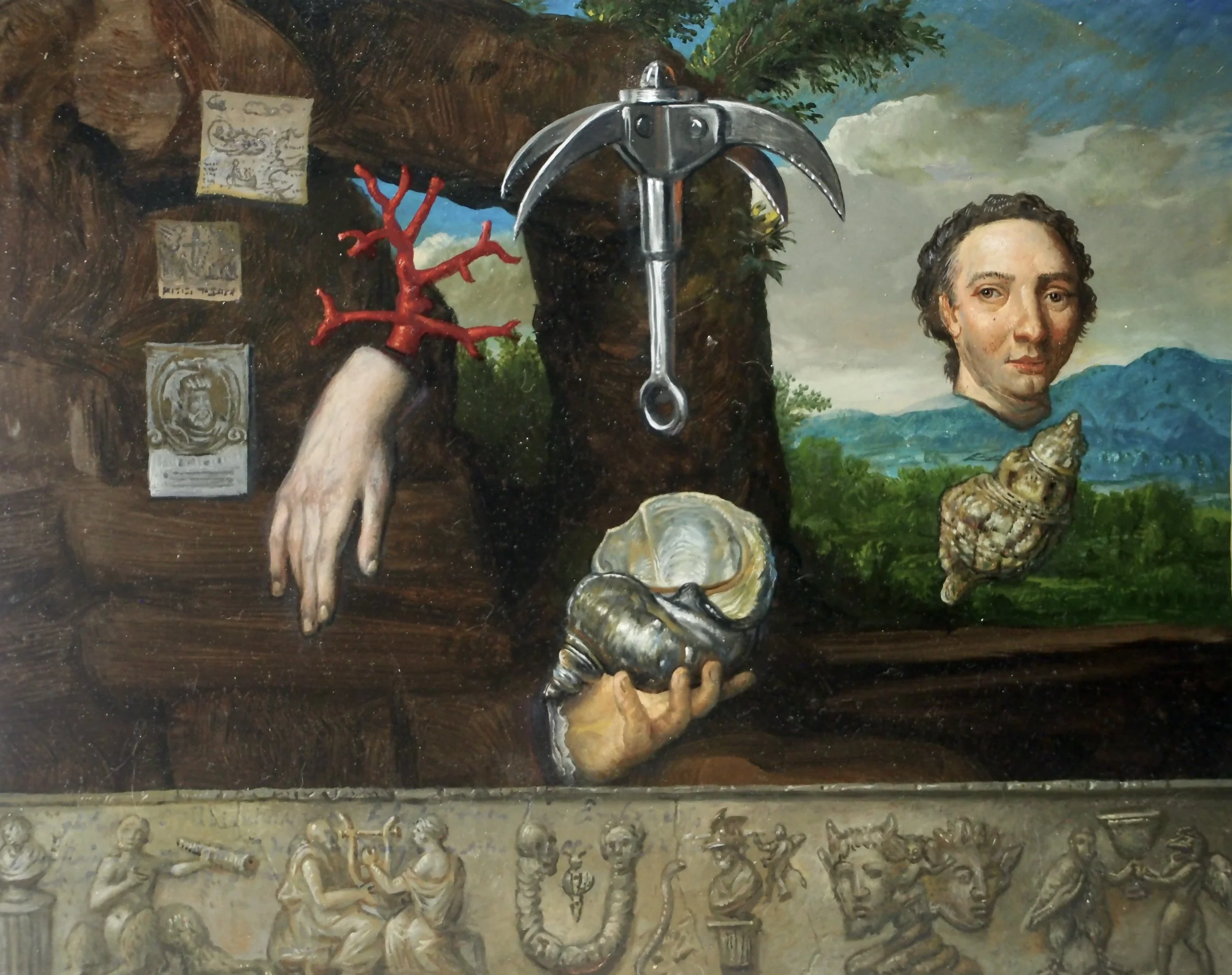
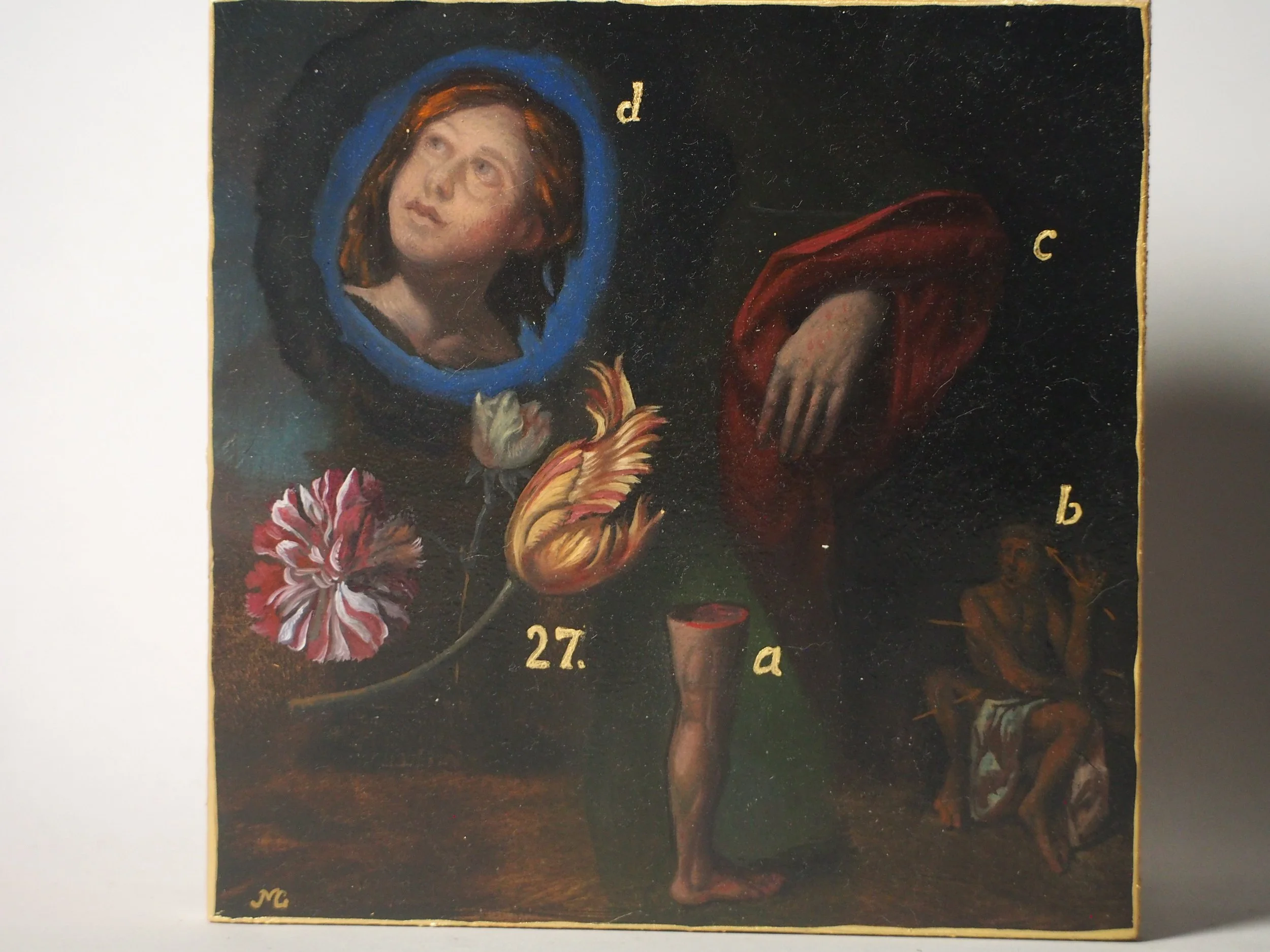
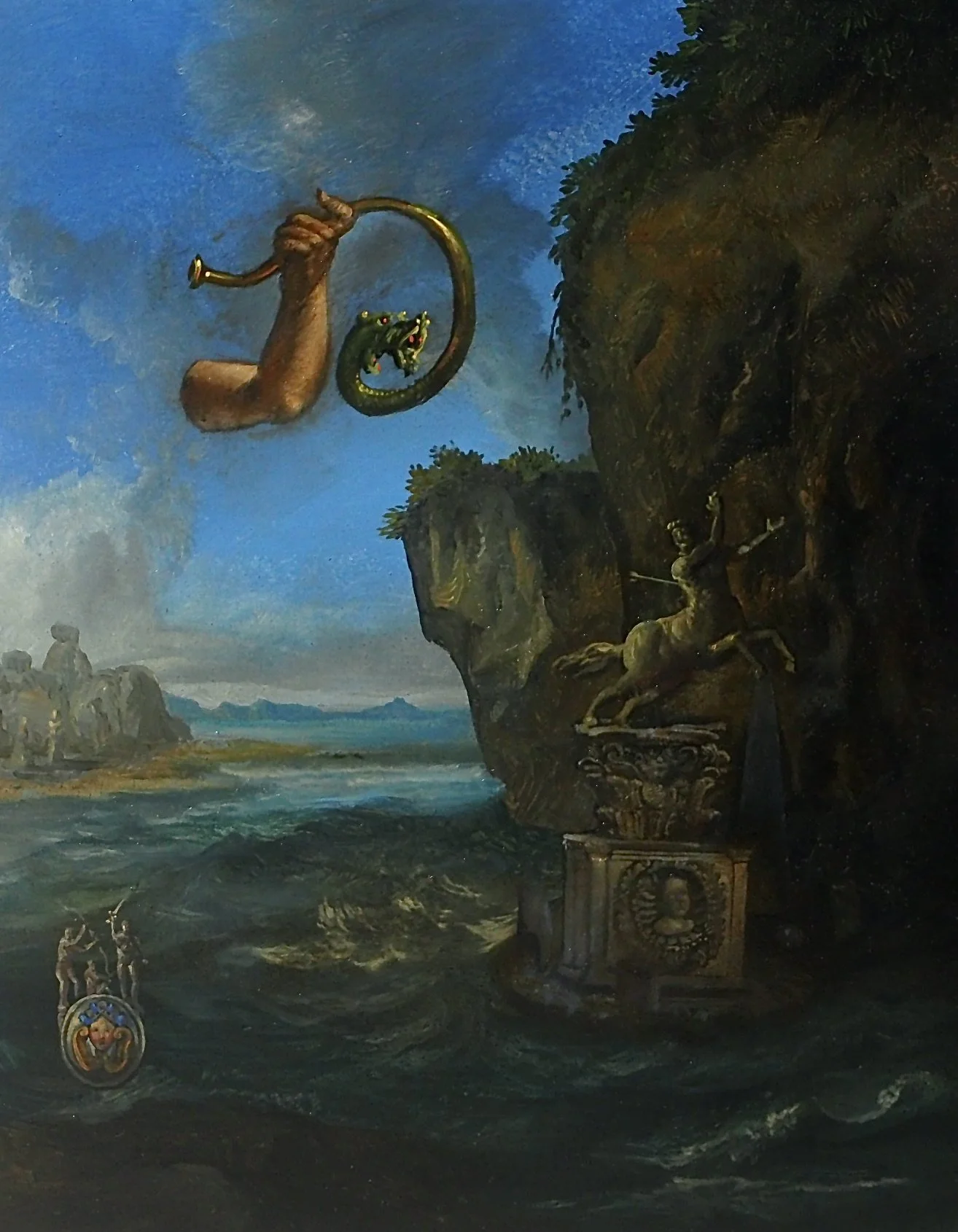
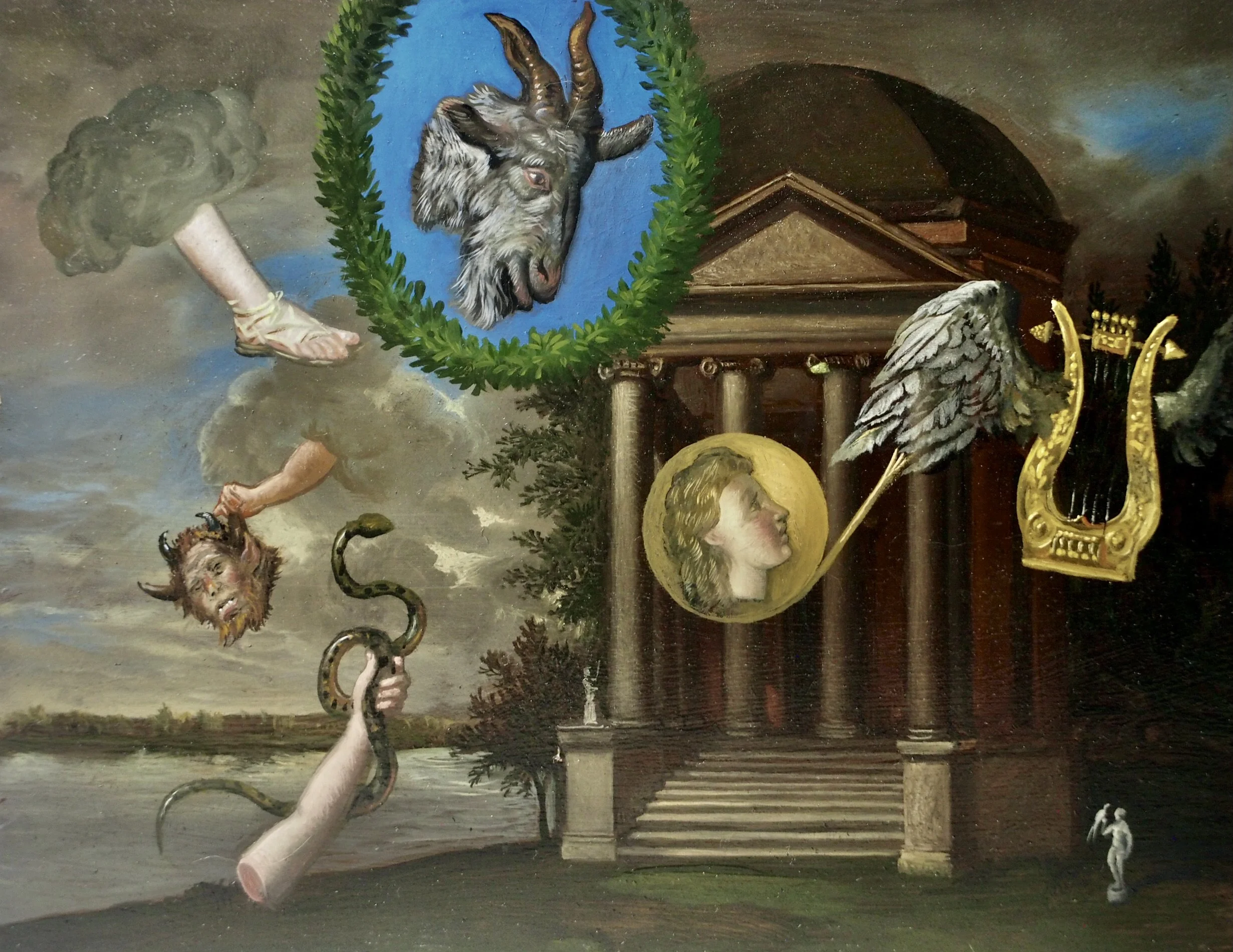
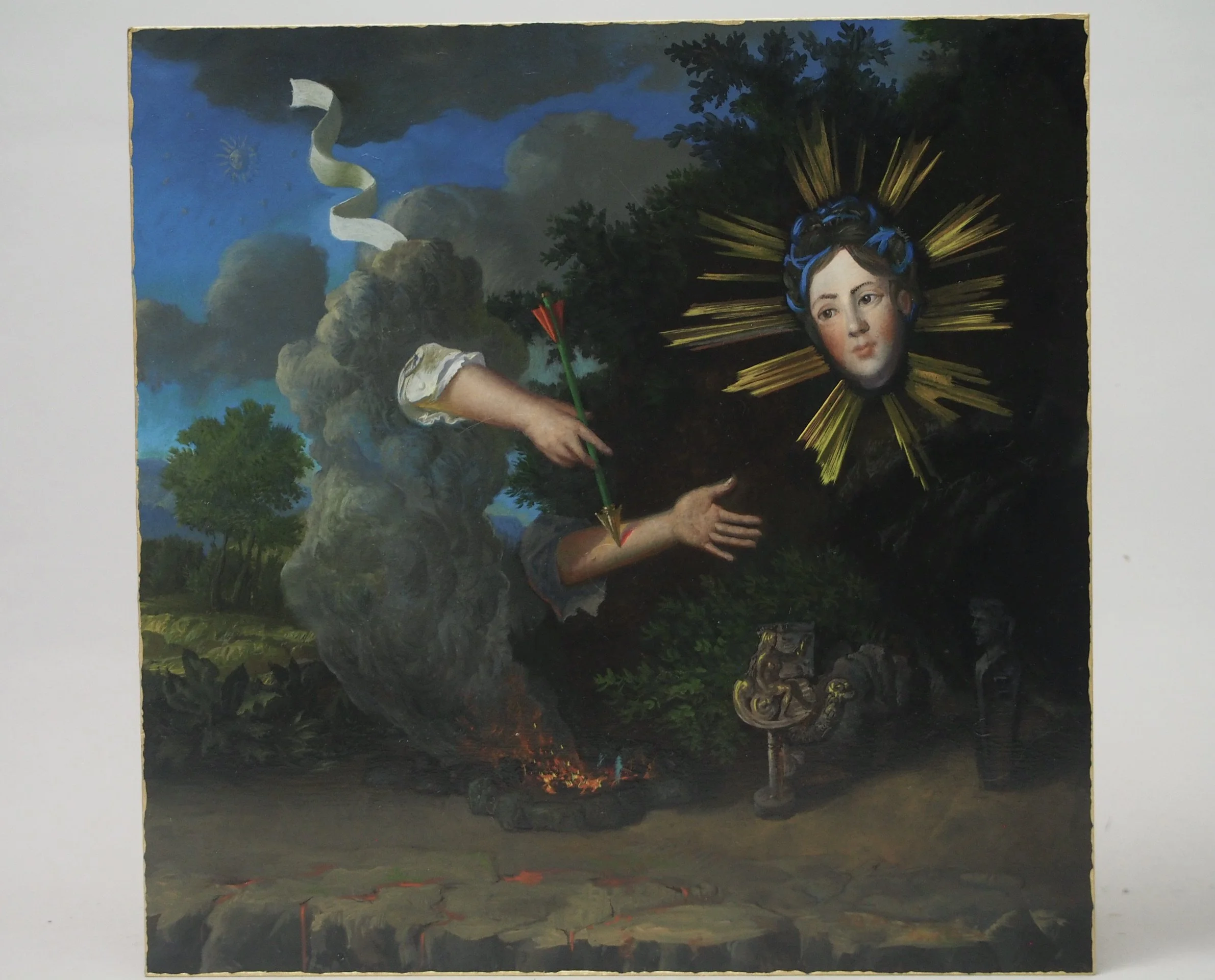
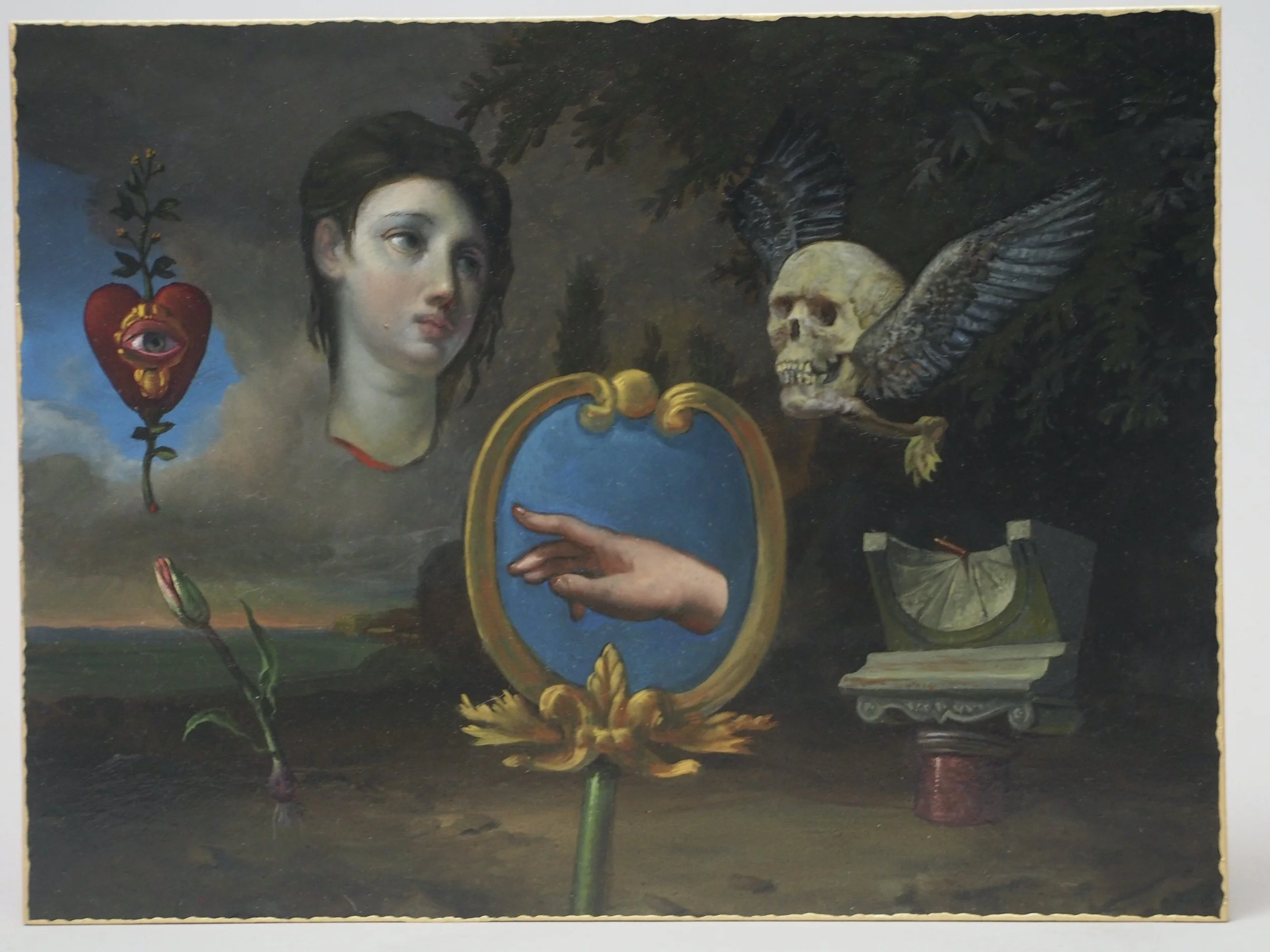
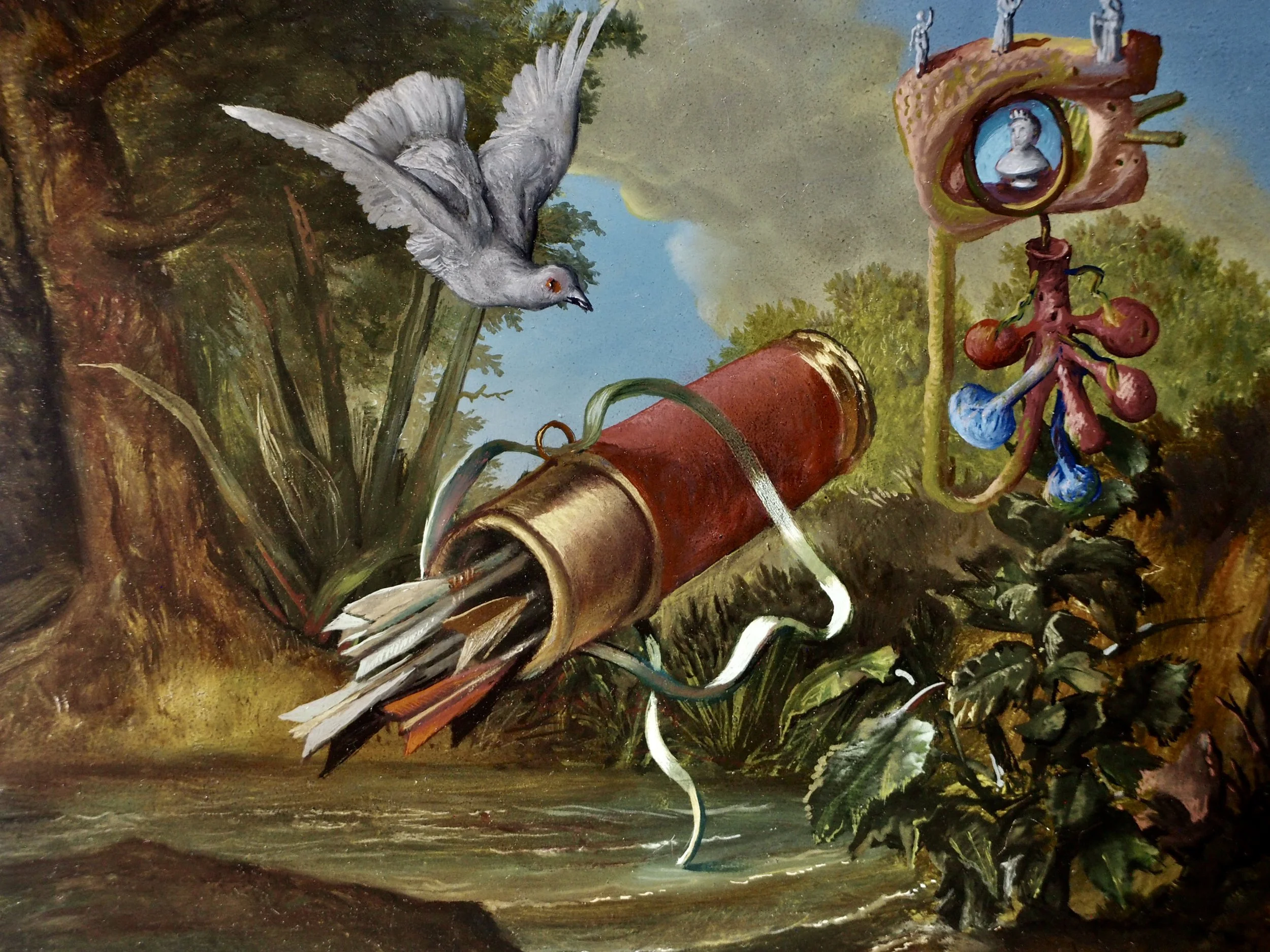
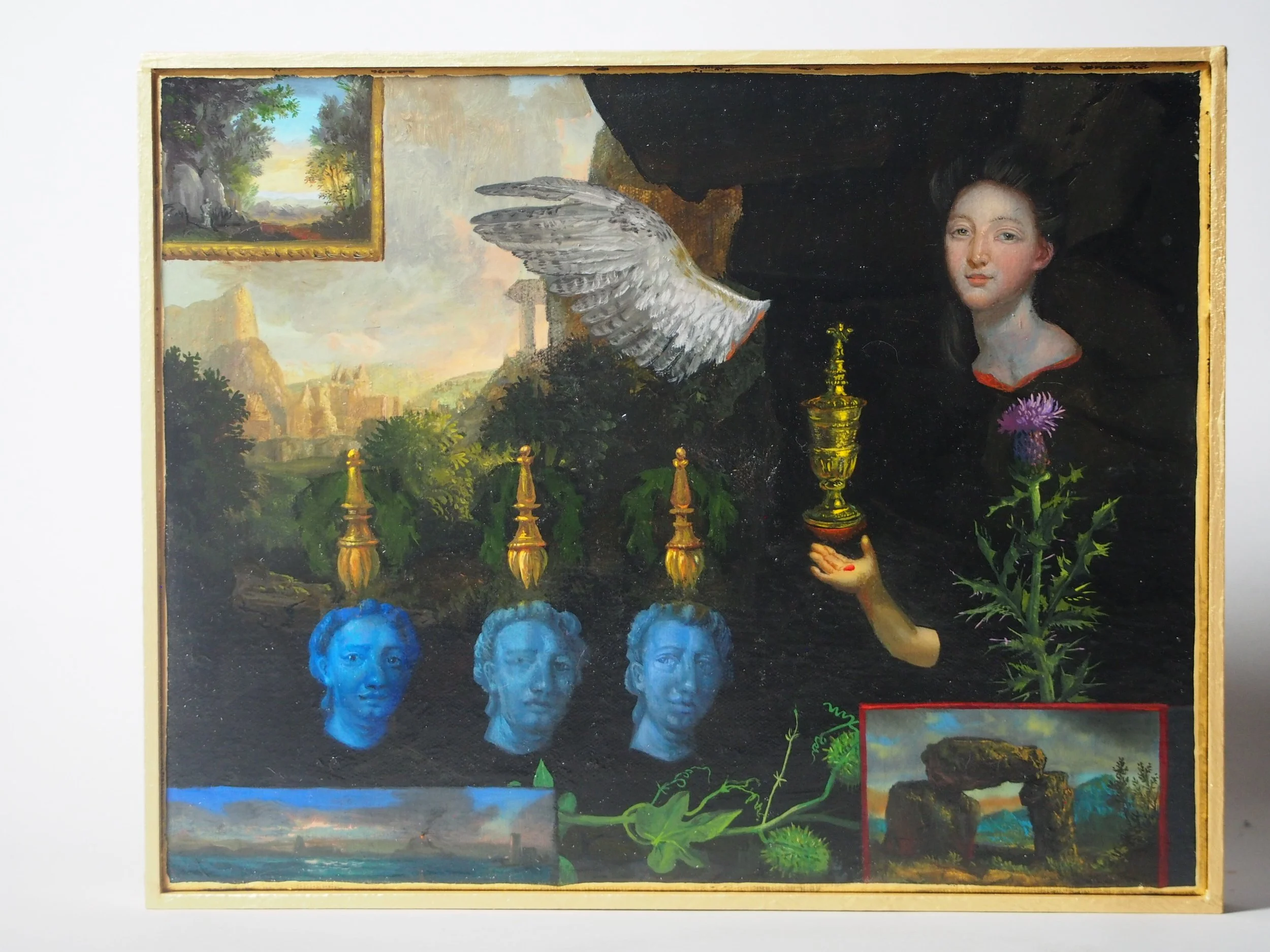
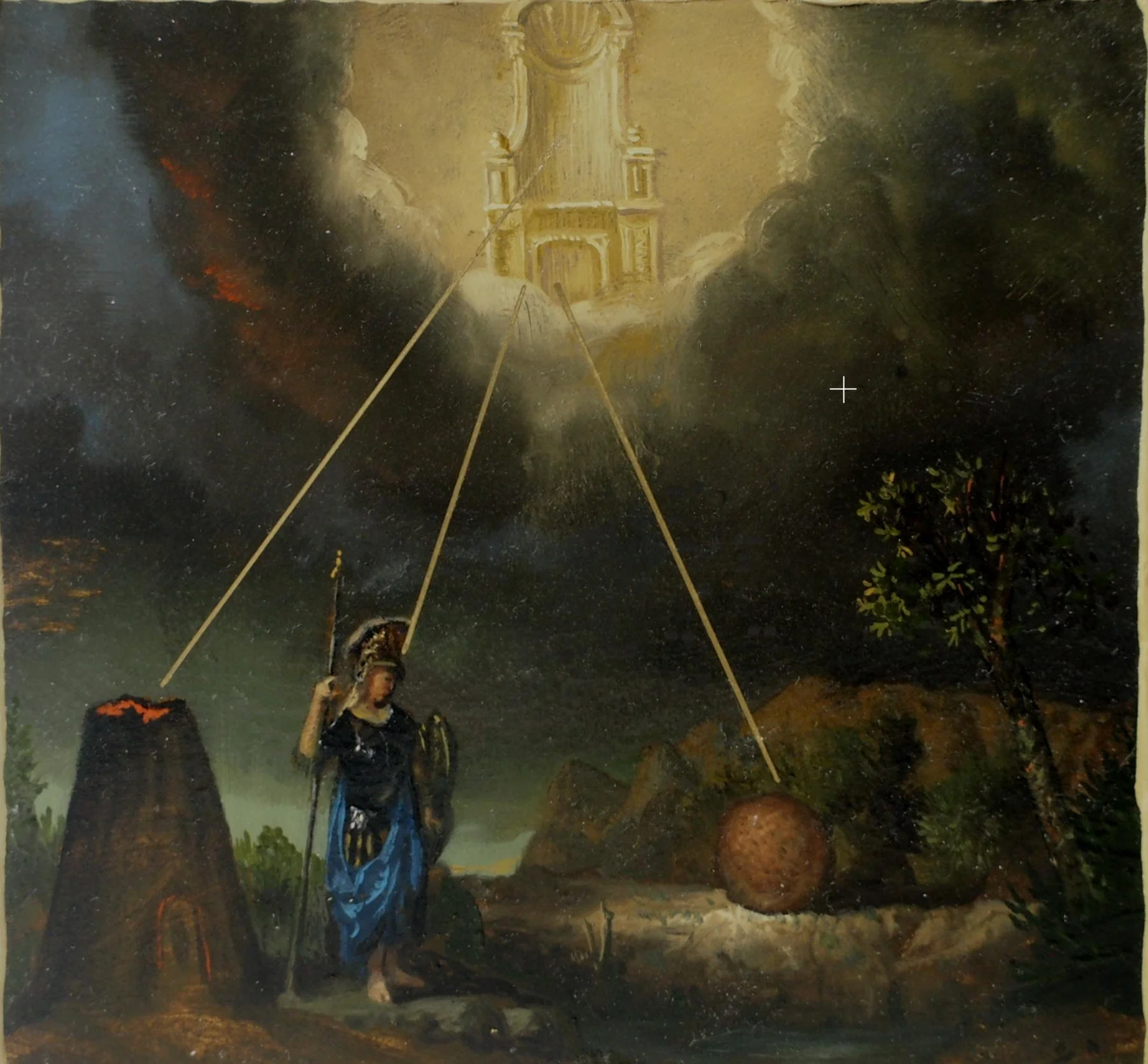
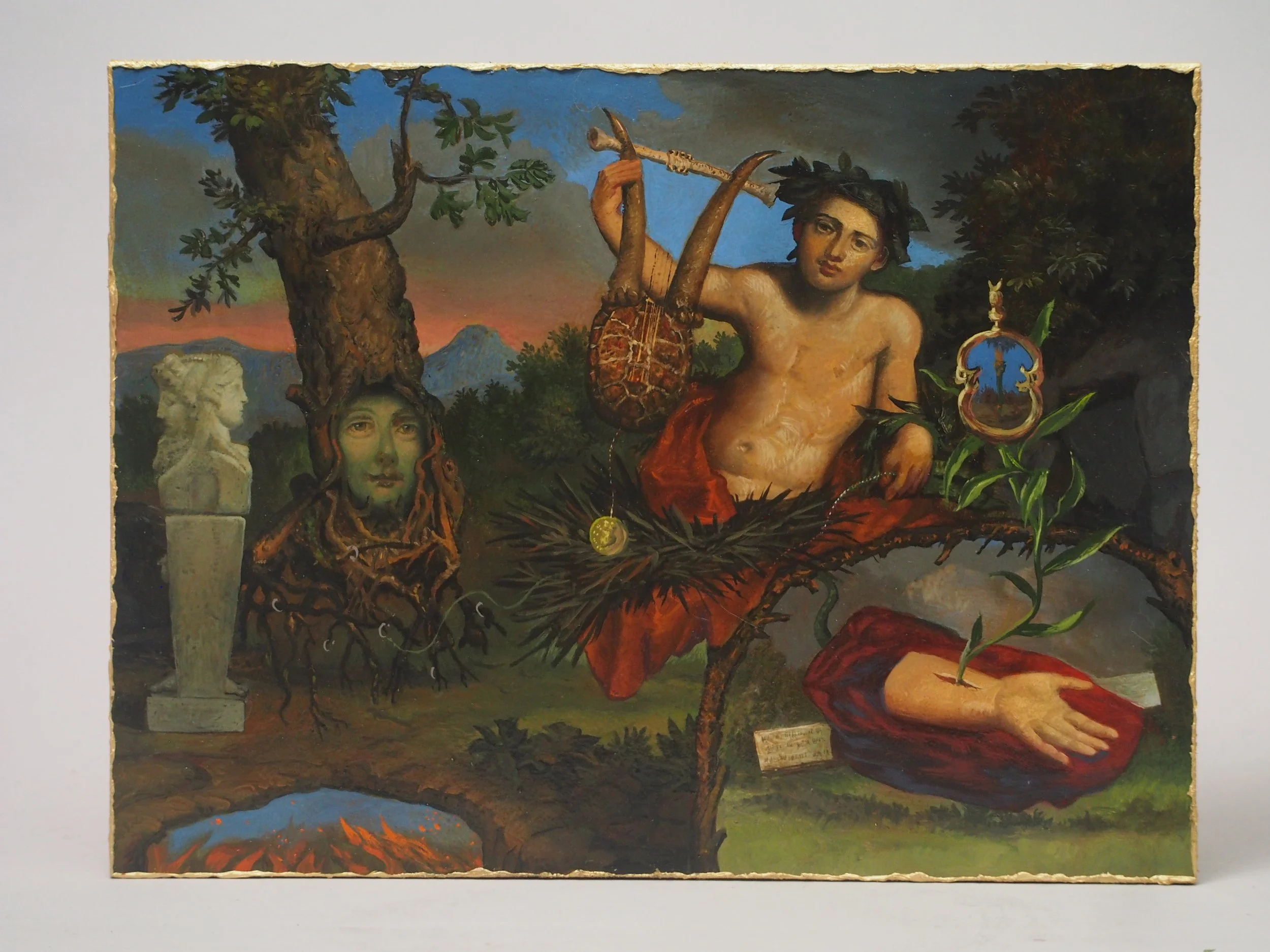
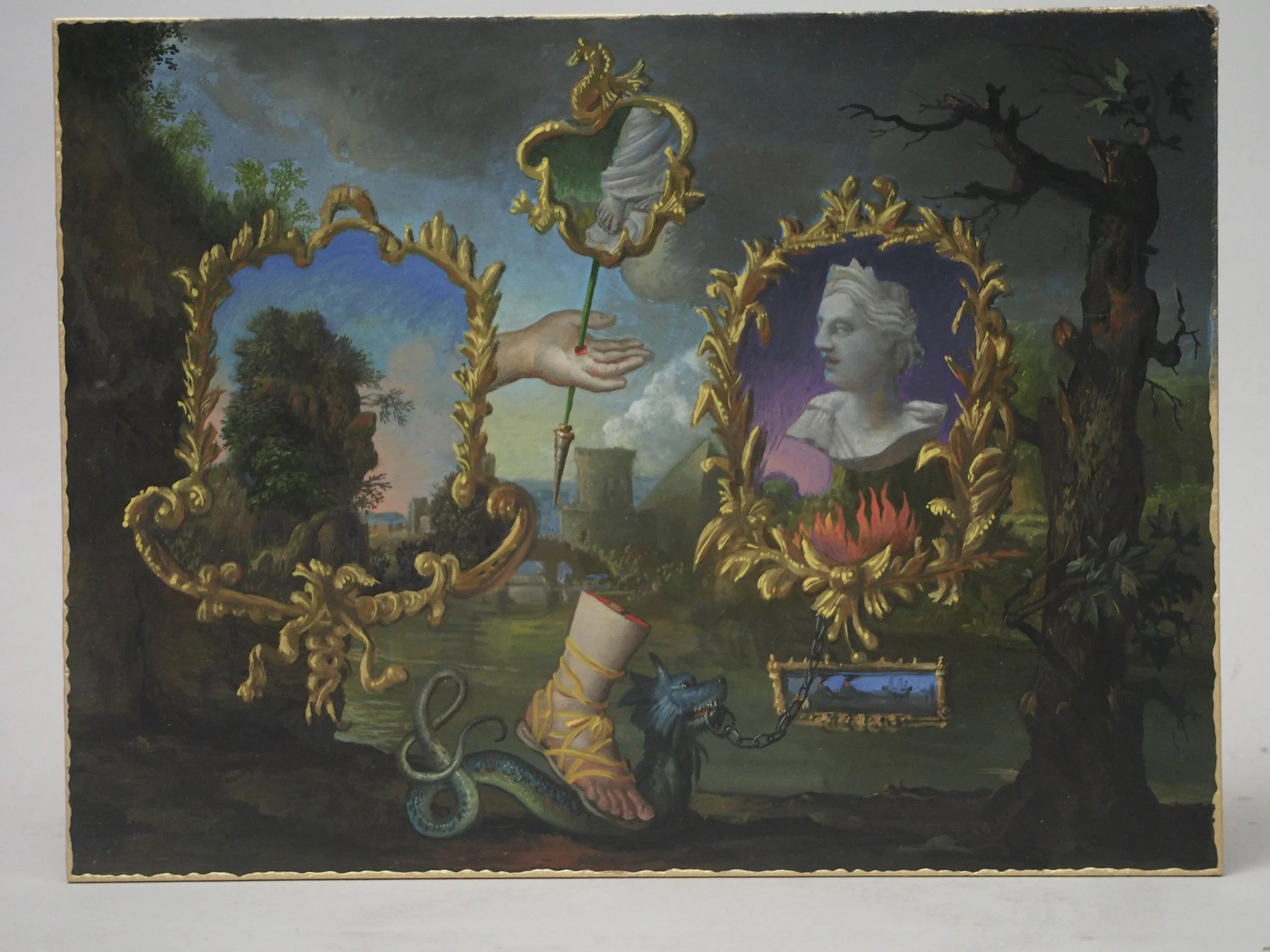
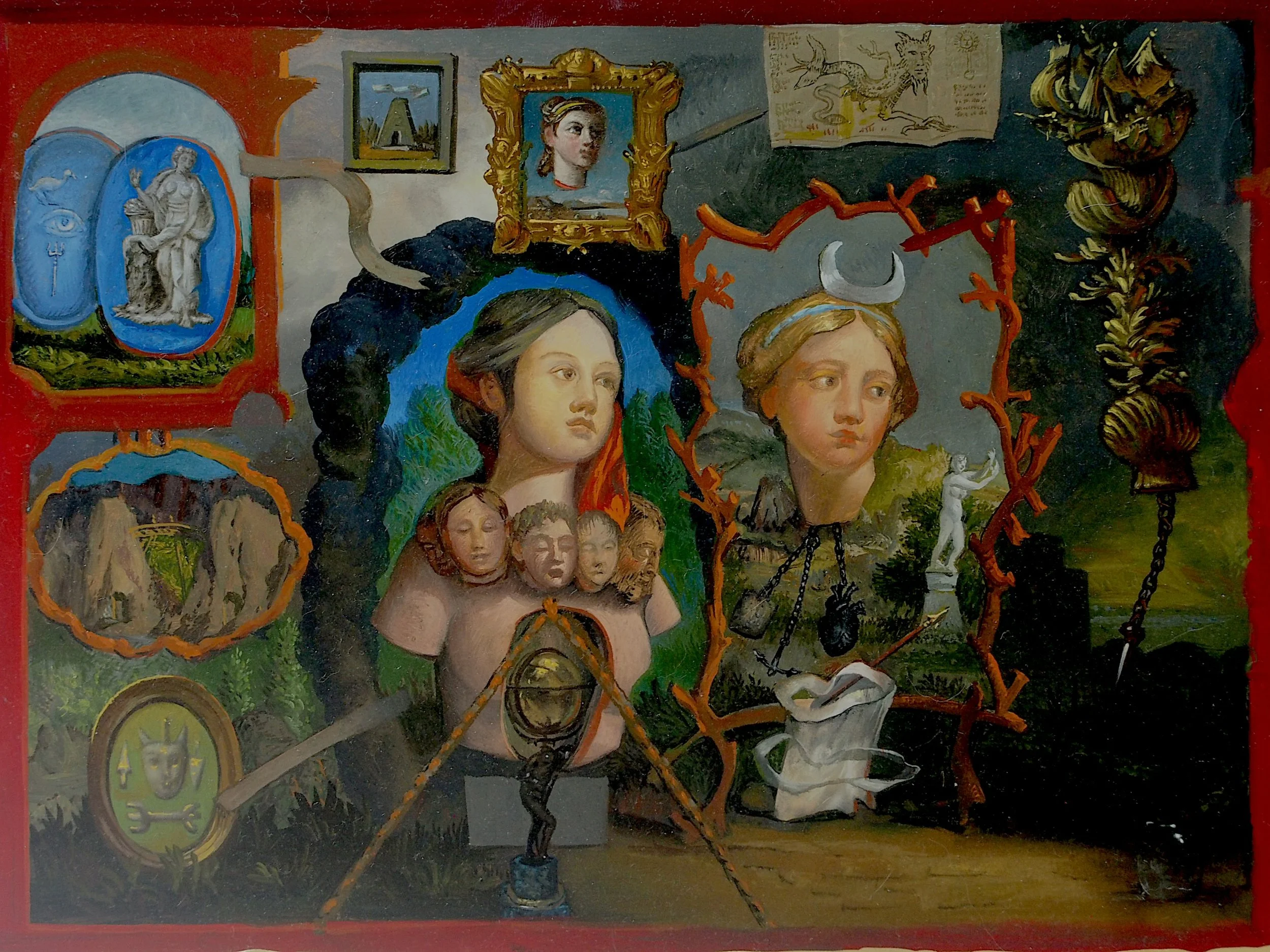
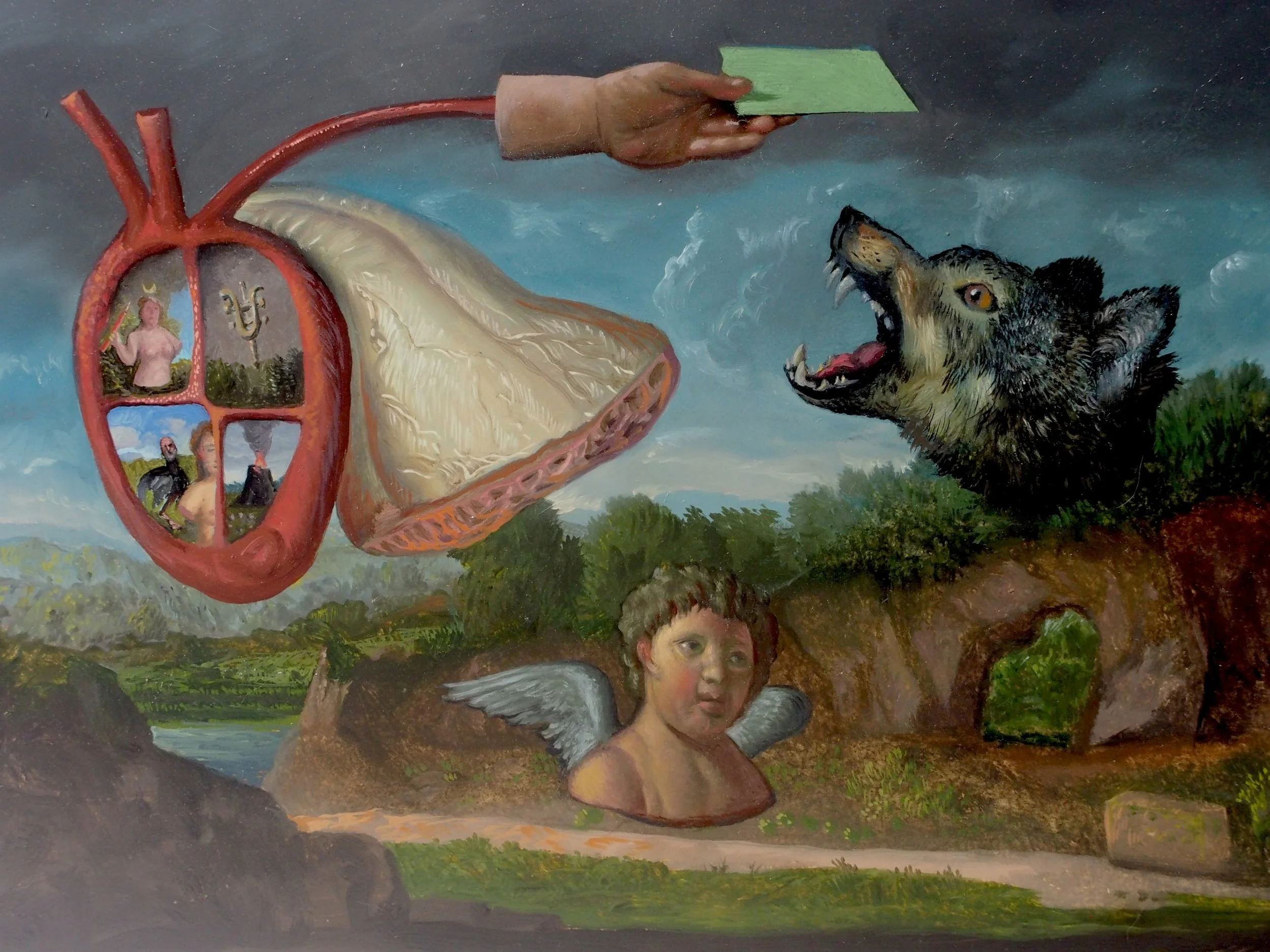
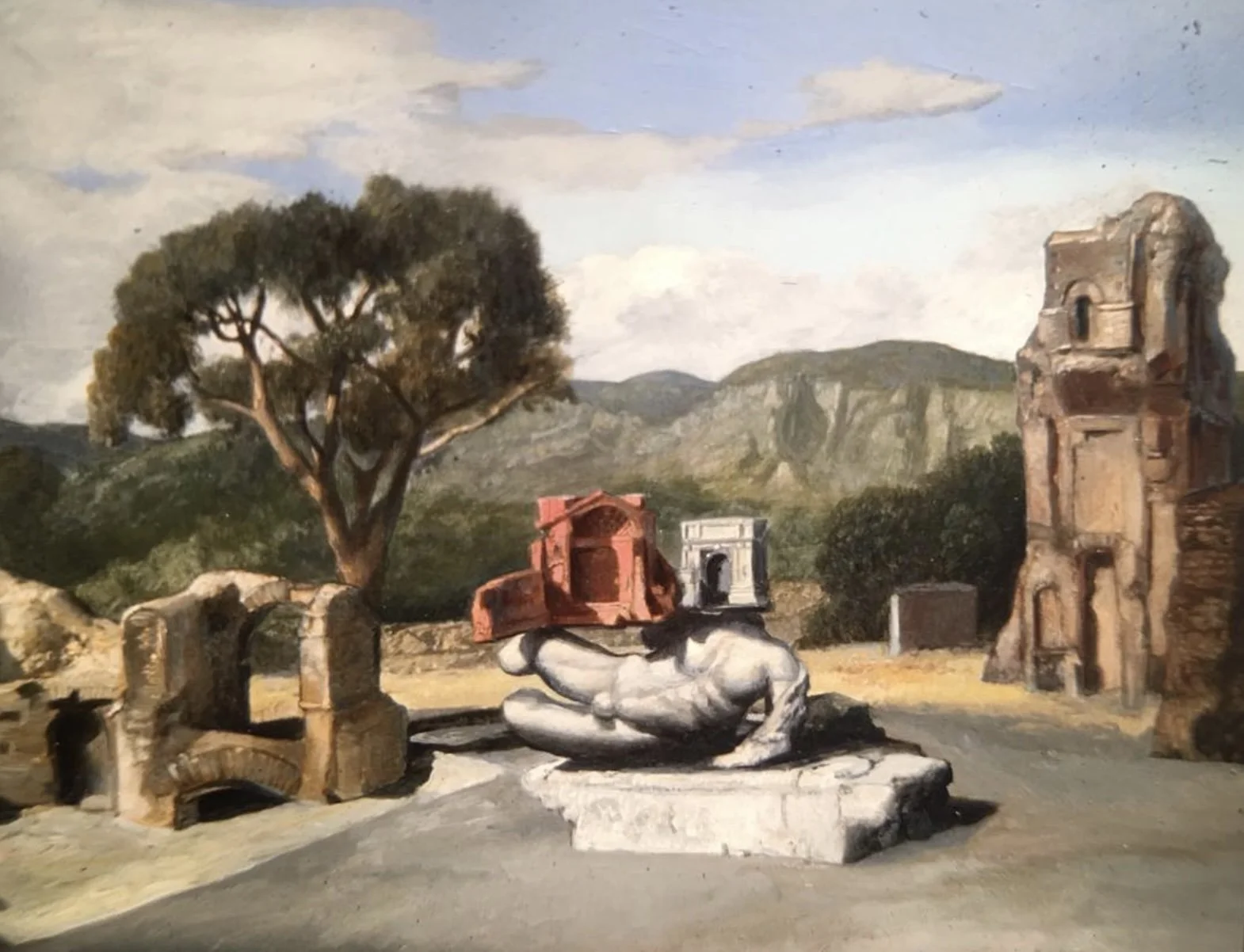
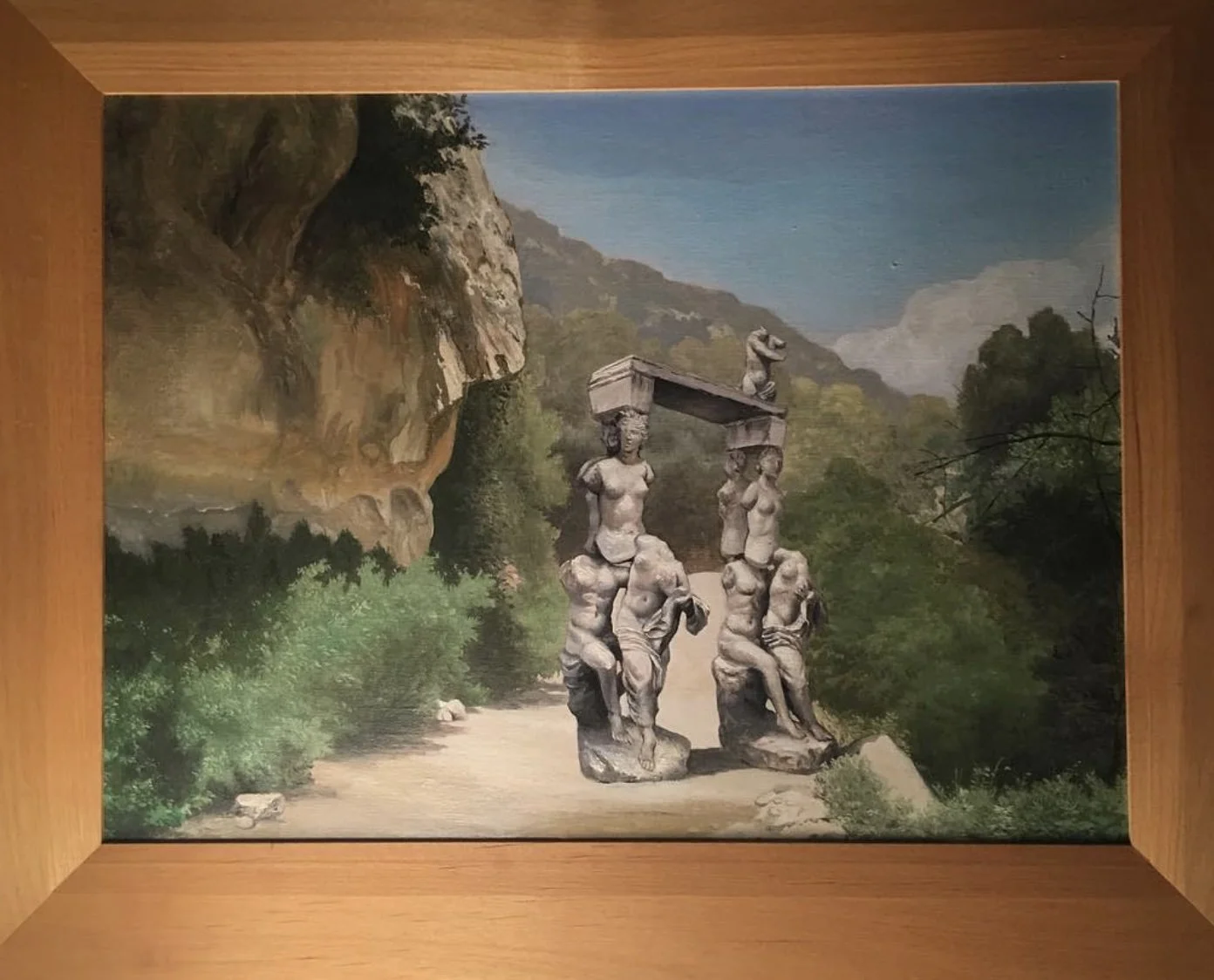
Images of recent work, some still in progress. Occasionally, details of reference materials and selections from the archive of previous periods are also shared here.
An updated list of works available for sale directly from the studio Is available by request via email to: info@griswoldliberveritatis.com or by direct message on Instagram: @liberveritatis
1988 - Present
An assortment of John Griswold’s works on paper, ranging from preparatory sketches in various media to finished compositions. Some drawings feature analog collaged elements. Interpretations of iconic emblematic images, drawn from his collection of historical volumes, fill numerous bound sketchbooks.
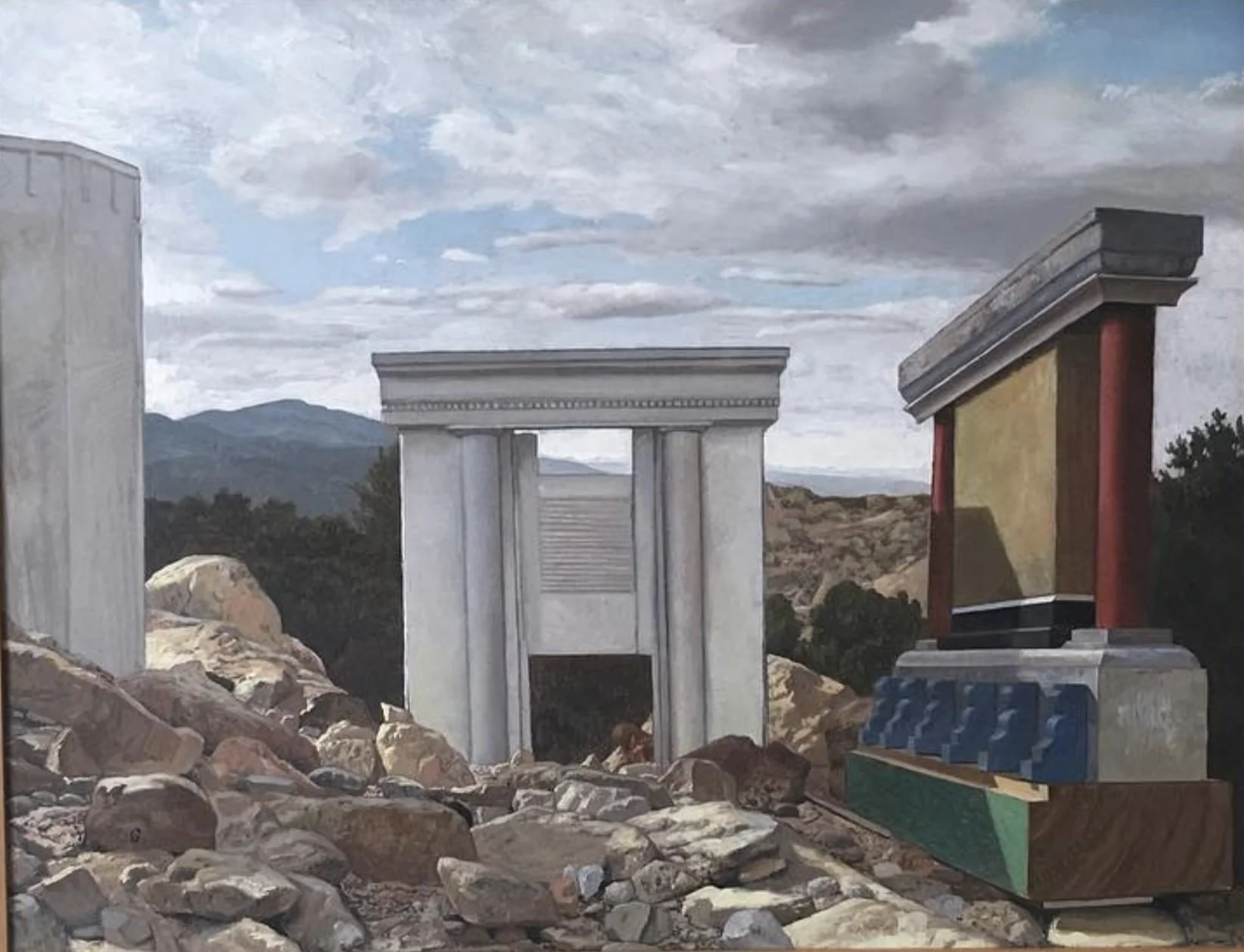
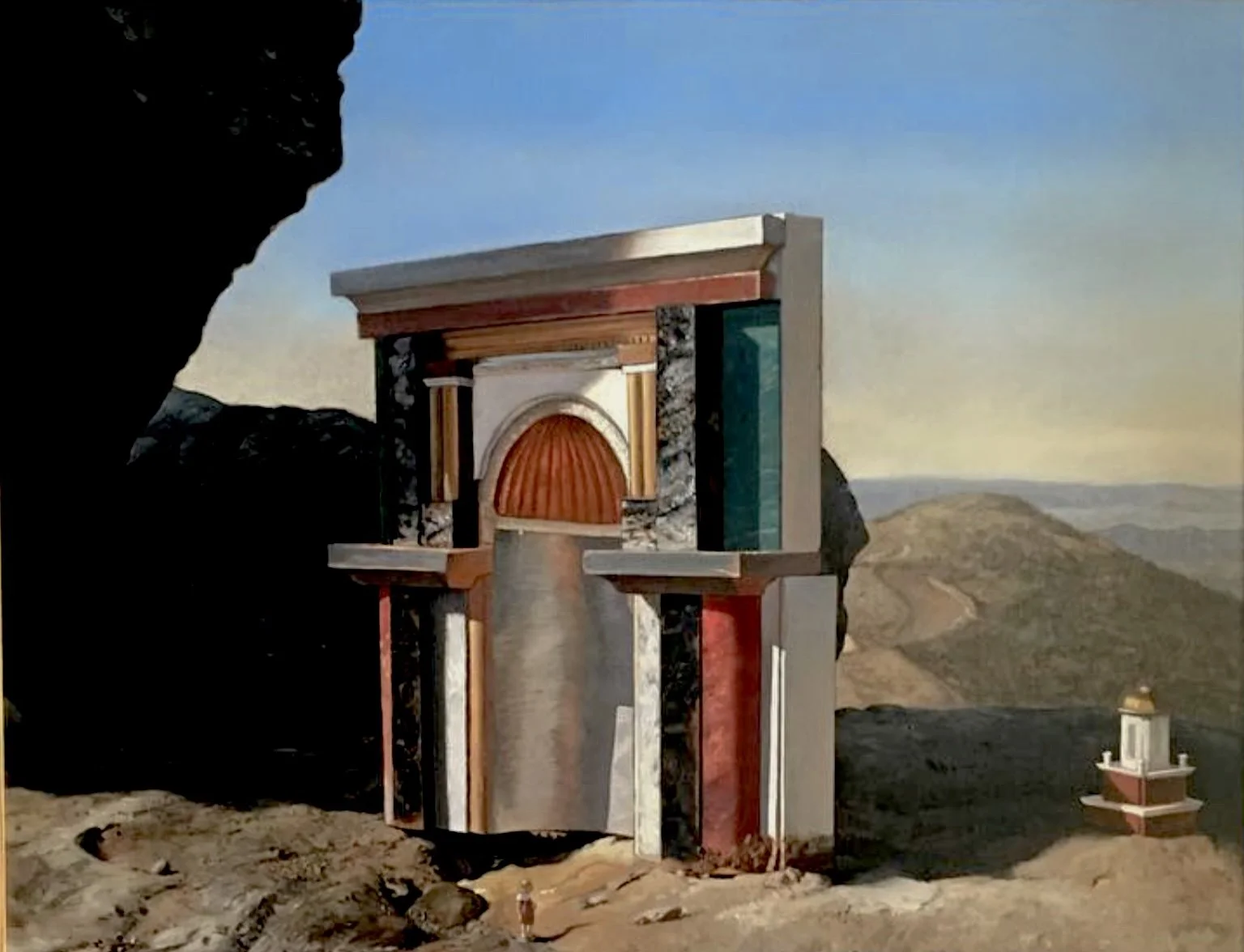
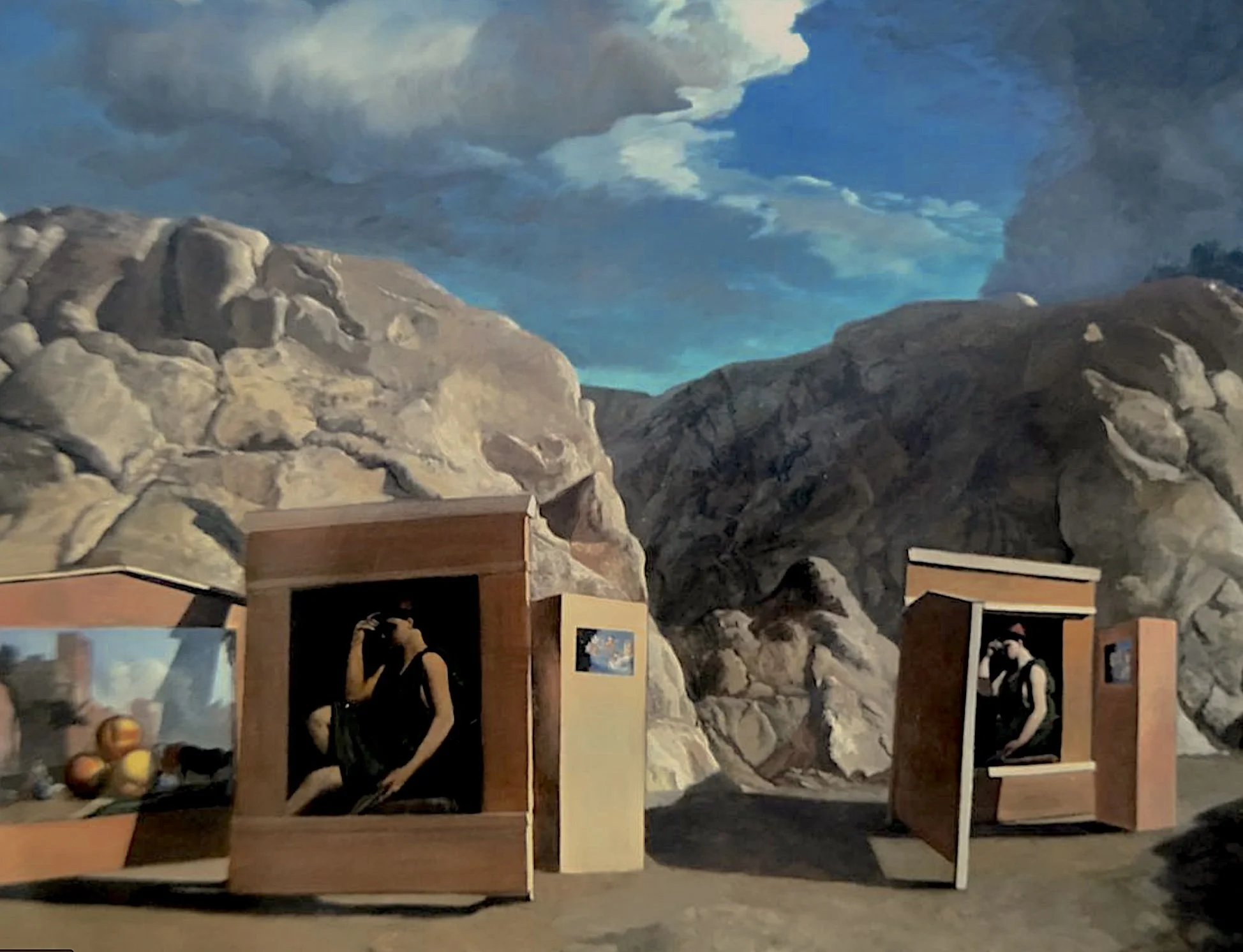
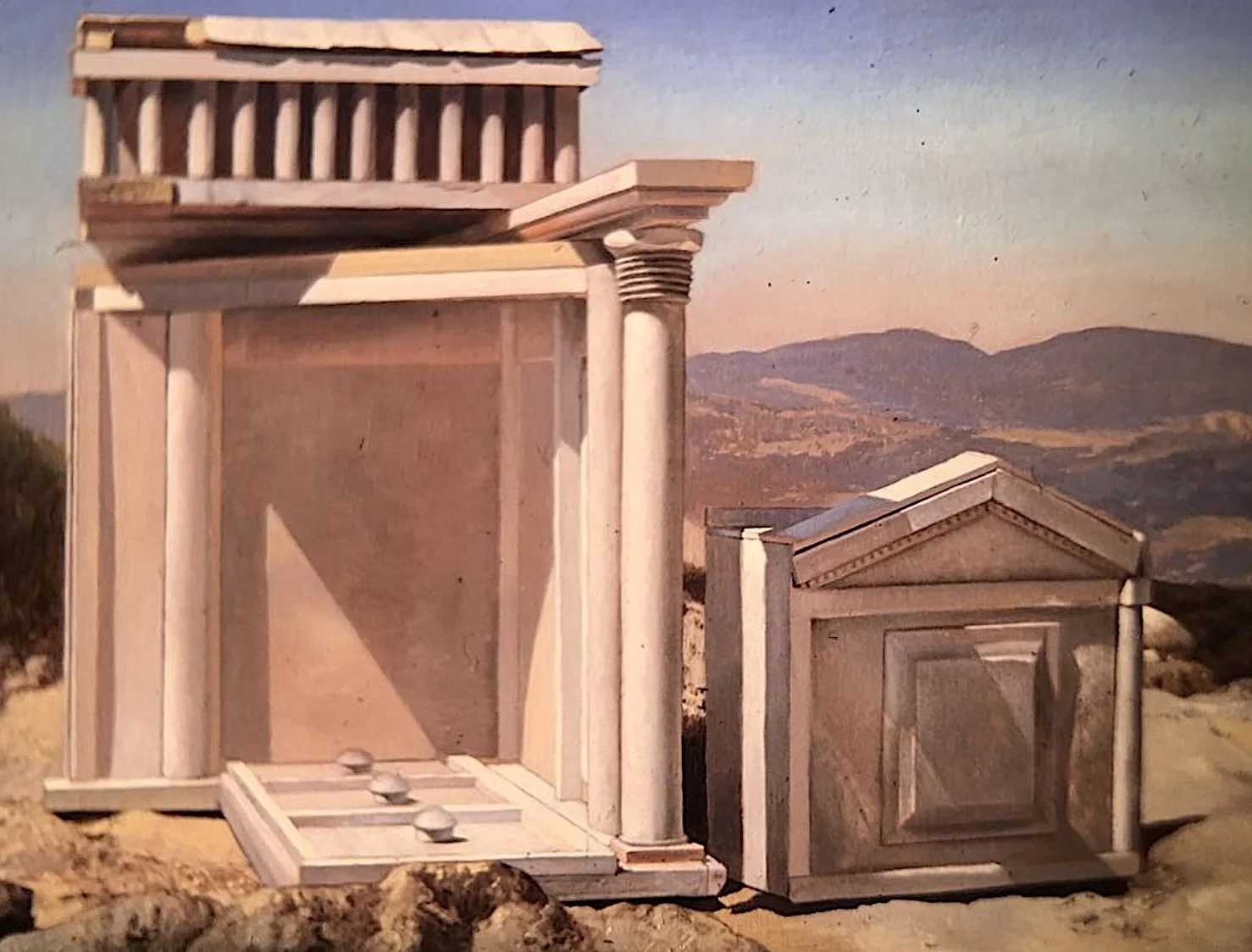
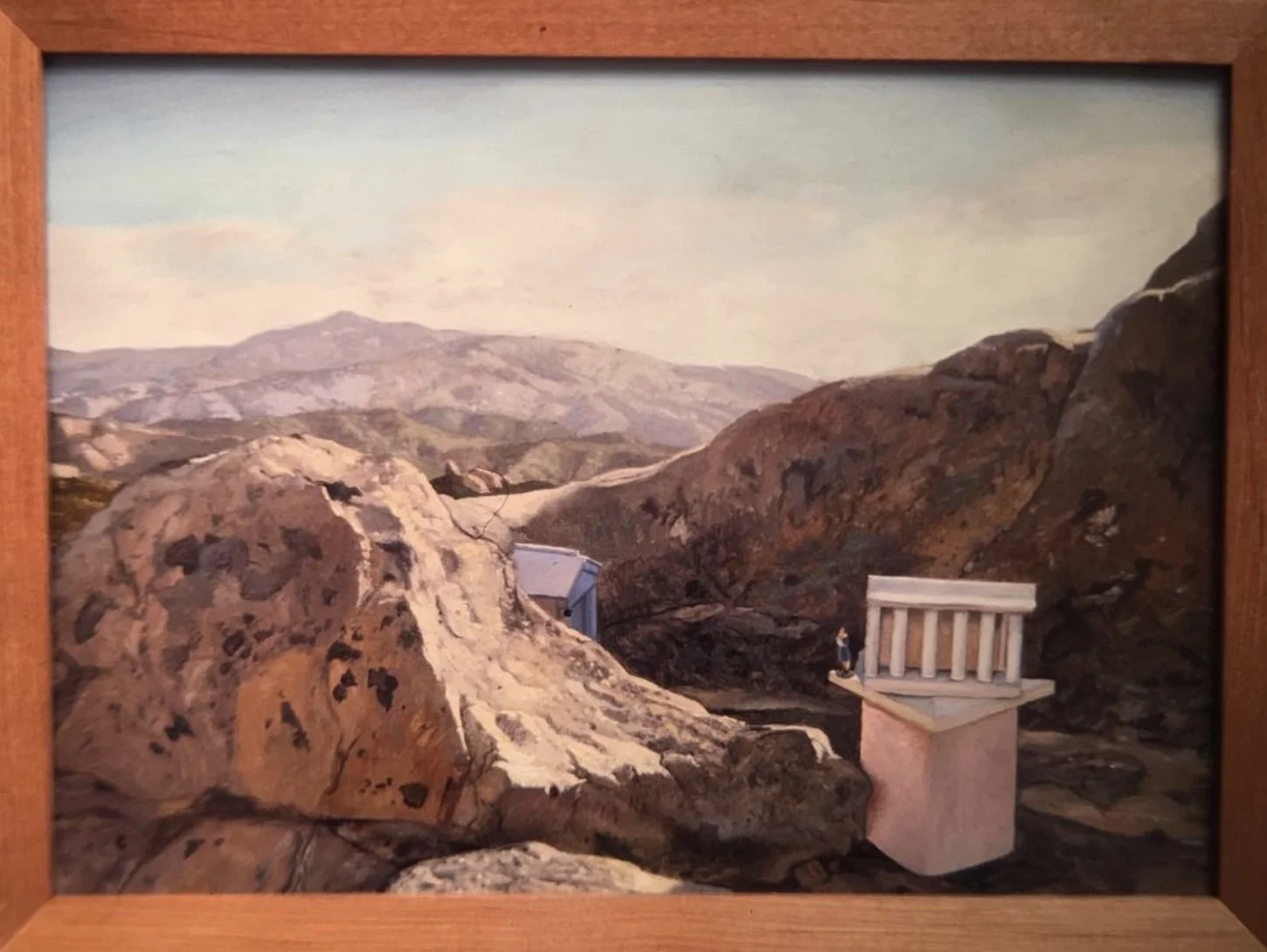
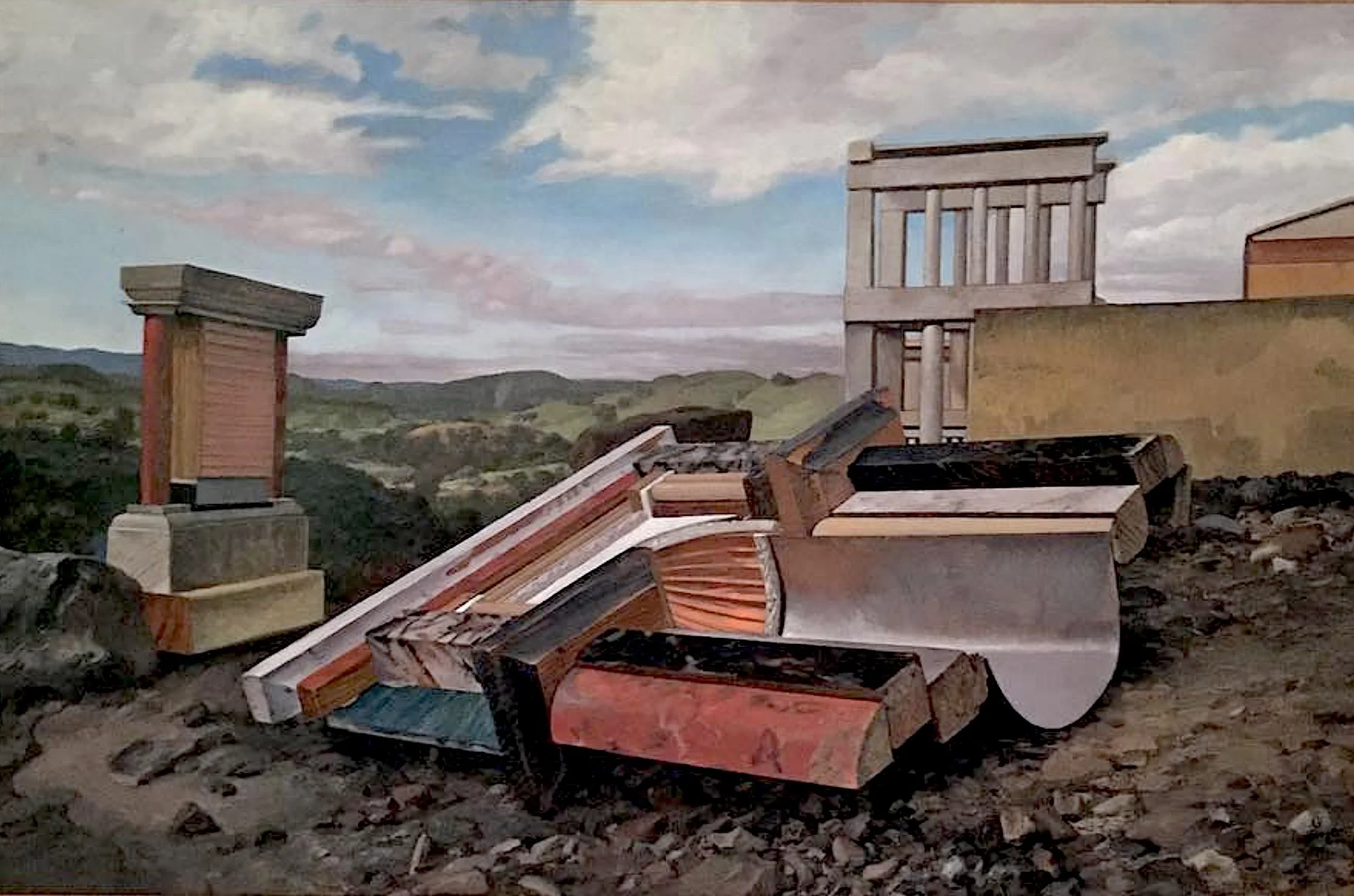
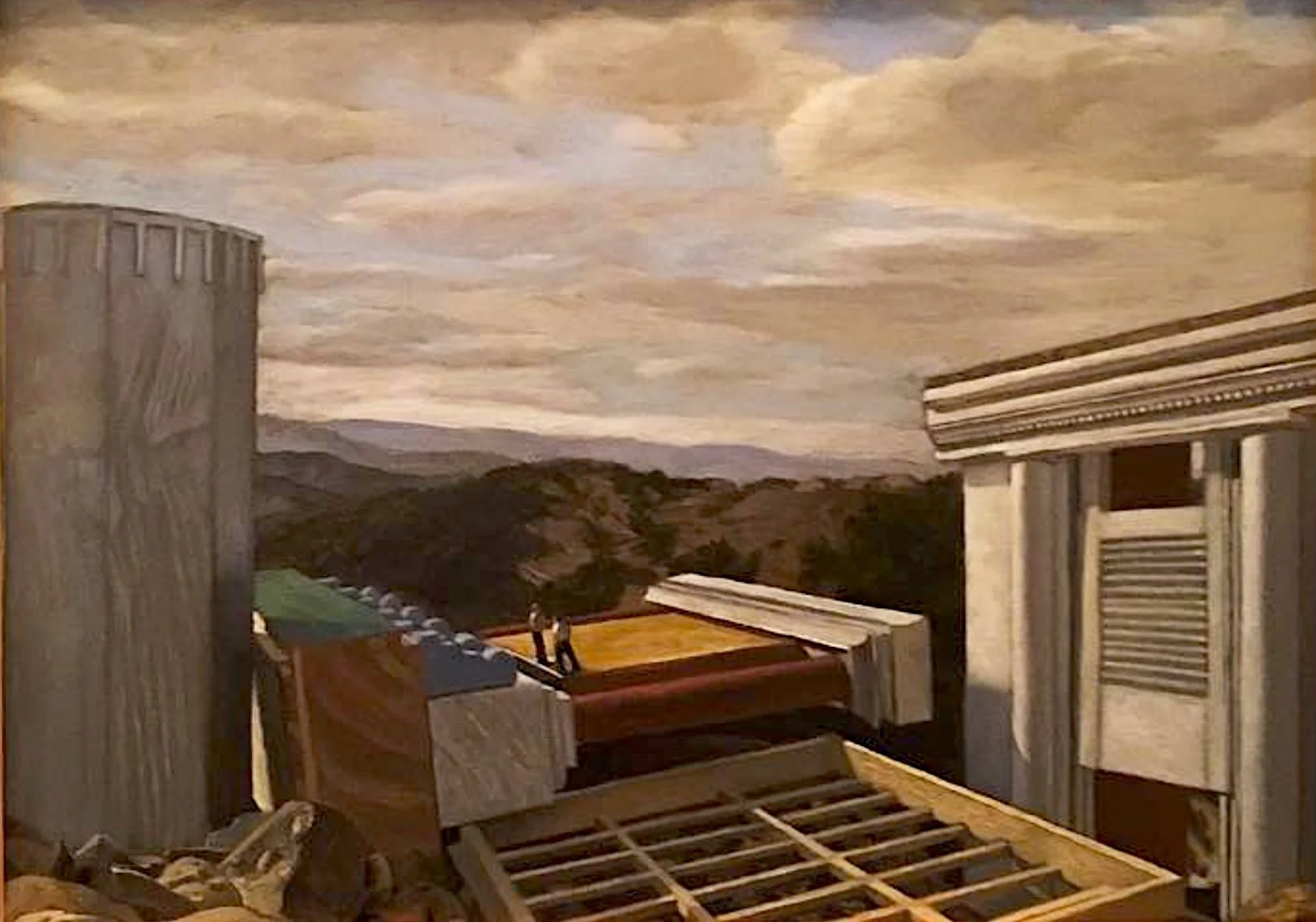
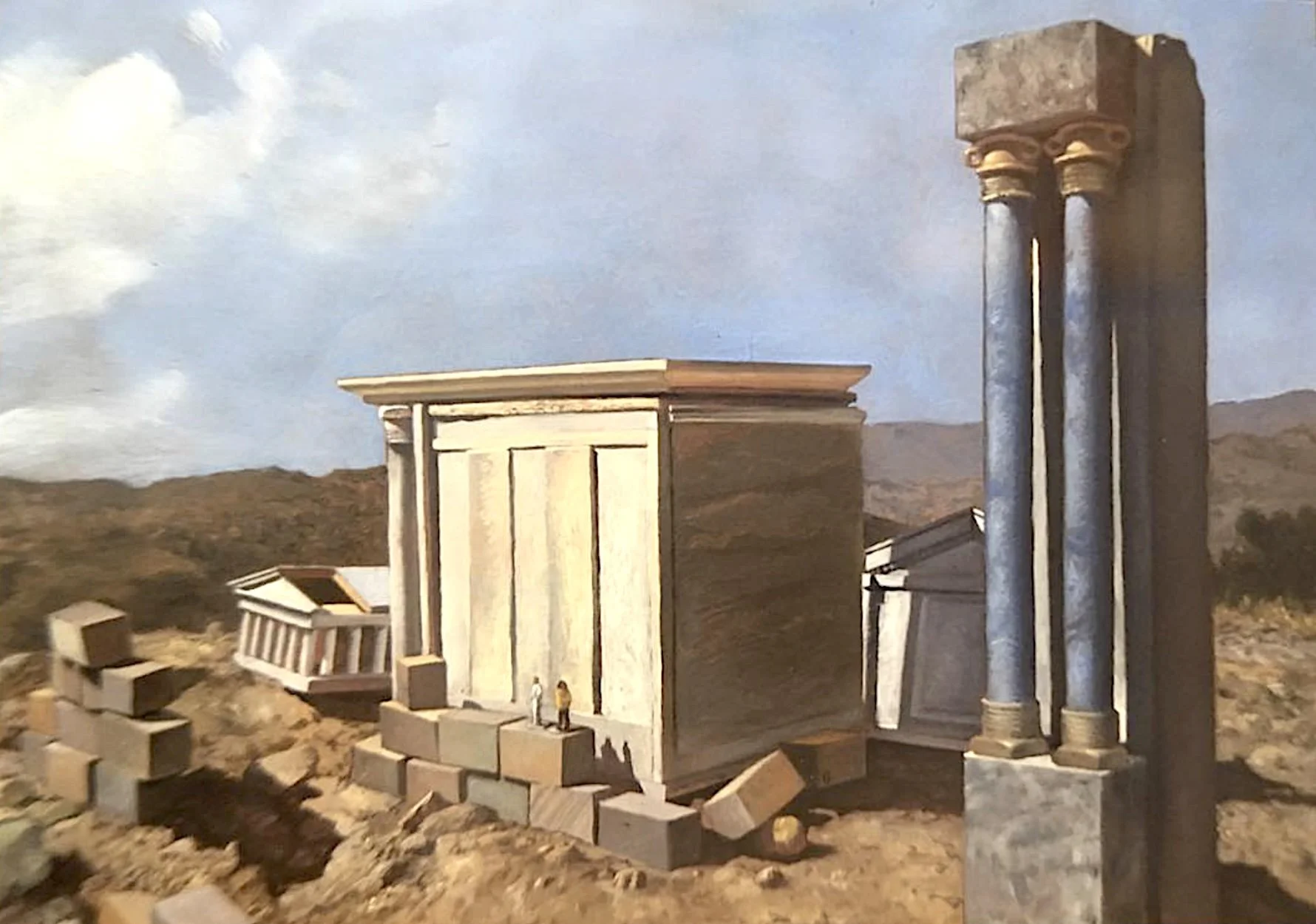
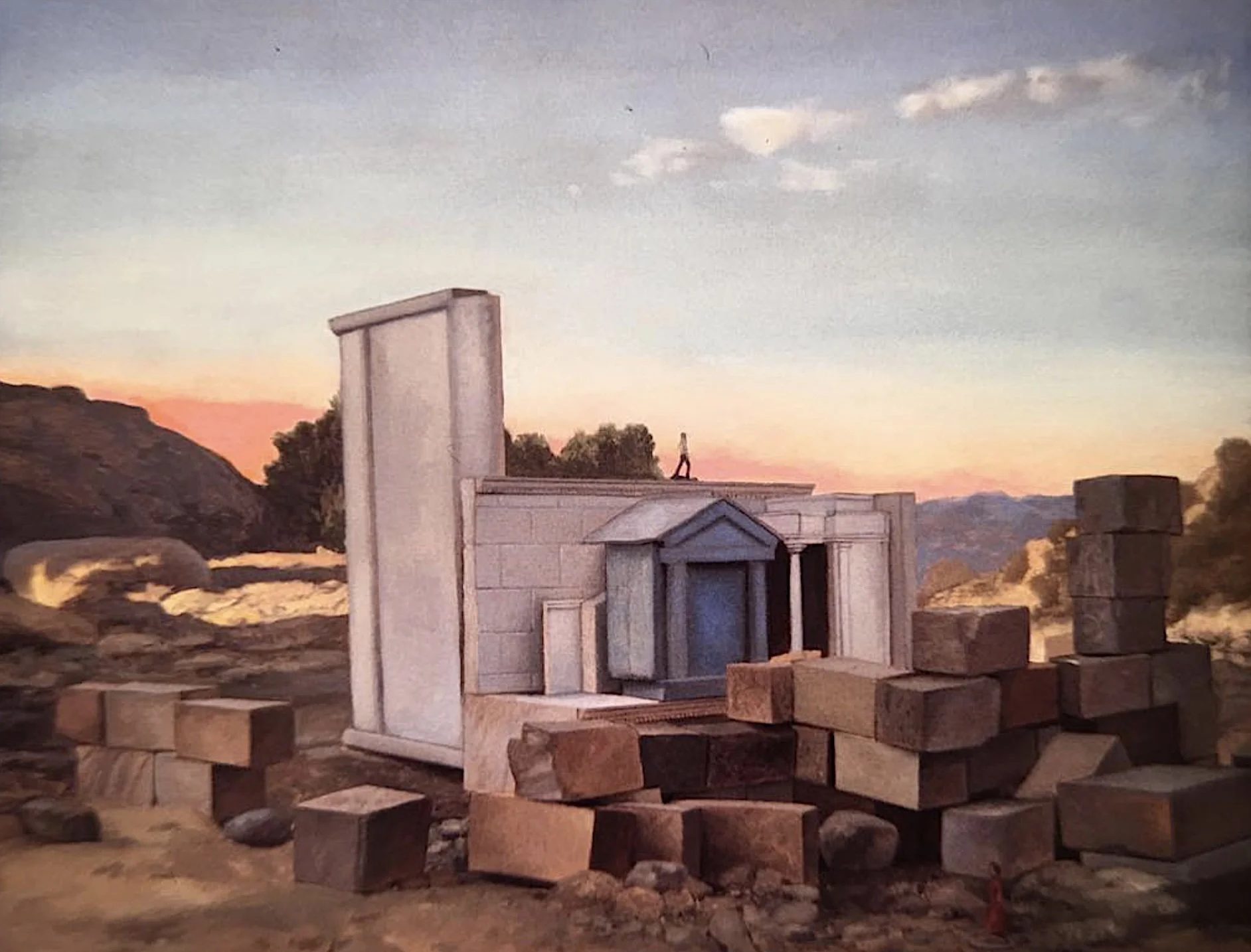
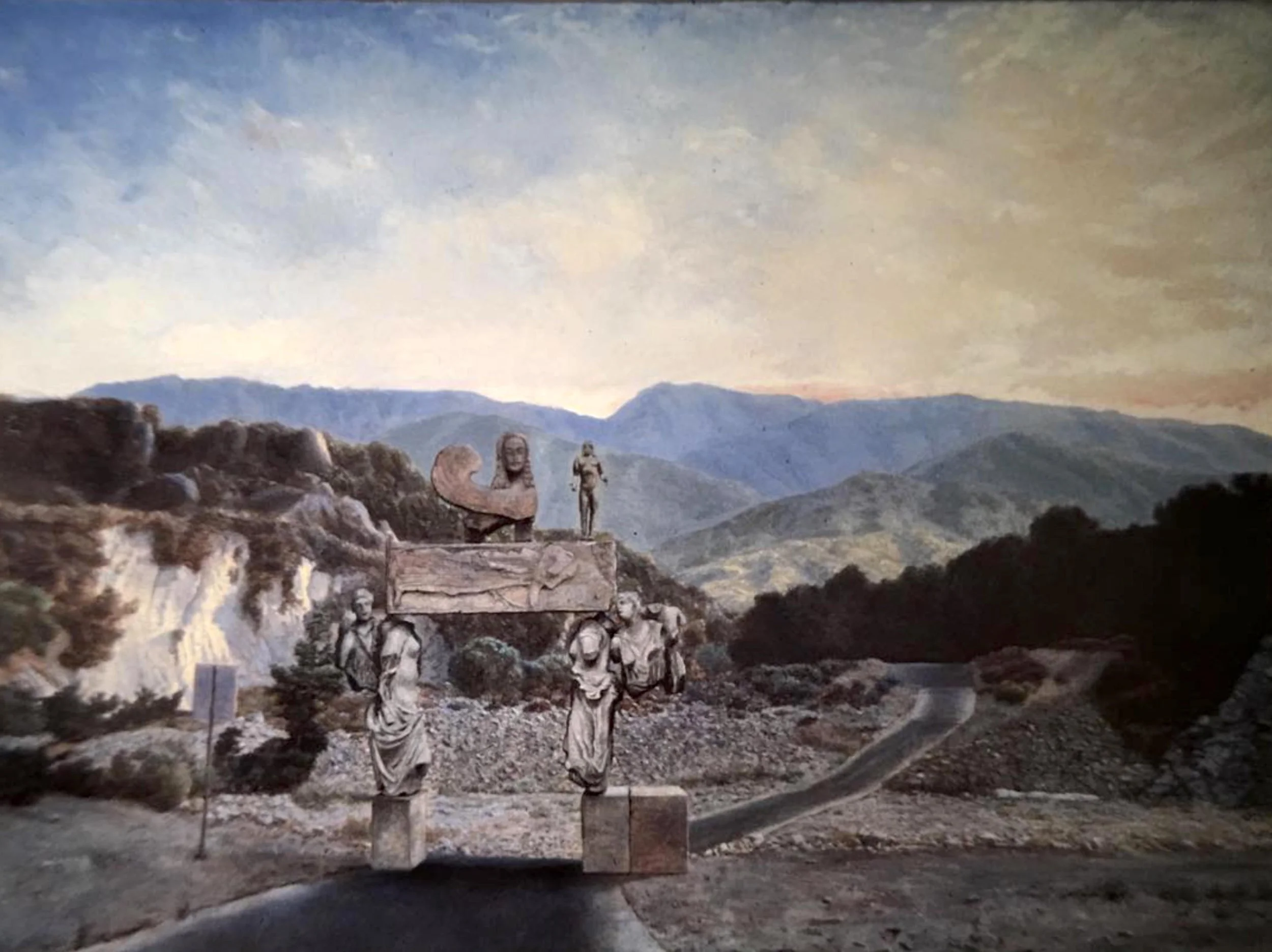
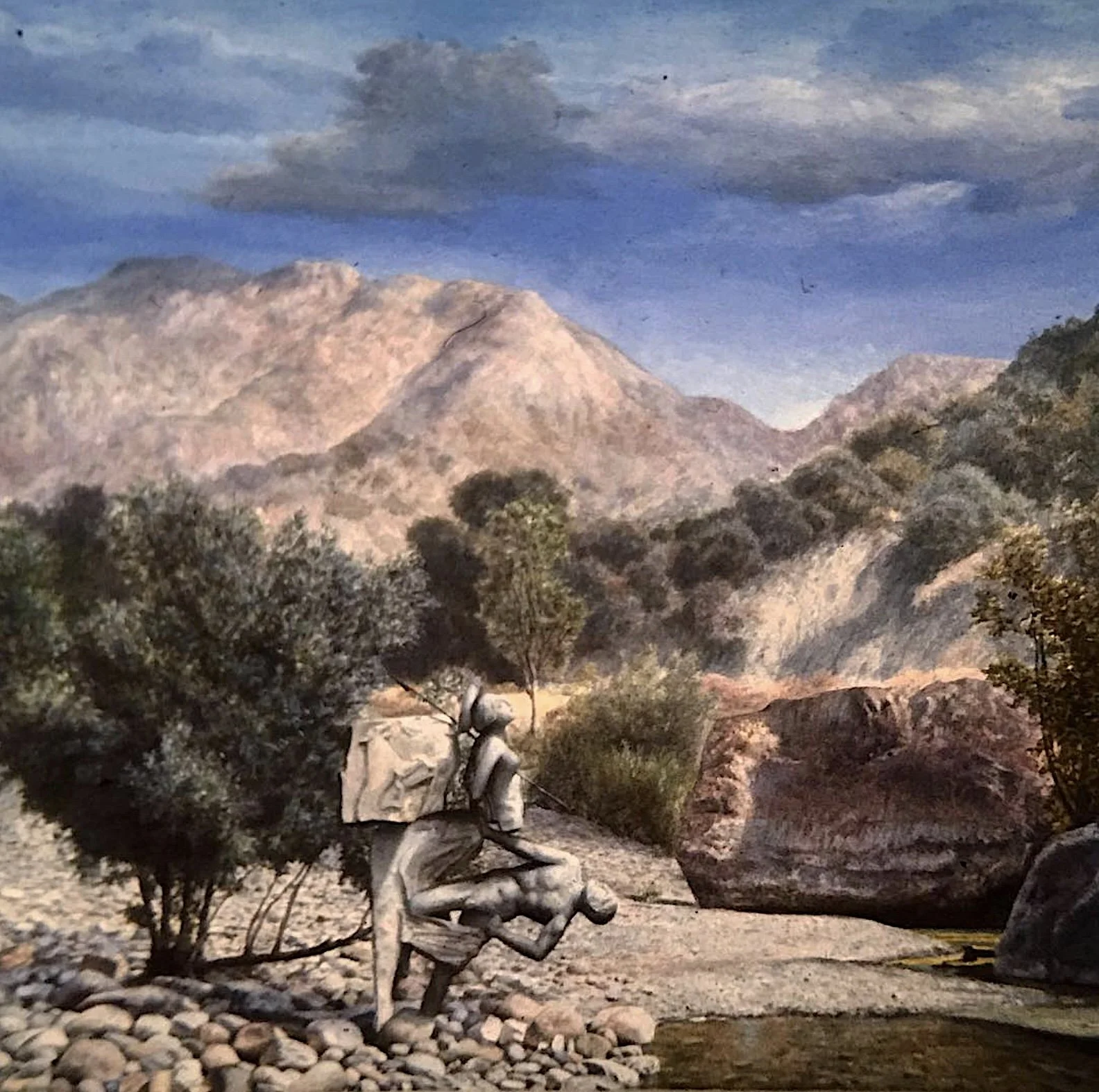
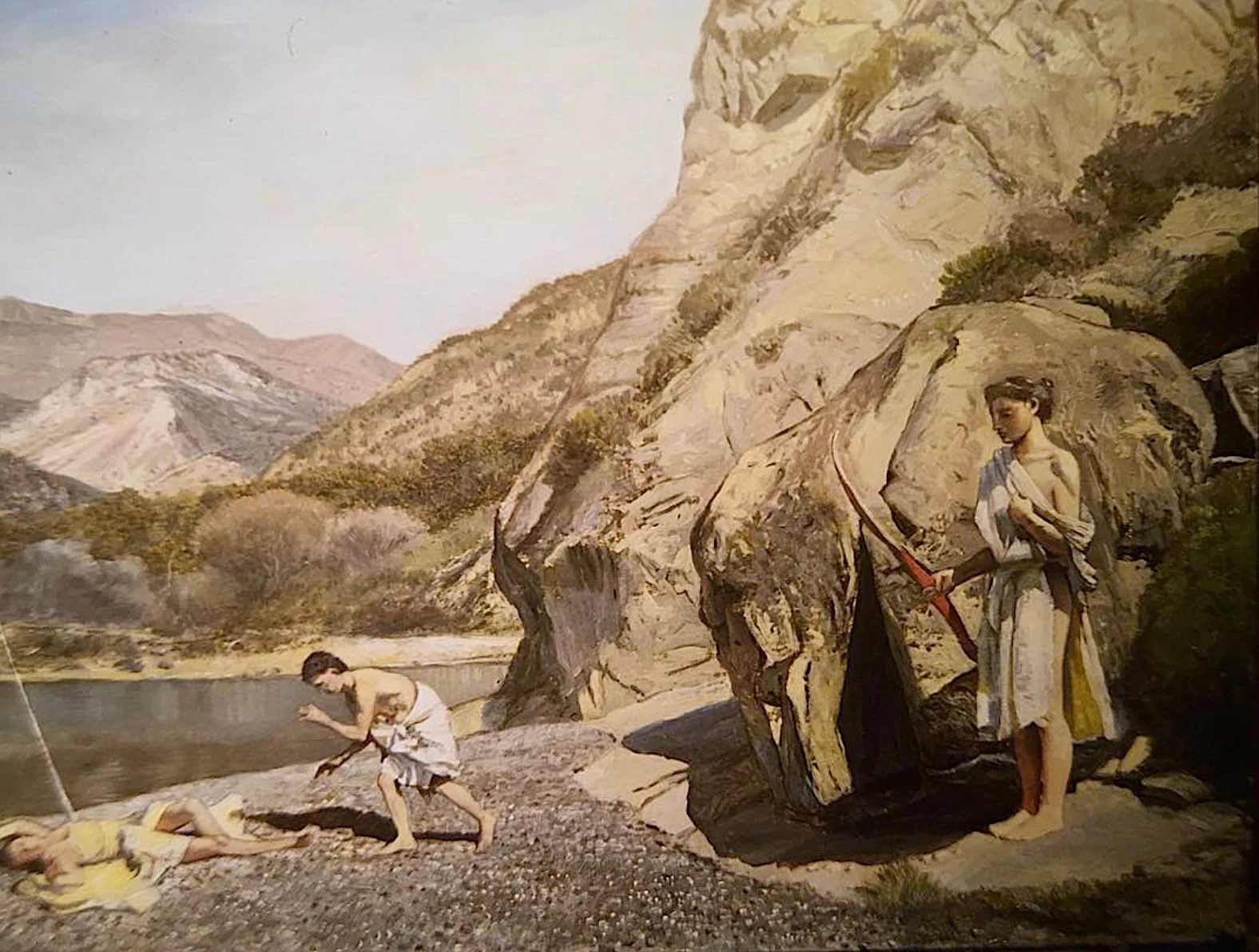
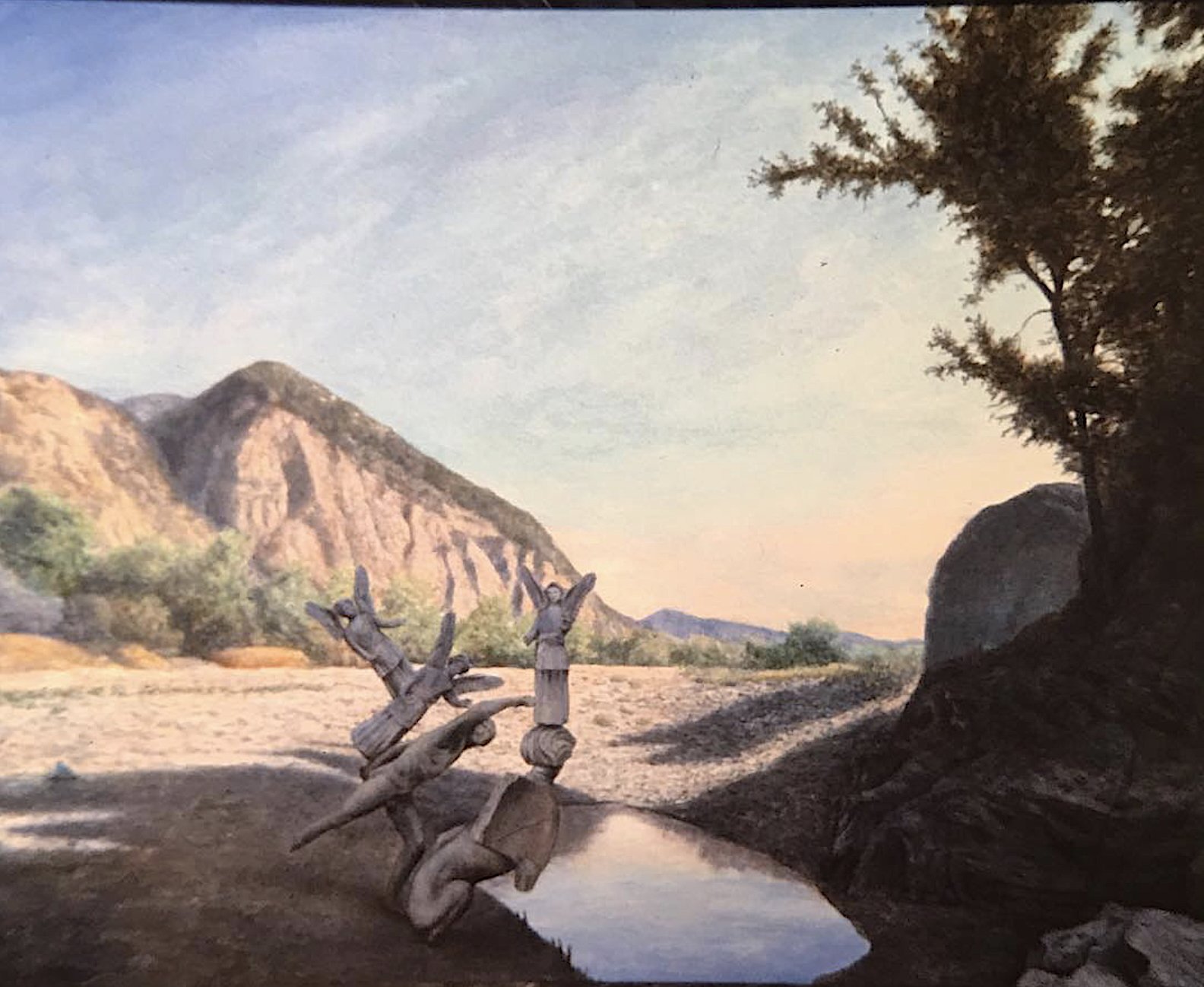
Sacred Precincts: John Griswold Paintings, Tatistcheff Gallery, Santa Monica, California, curated by Terrence Rogers, March 30-April 29, 1989
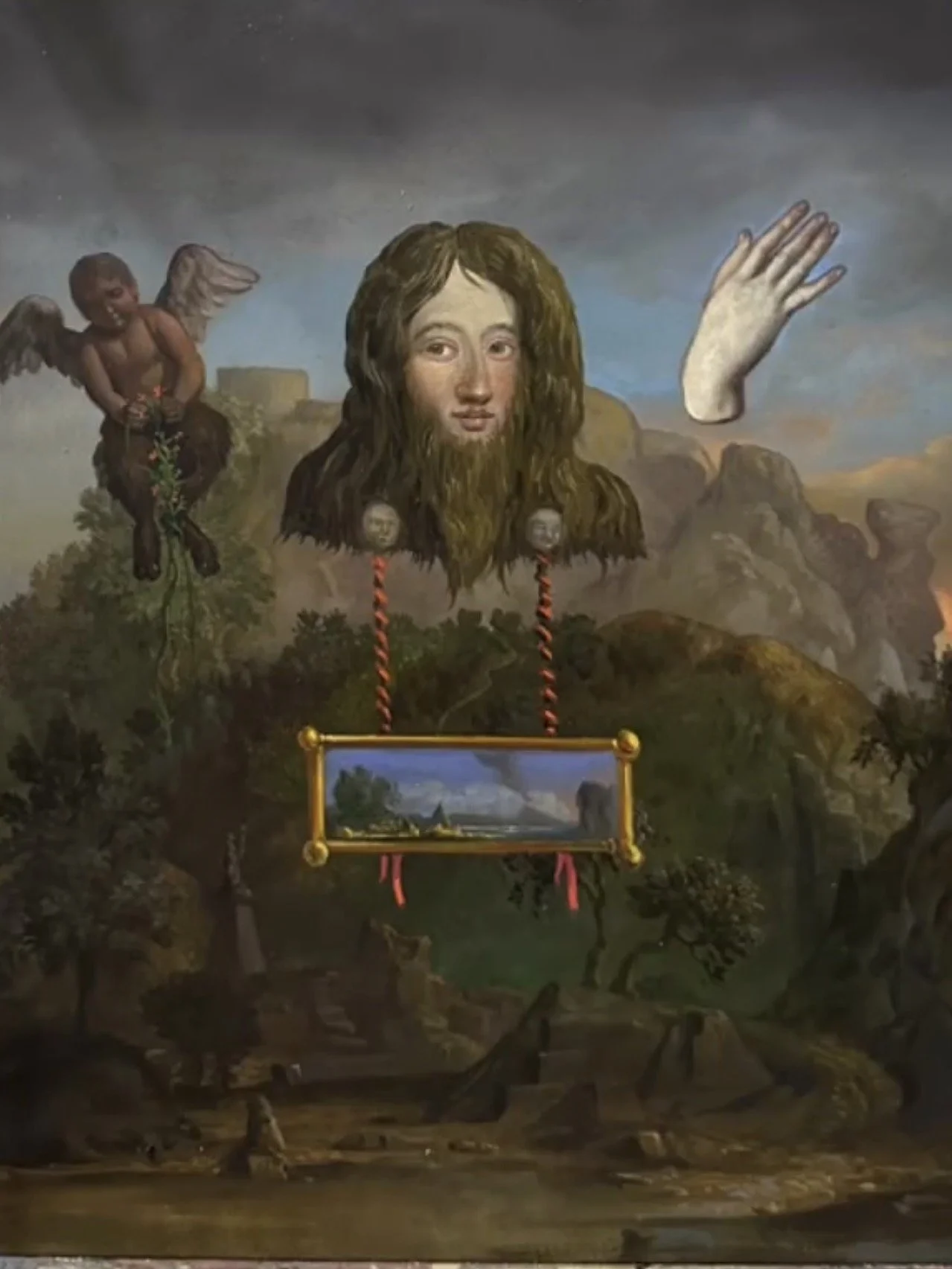
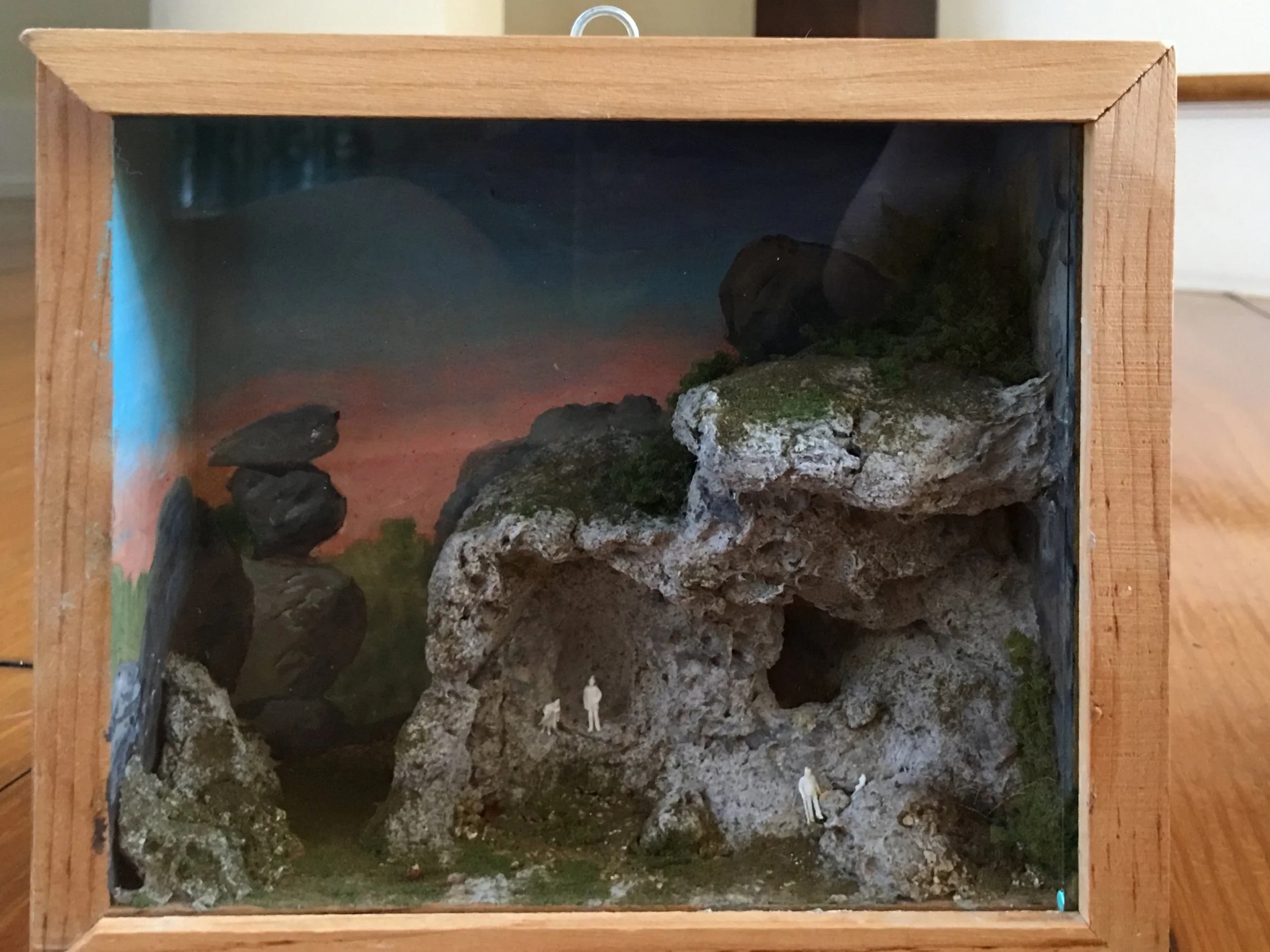
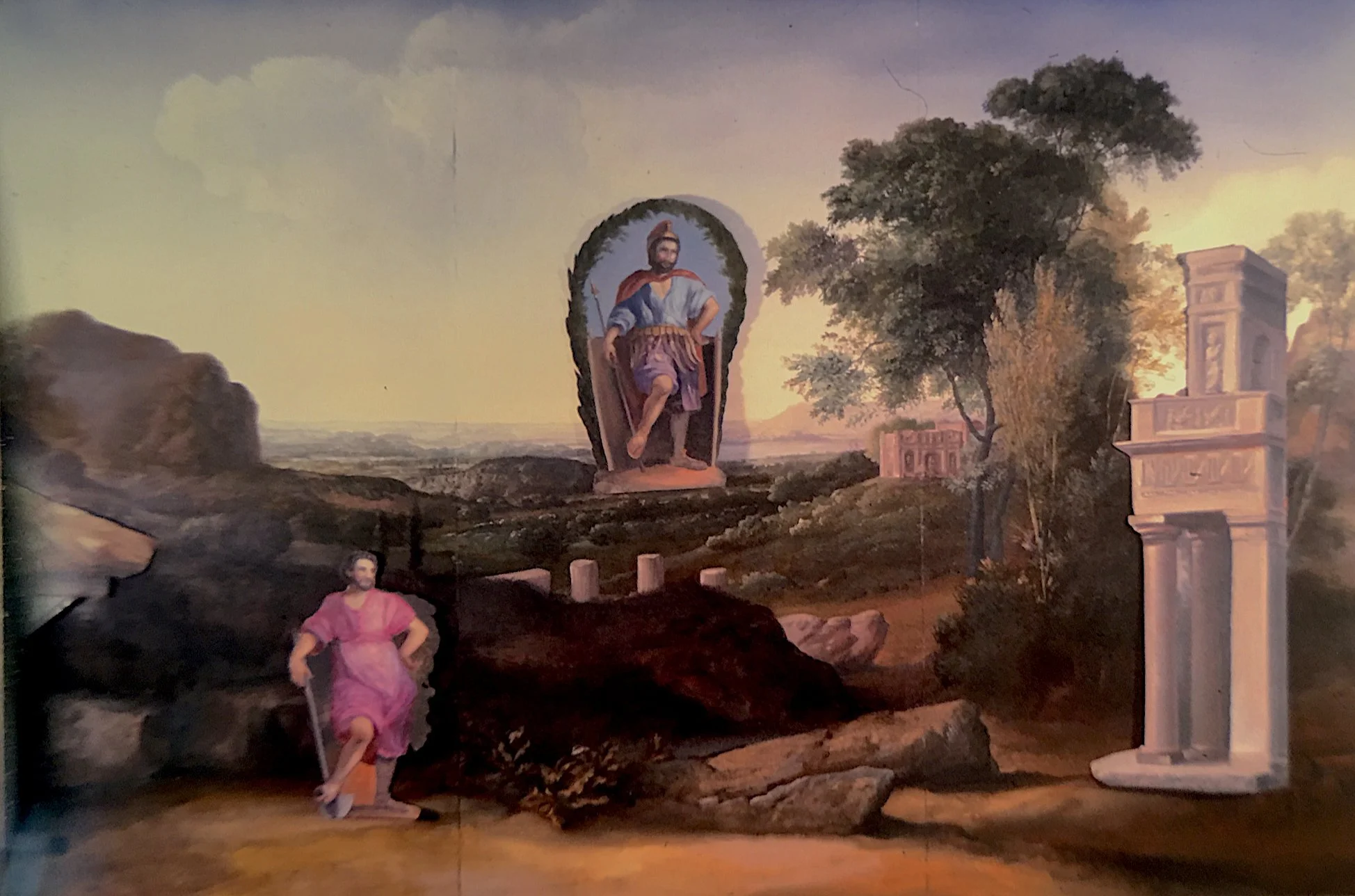
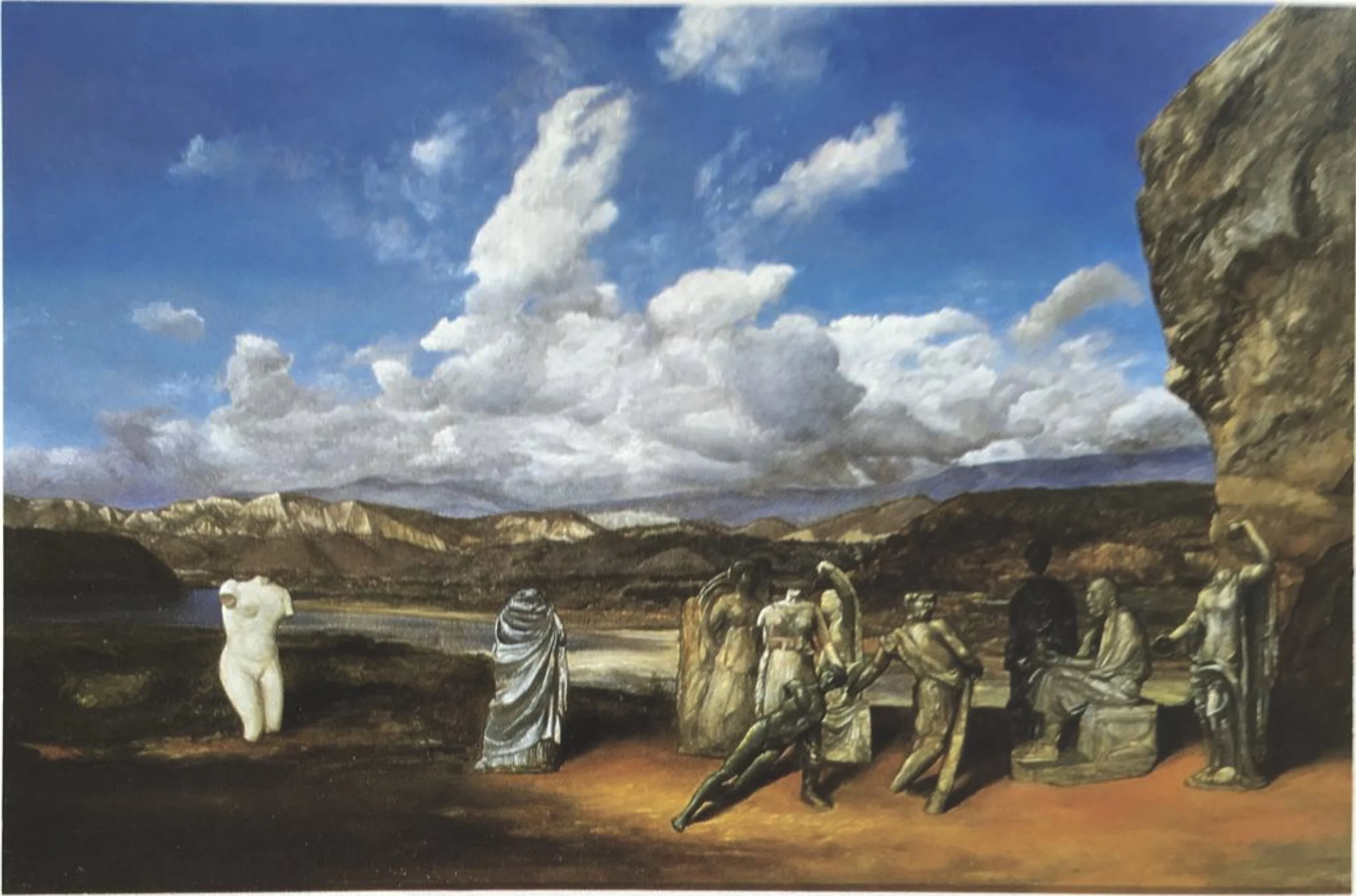
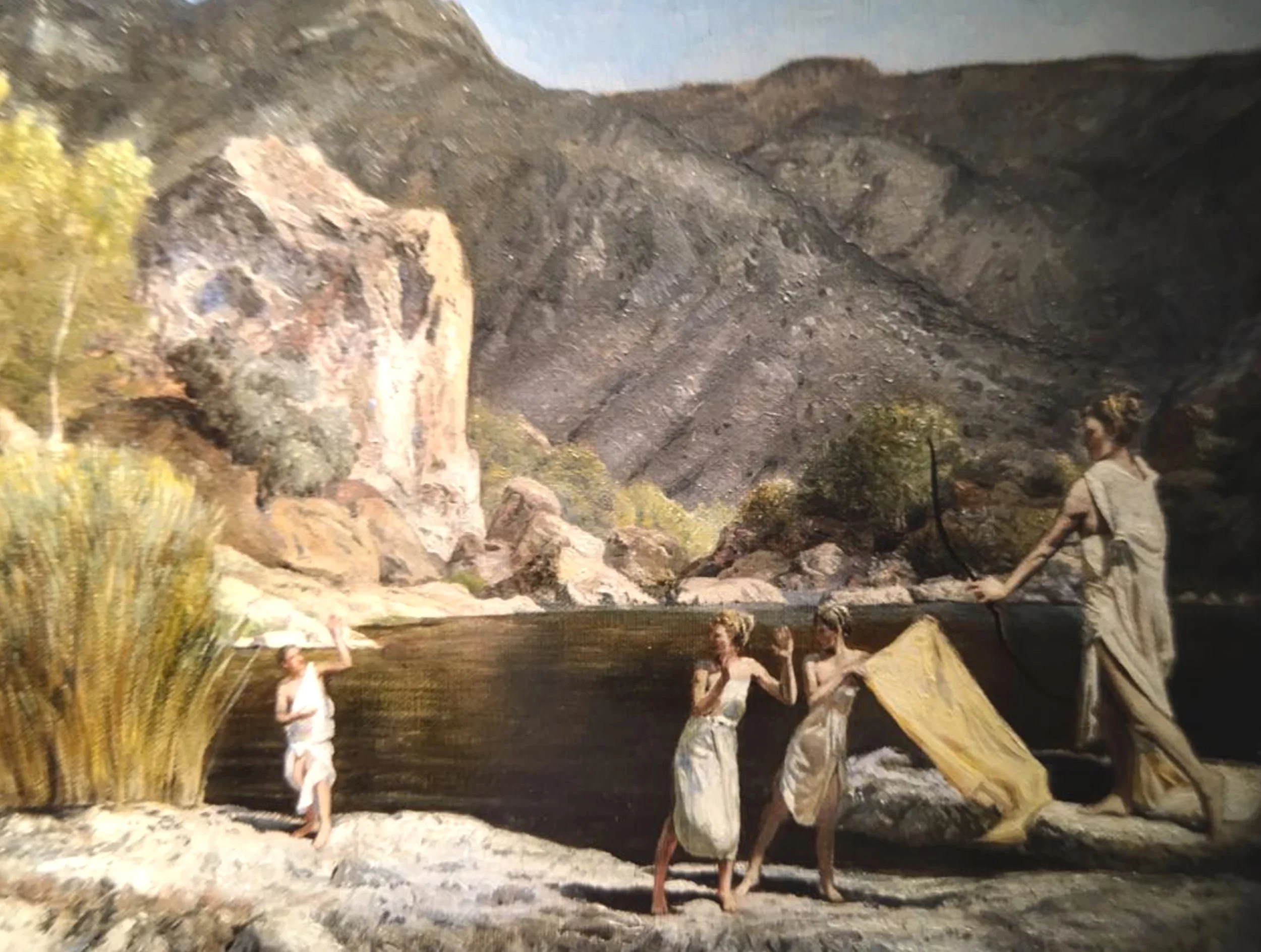
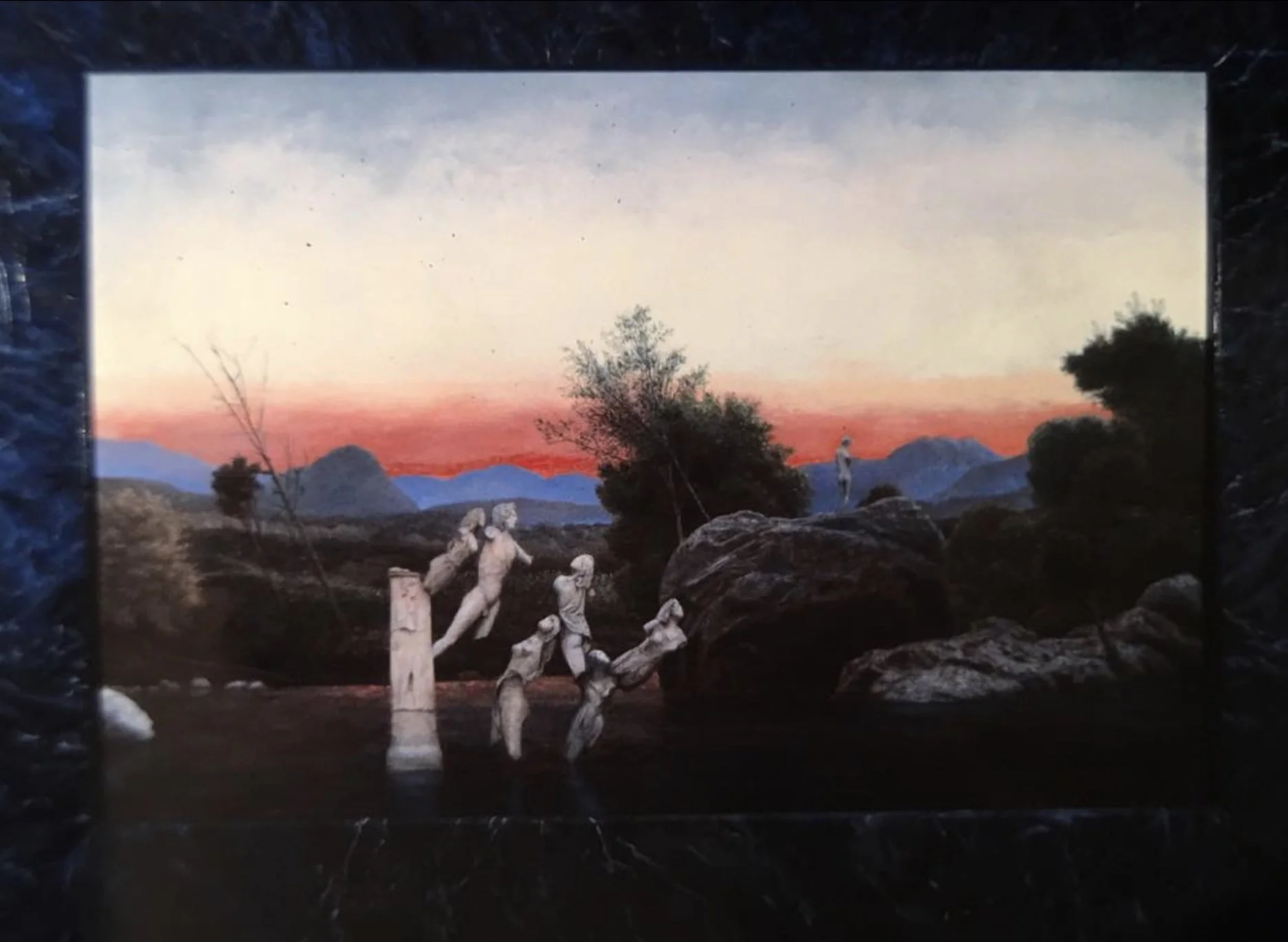
This series of related oil paintings, ranging widely in scale, featured hand built miniatures variously arranged in the coastal mountains of the Santa Ynez Valley, bathed in sunlight reminiscent of the artist’s time working in Greece. The artist’s statement for the exhibition read:
Sacred Precincts: Parallel worlds where familiar things are reset in a slightly different order. In the spirit of classical poetics and rhetoric they are a manifestation of “xenikon”, or strangeness. Through a shift in scale, the limits of these sacred spaces are strongly demarcated and given a particular order. They are complete and whole, at the same time distinct from and integral to their surrounding environments.
According to Aristotle, the effect of this juxtaposition, the poetic and ordinary realms, is purification or catharsis. It provides a new frame to understand reality and implies the existence of a more perfect world.
Griswold’s paint handling recalls the academic realism and quality of light of Jean Léon Gerôme.
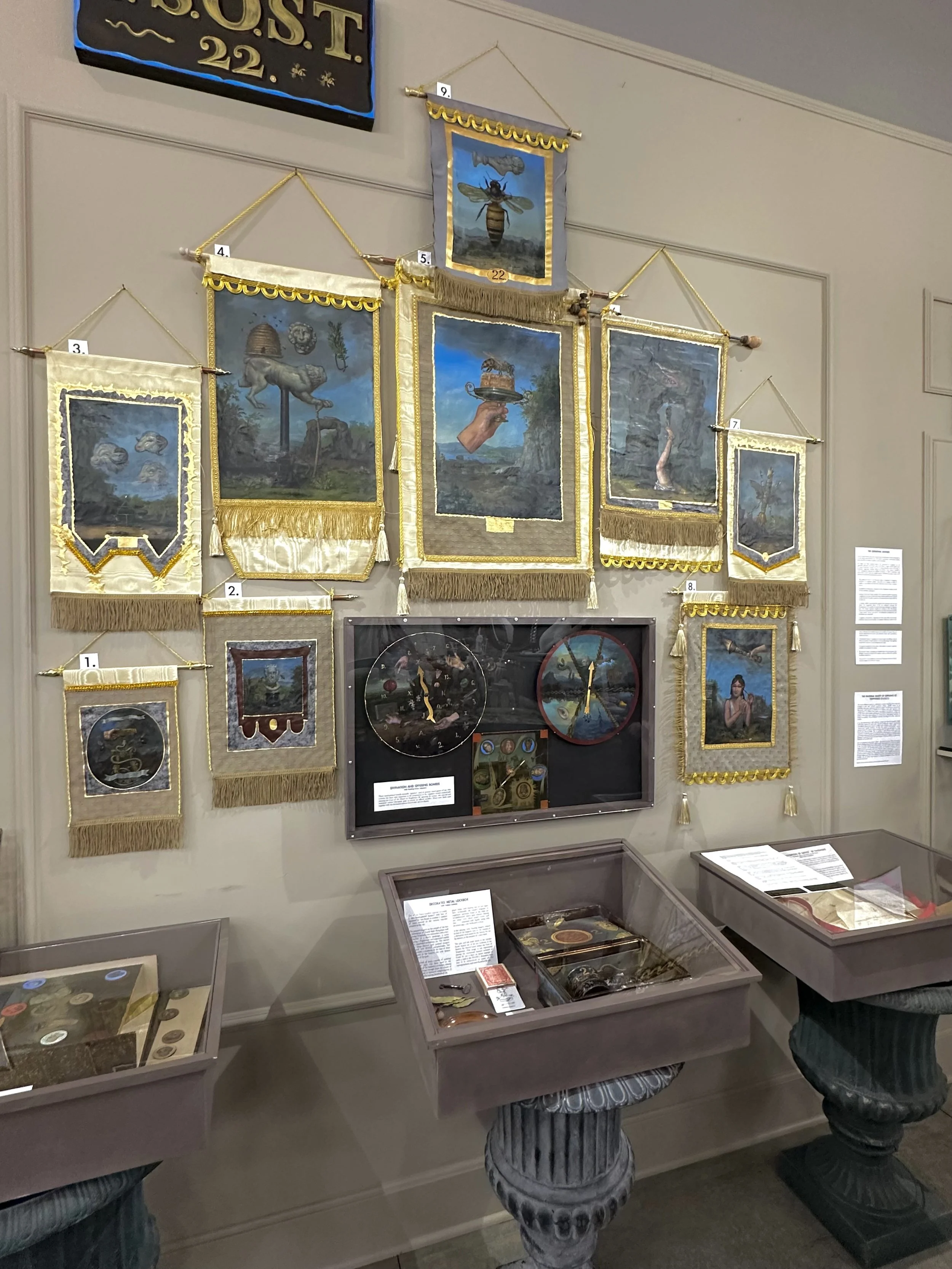
Recently Discovered Artifacts, Gold Bug Gallery, Pasadena, curated by John Griswold and Theodora Coleman, November 21, 2024 - January 10, 2025
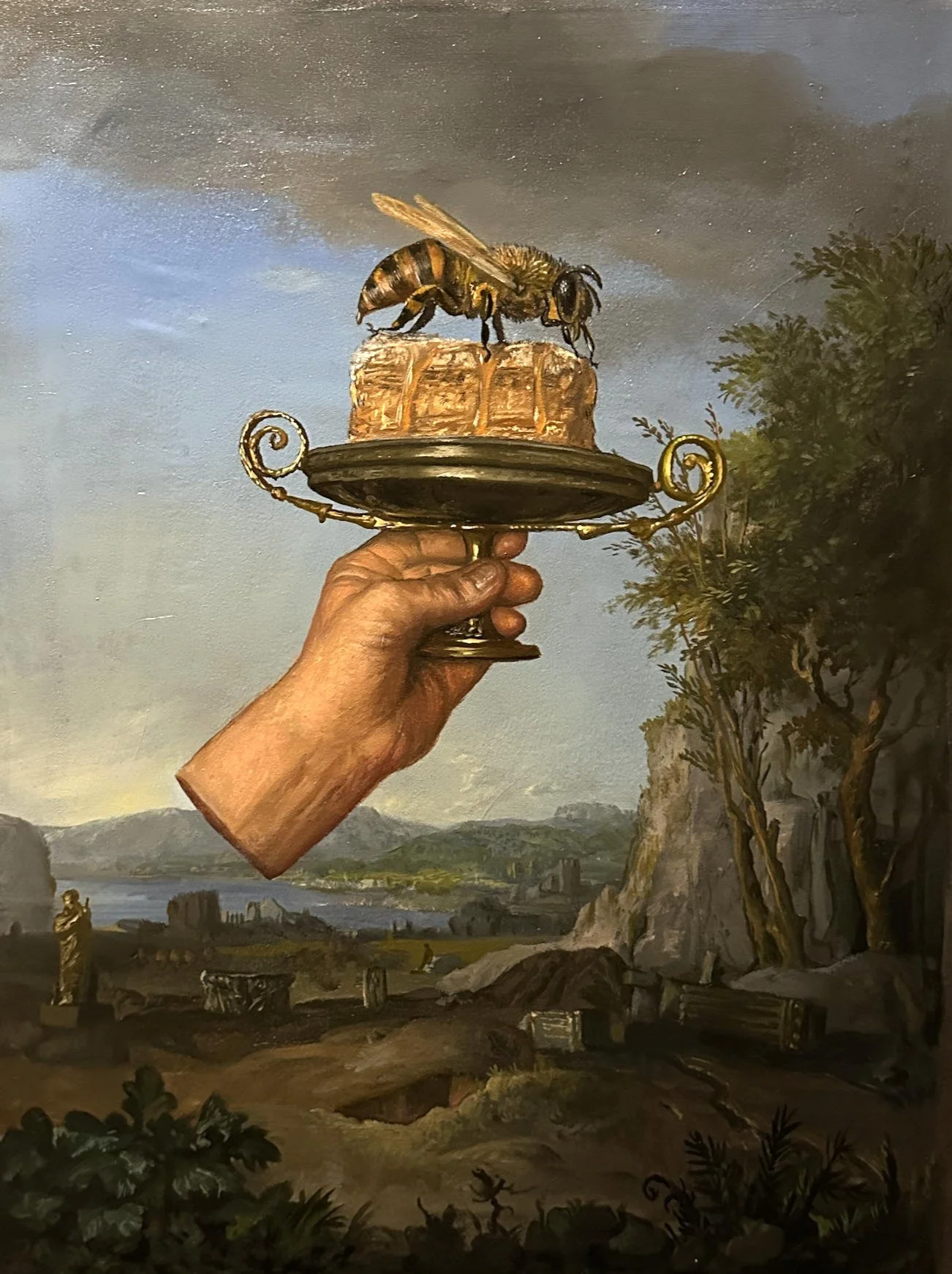
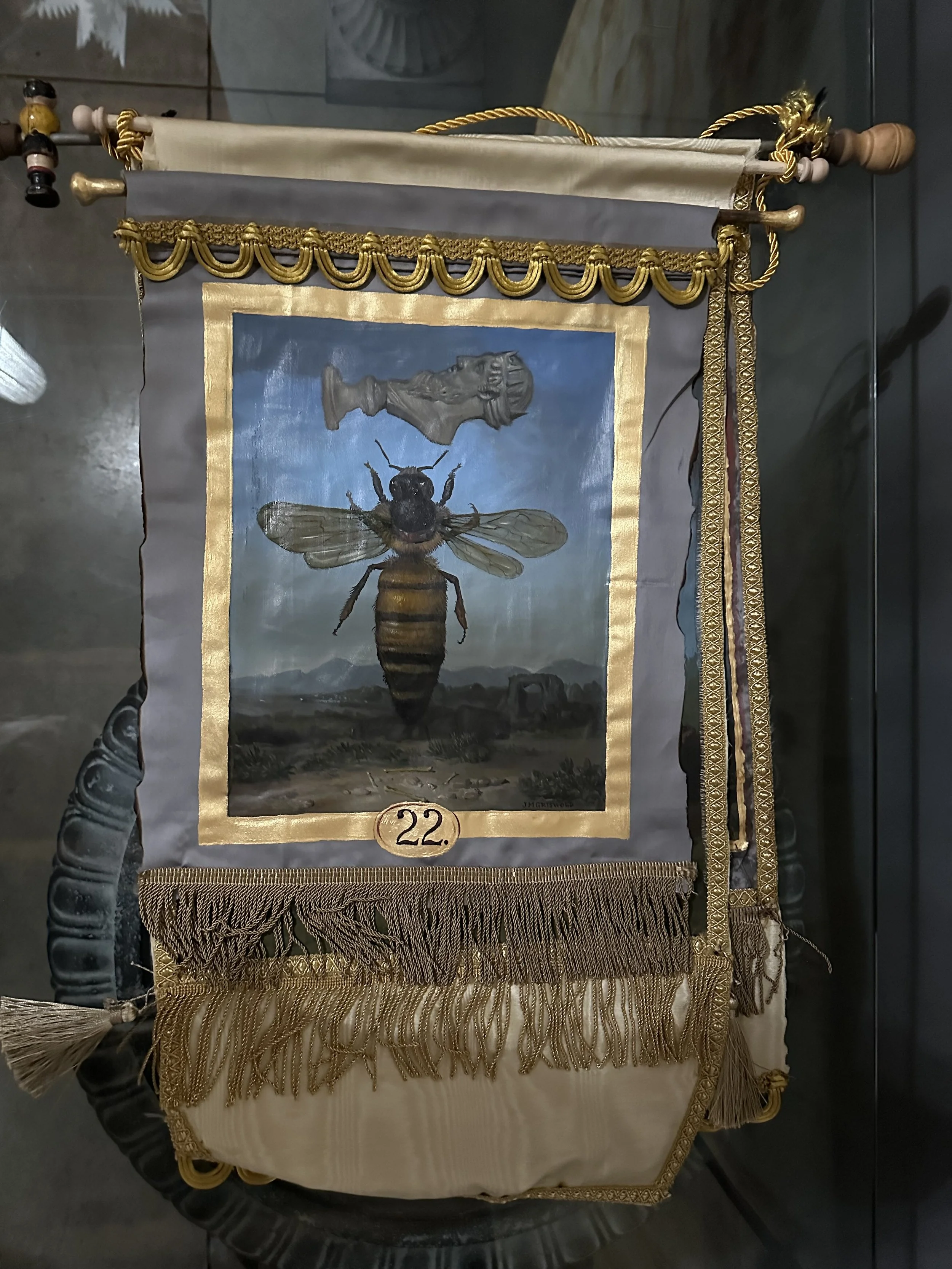
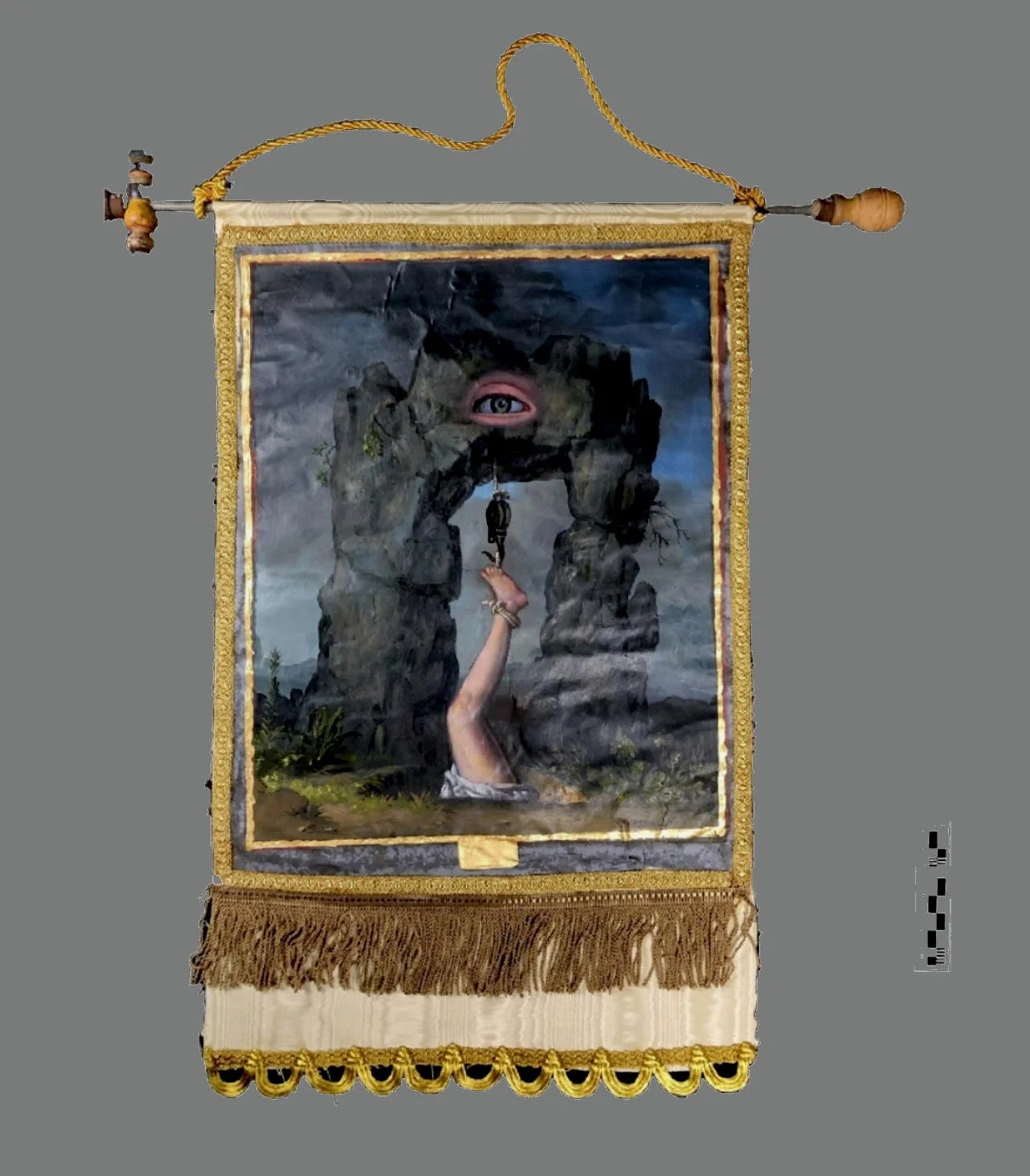
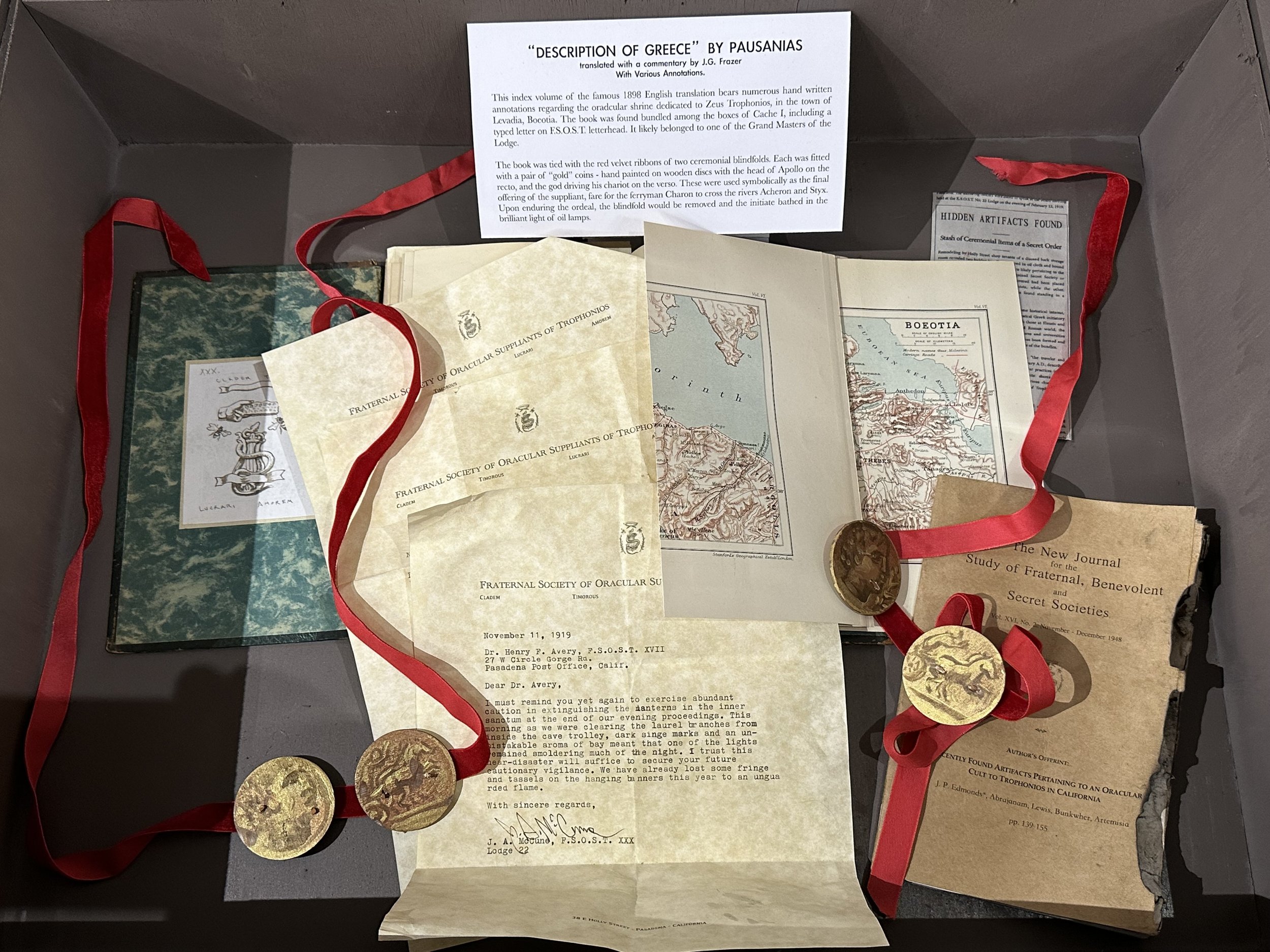
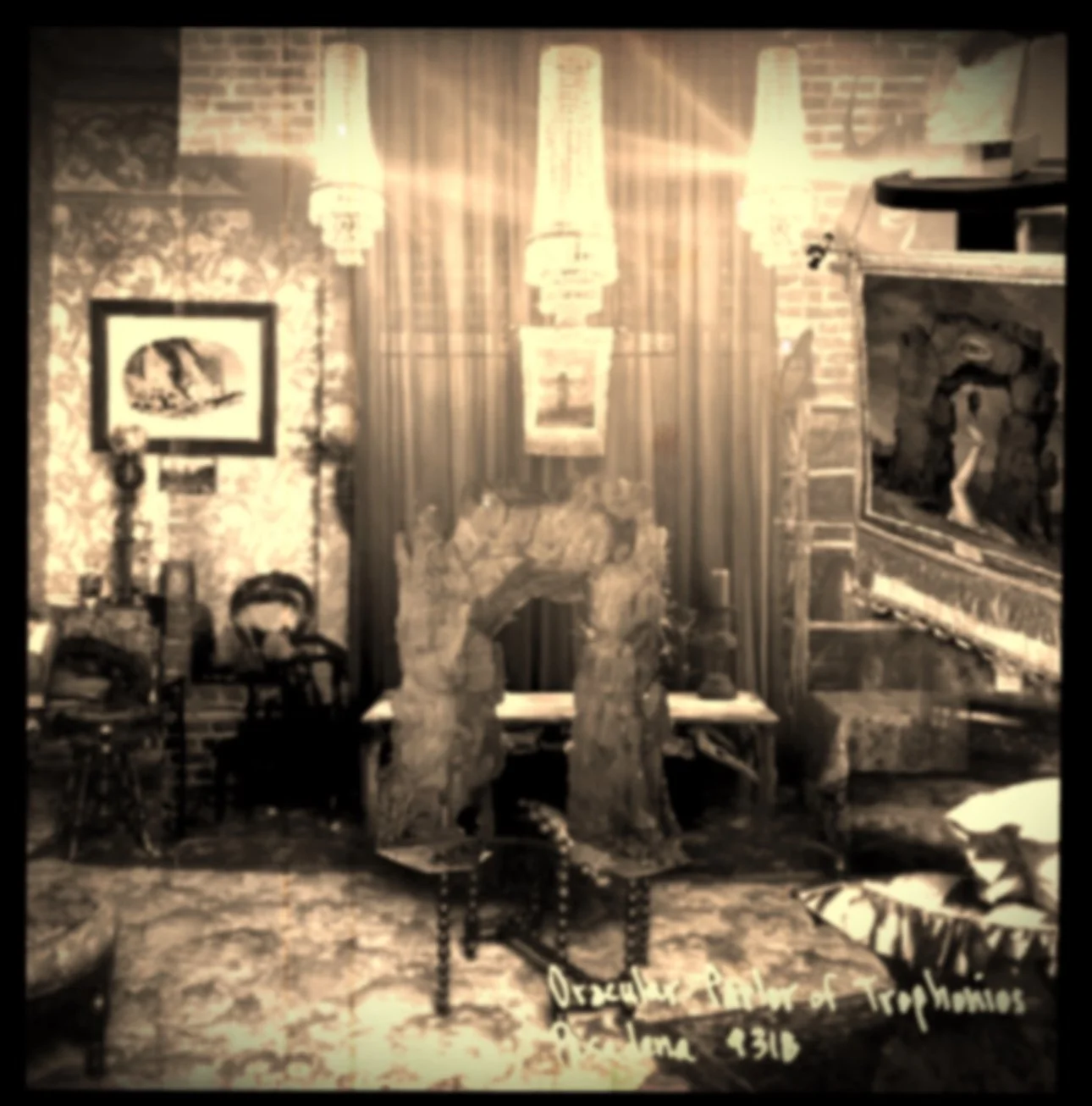
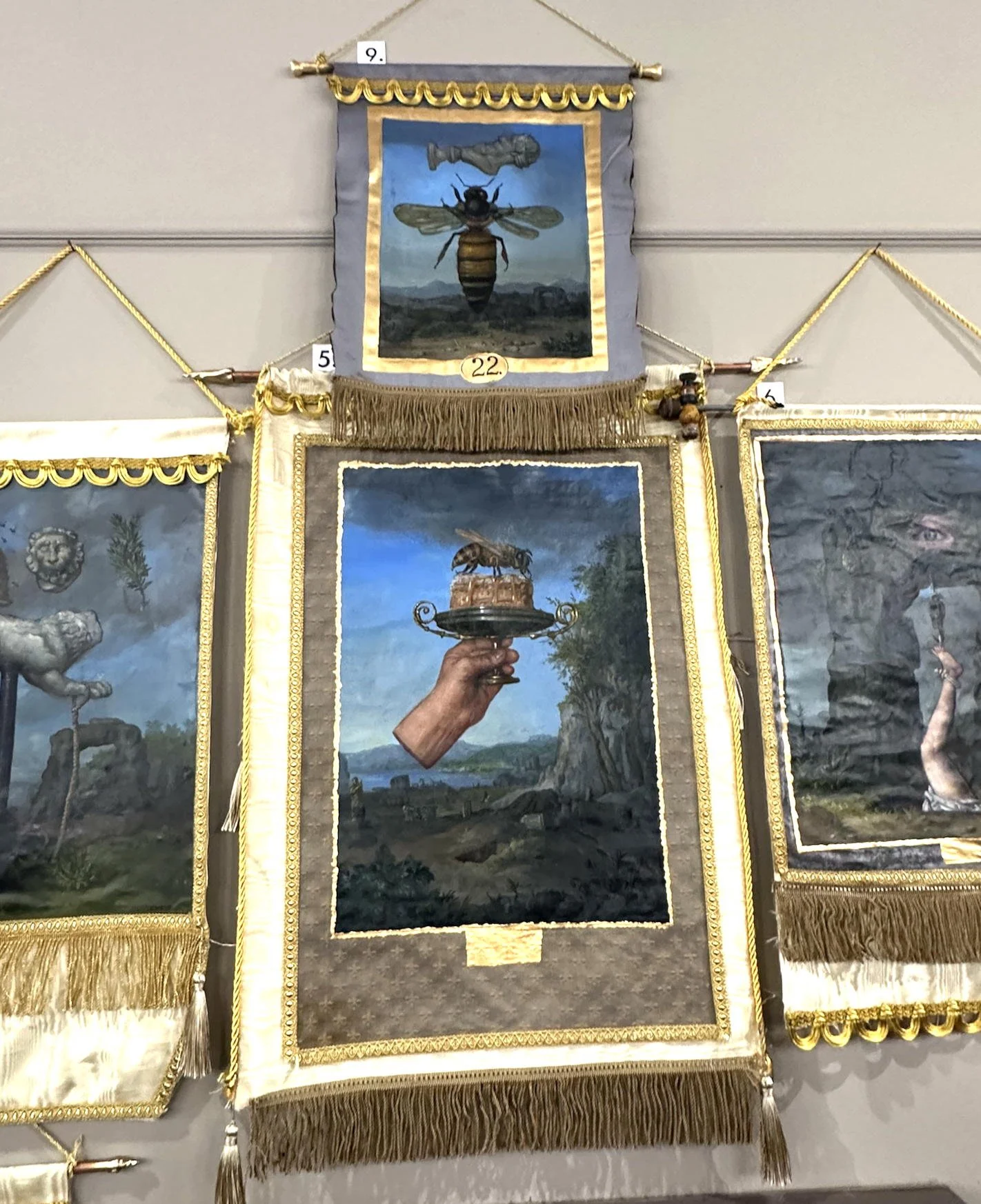
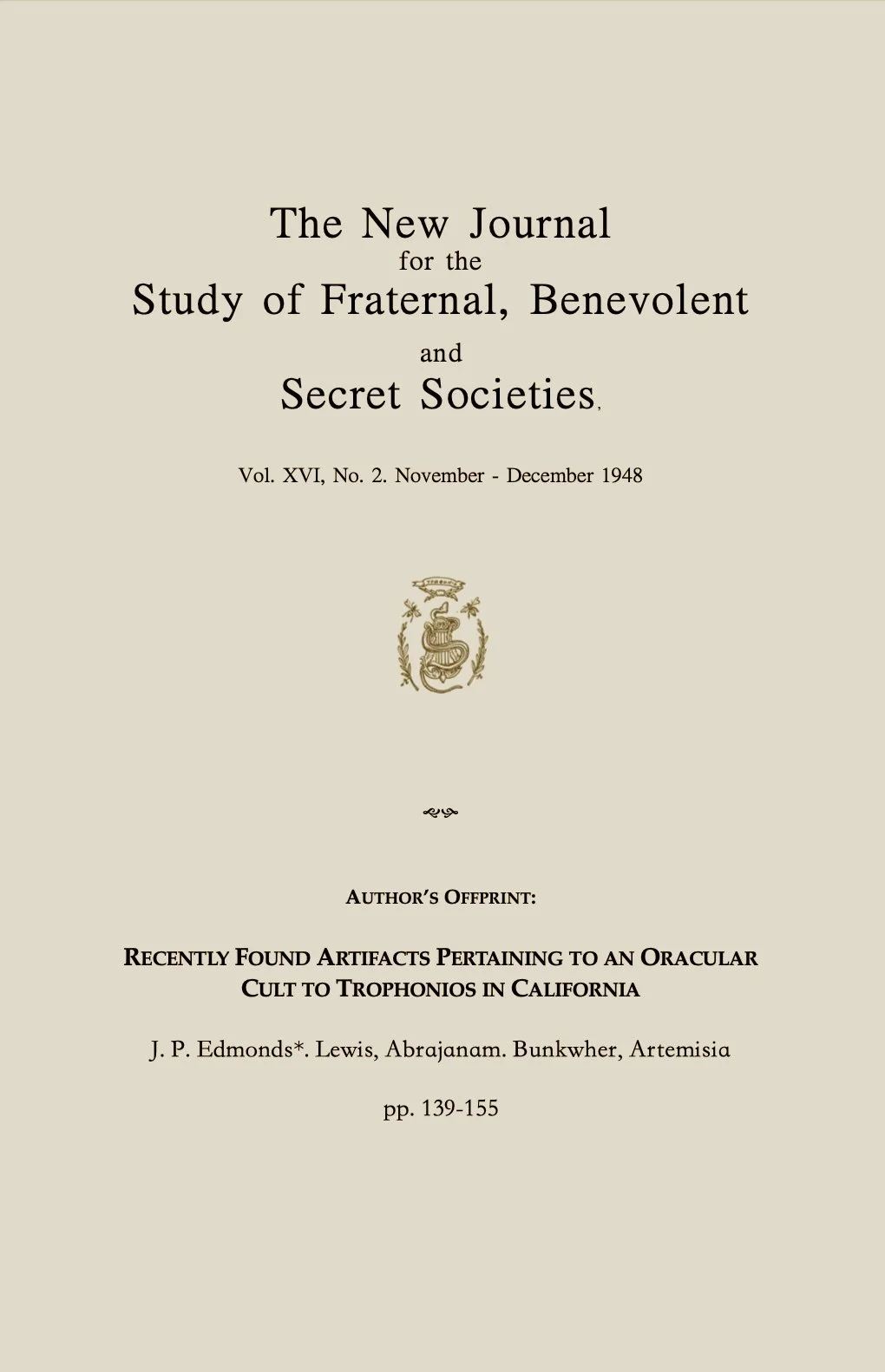
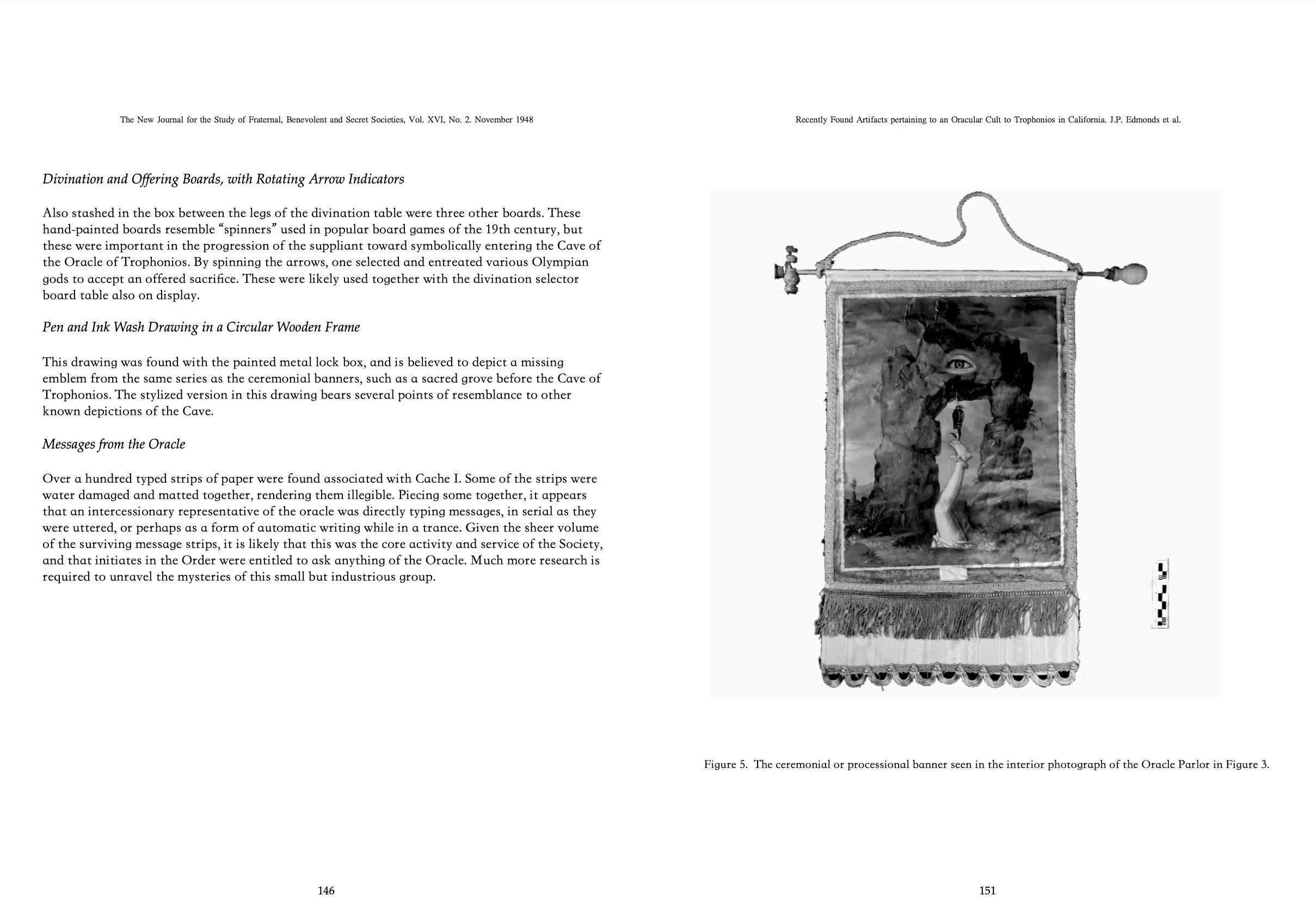
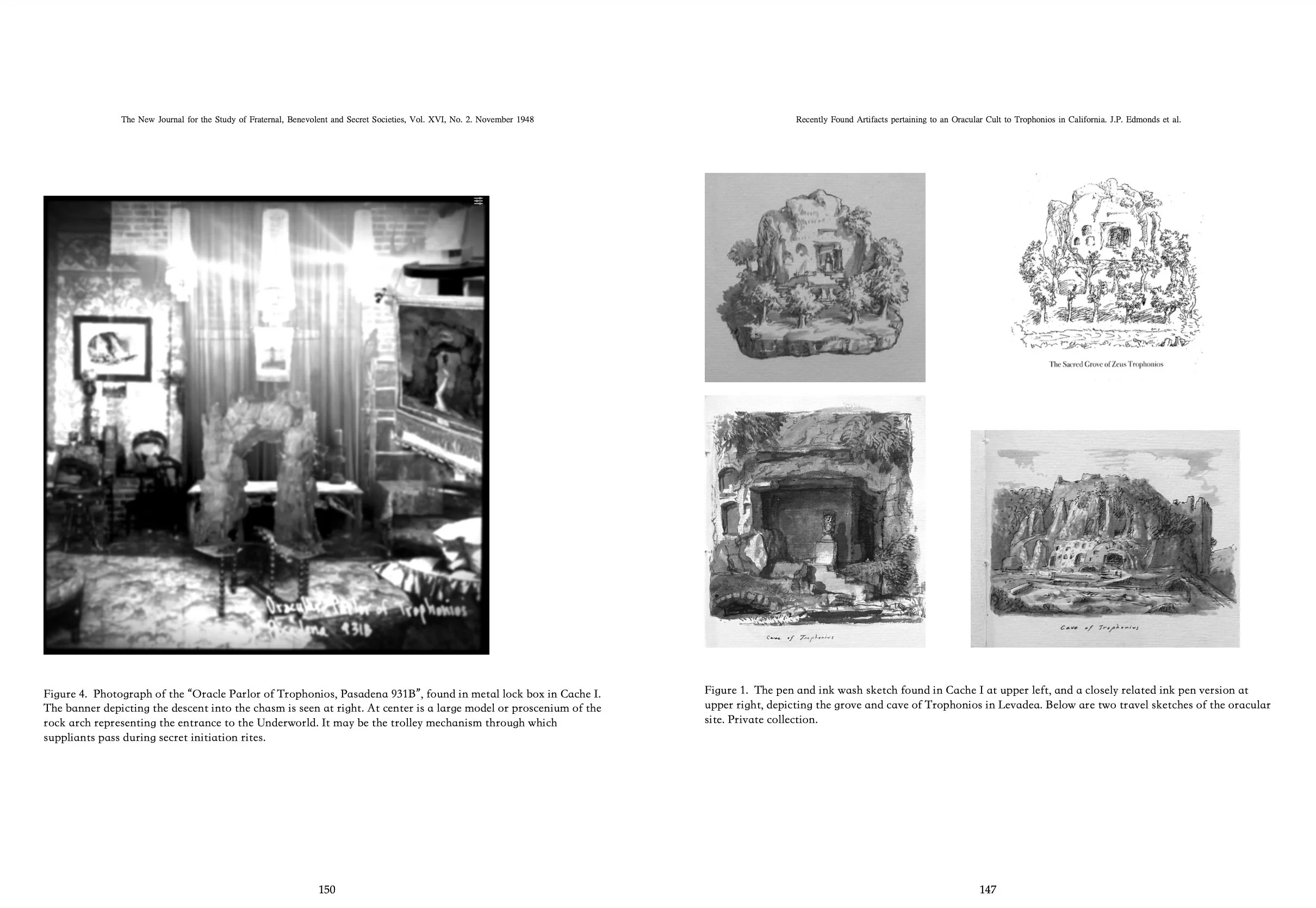
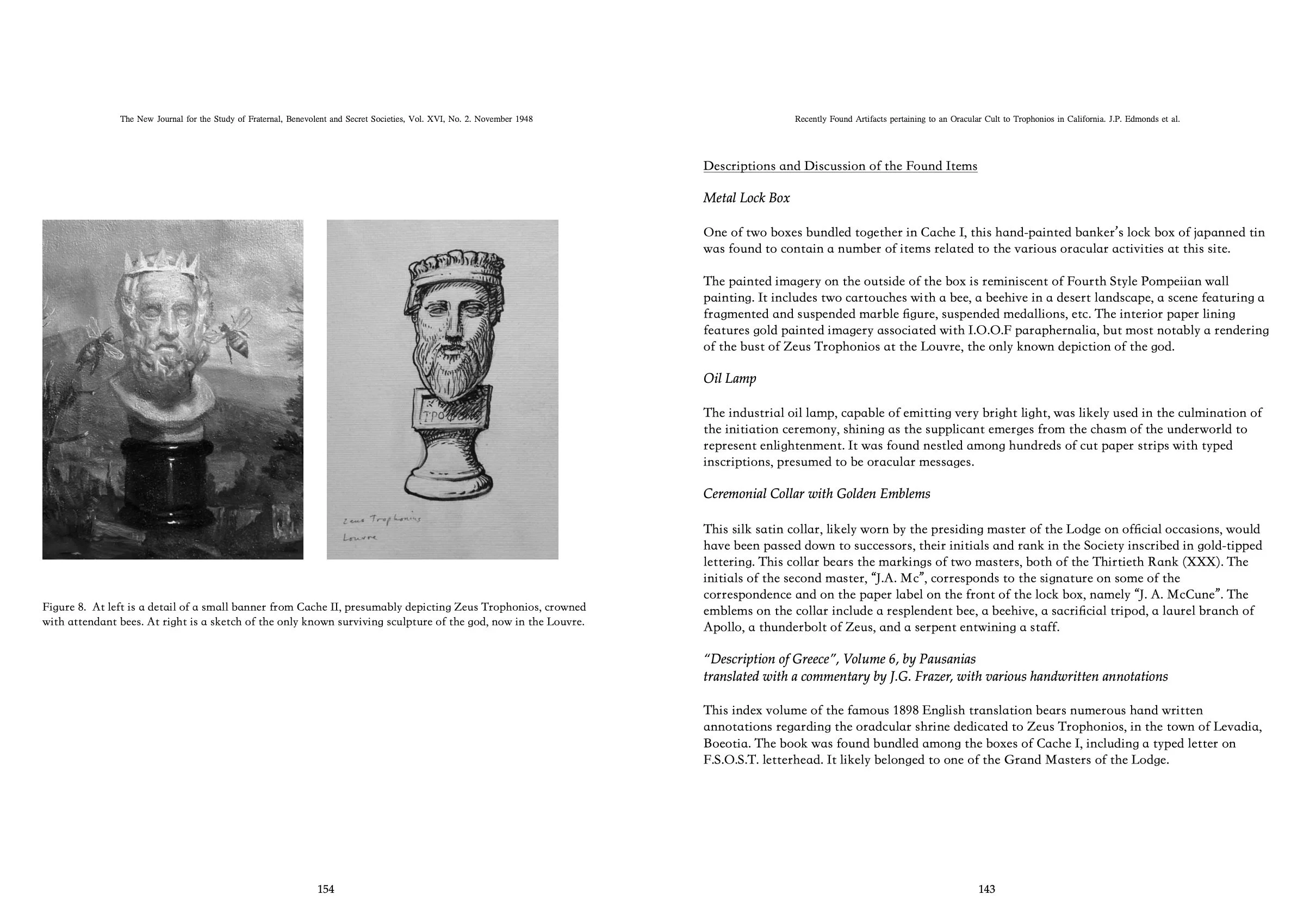
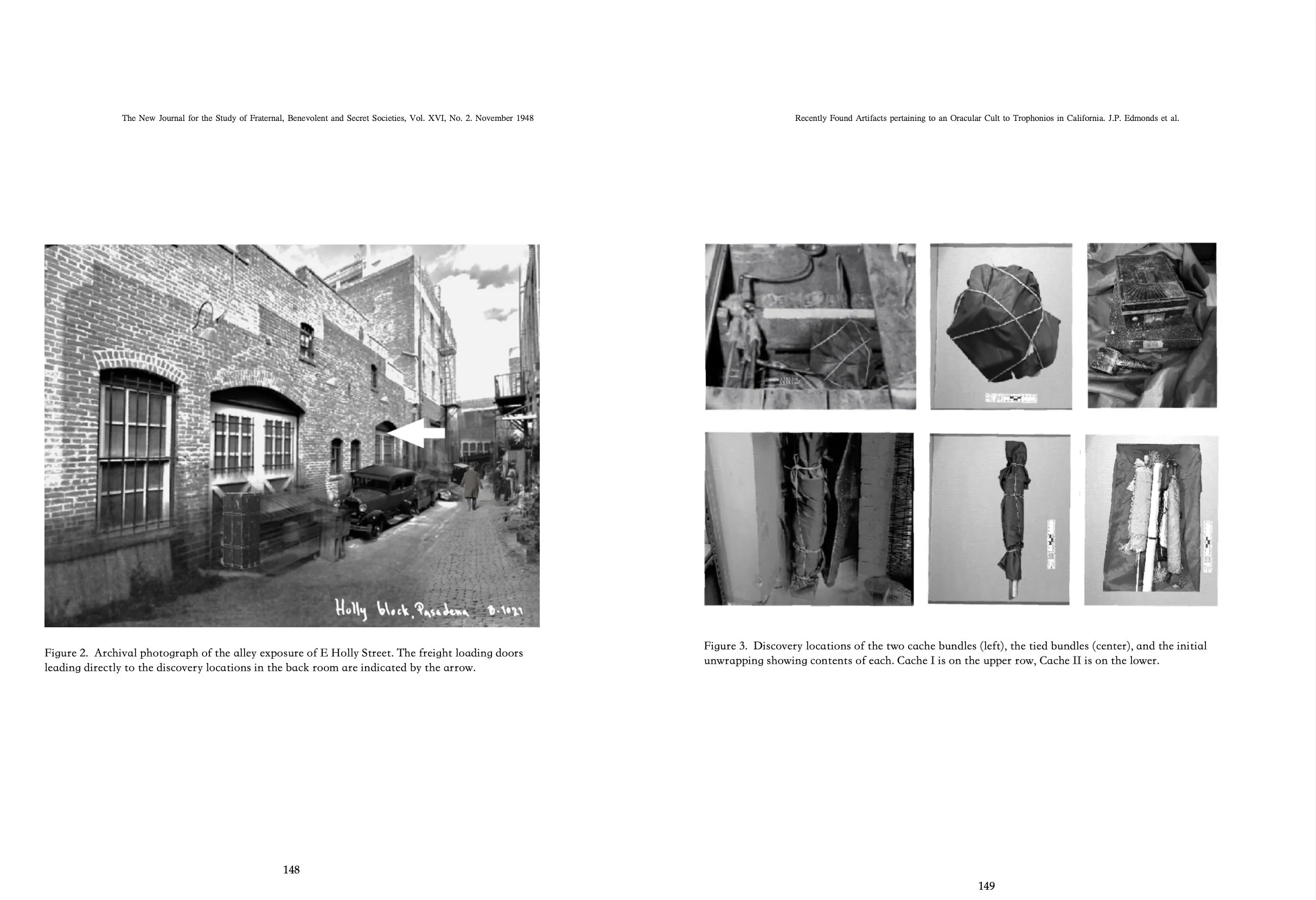
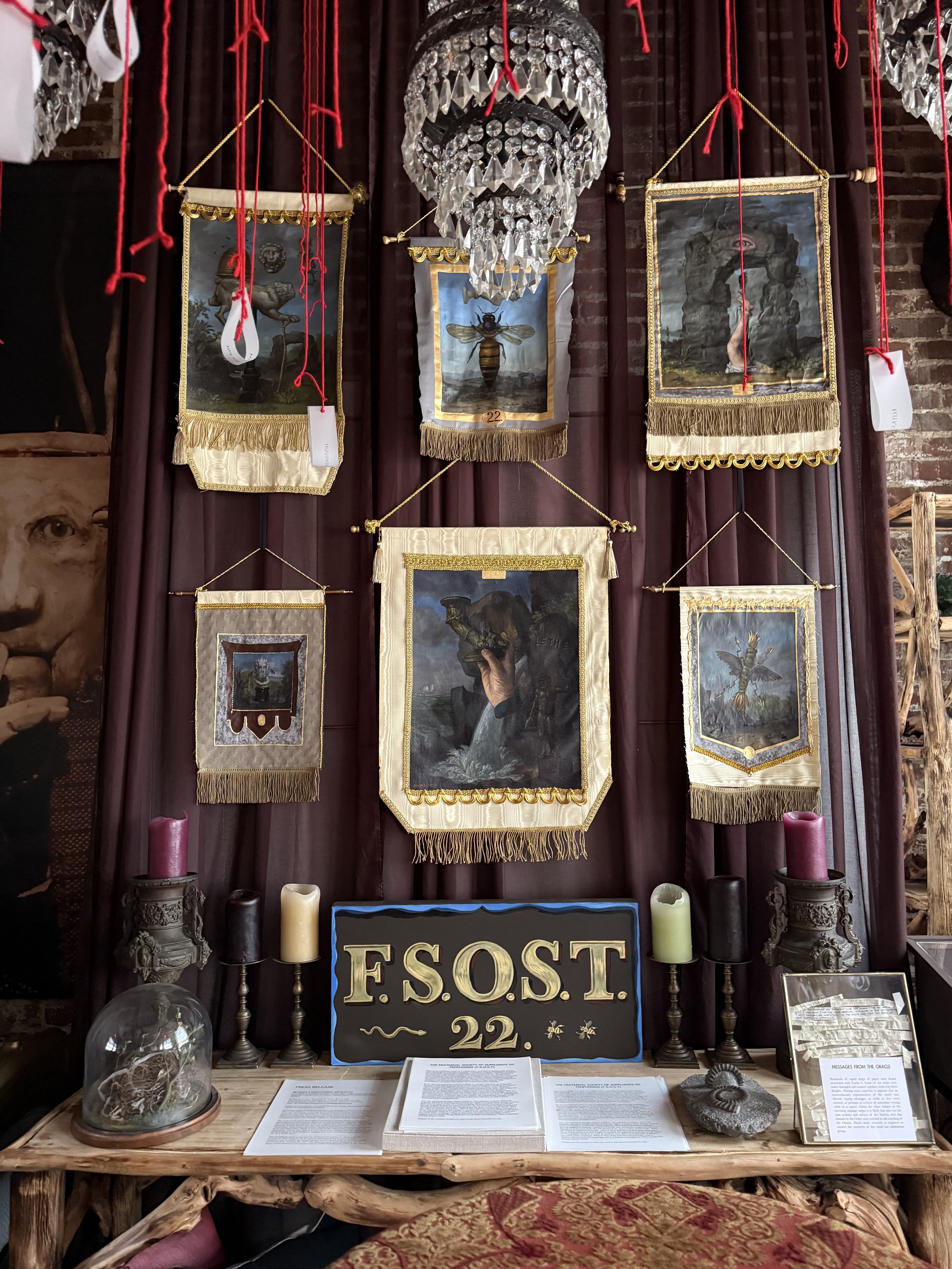
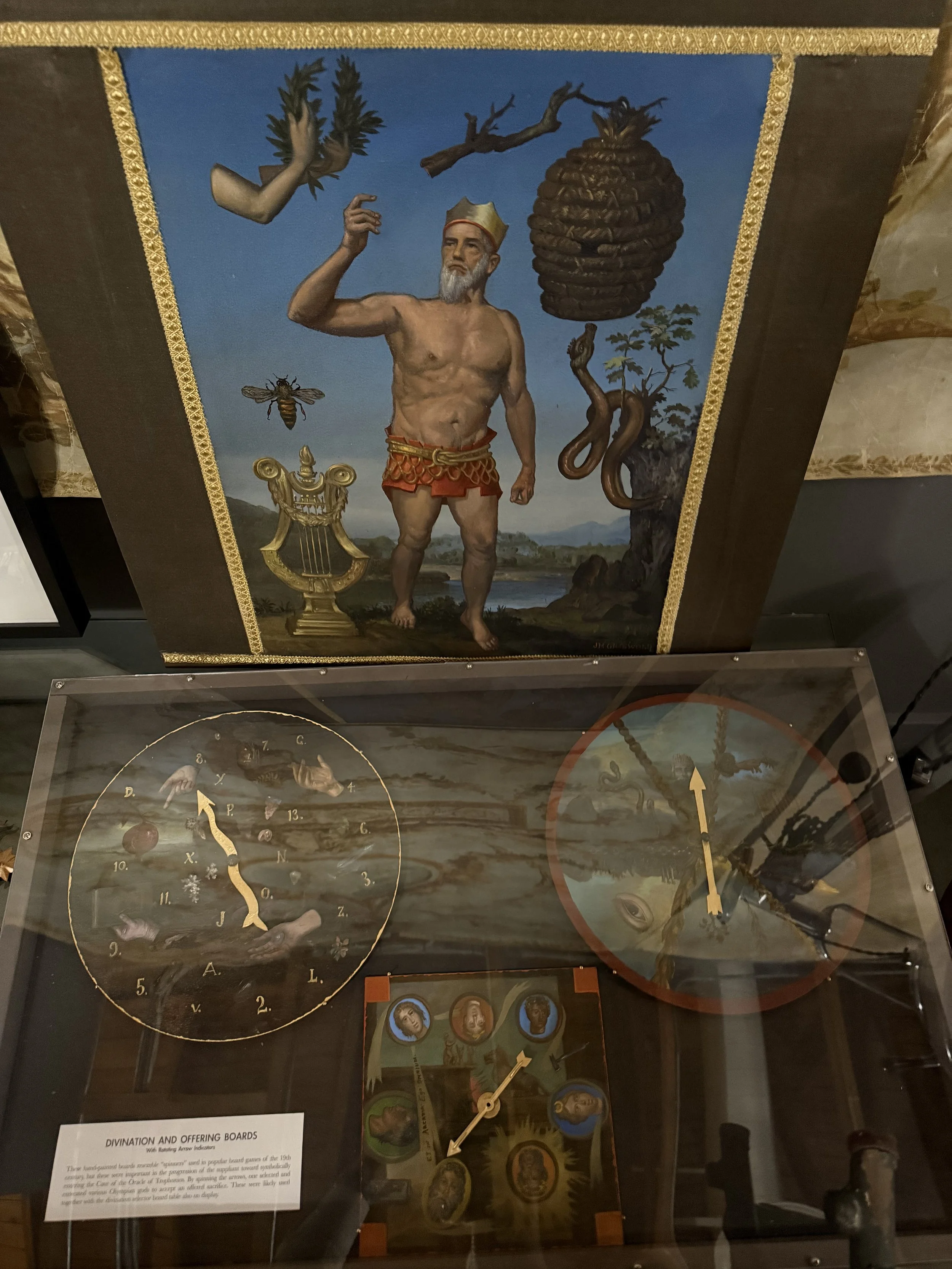
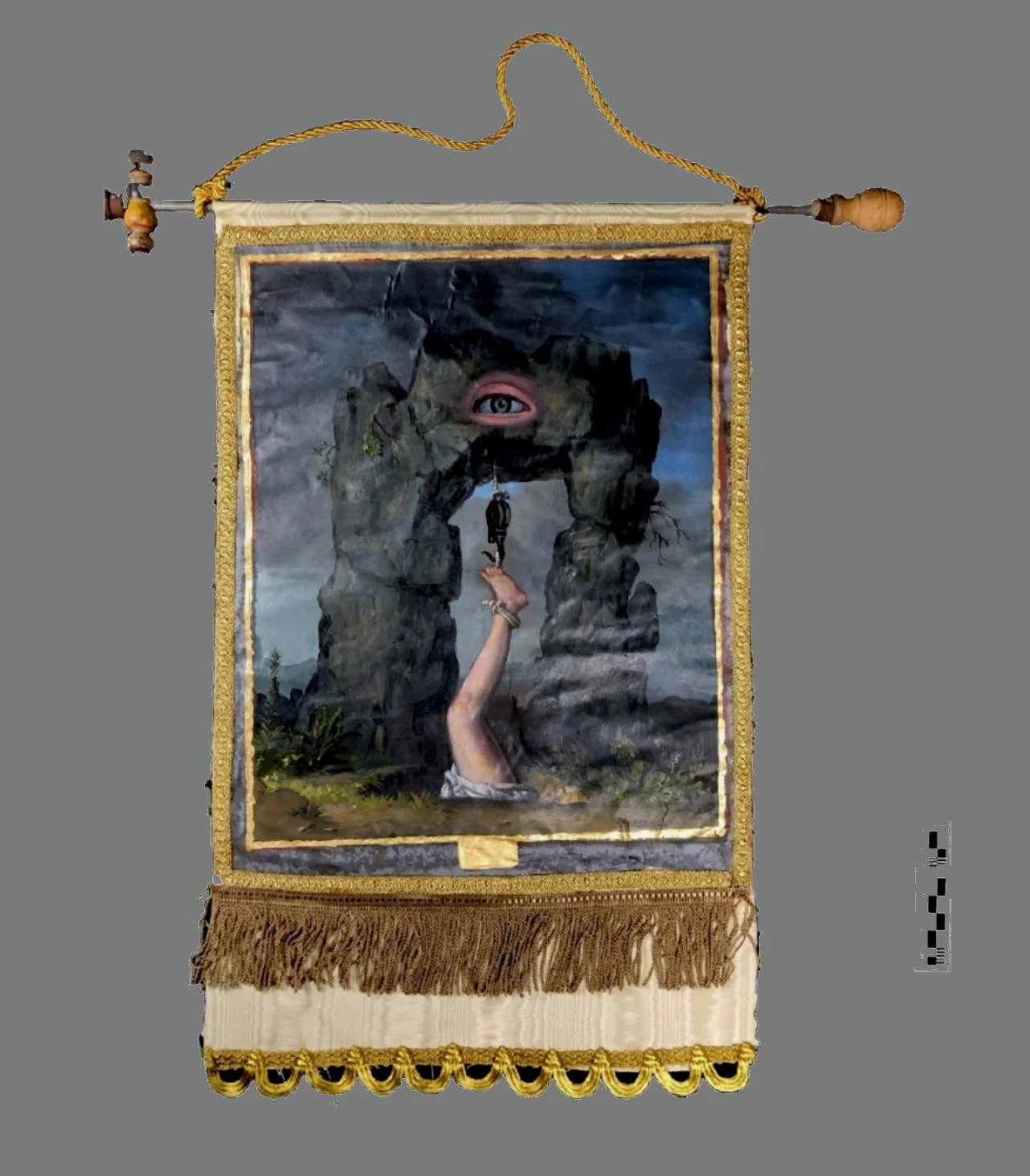
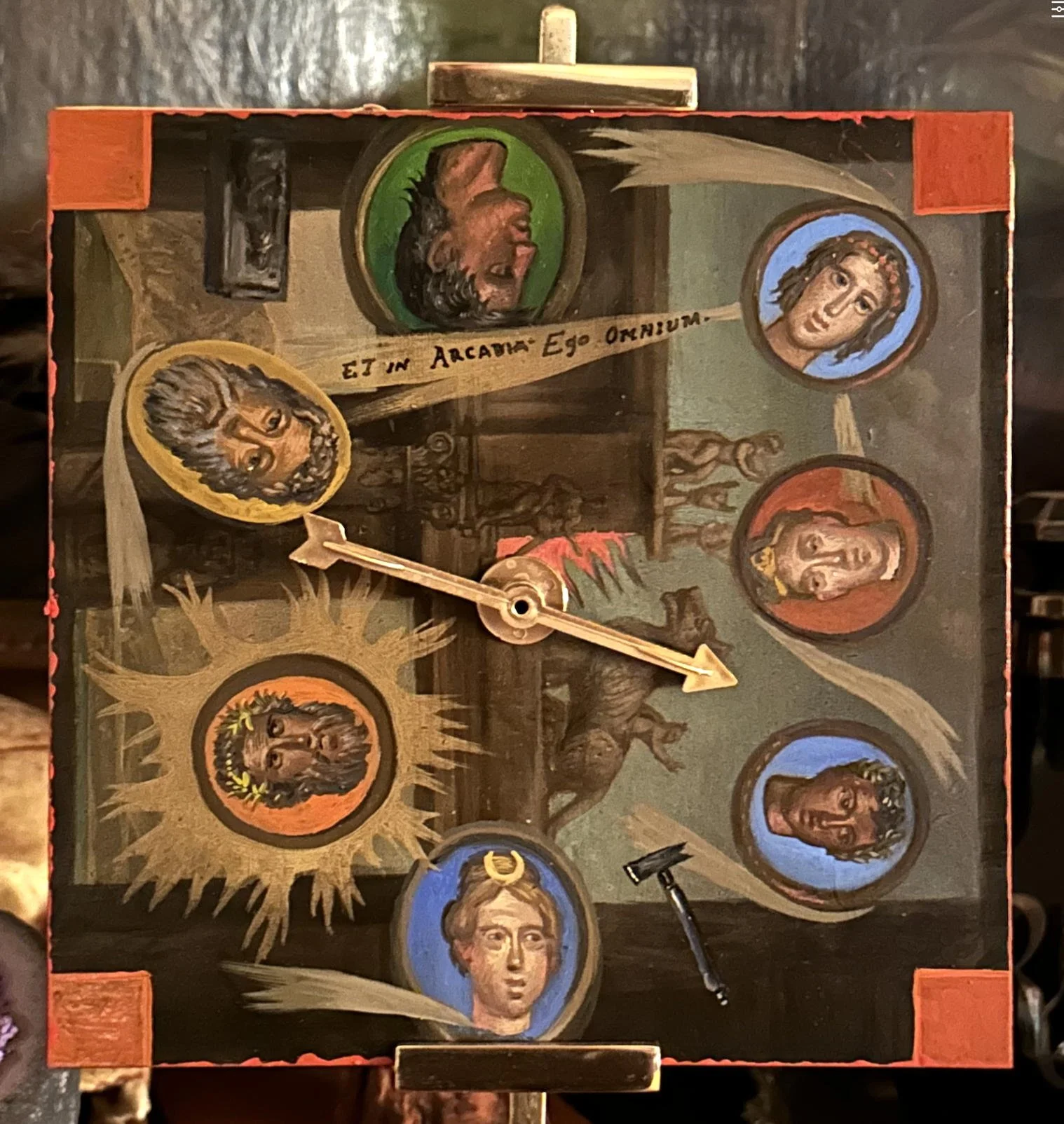
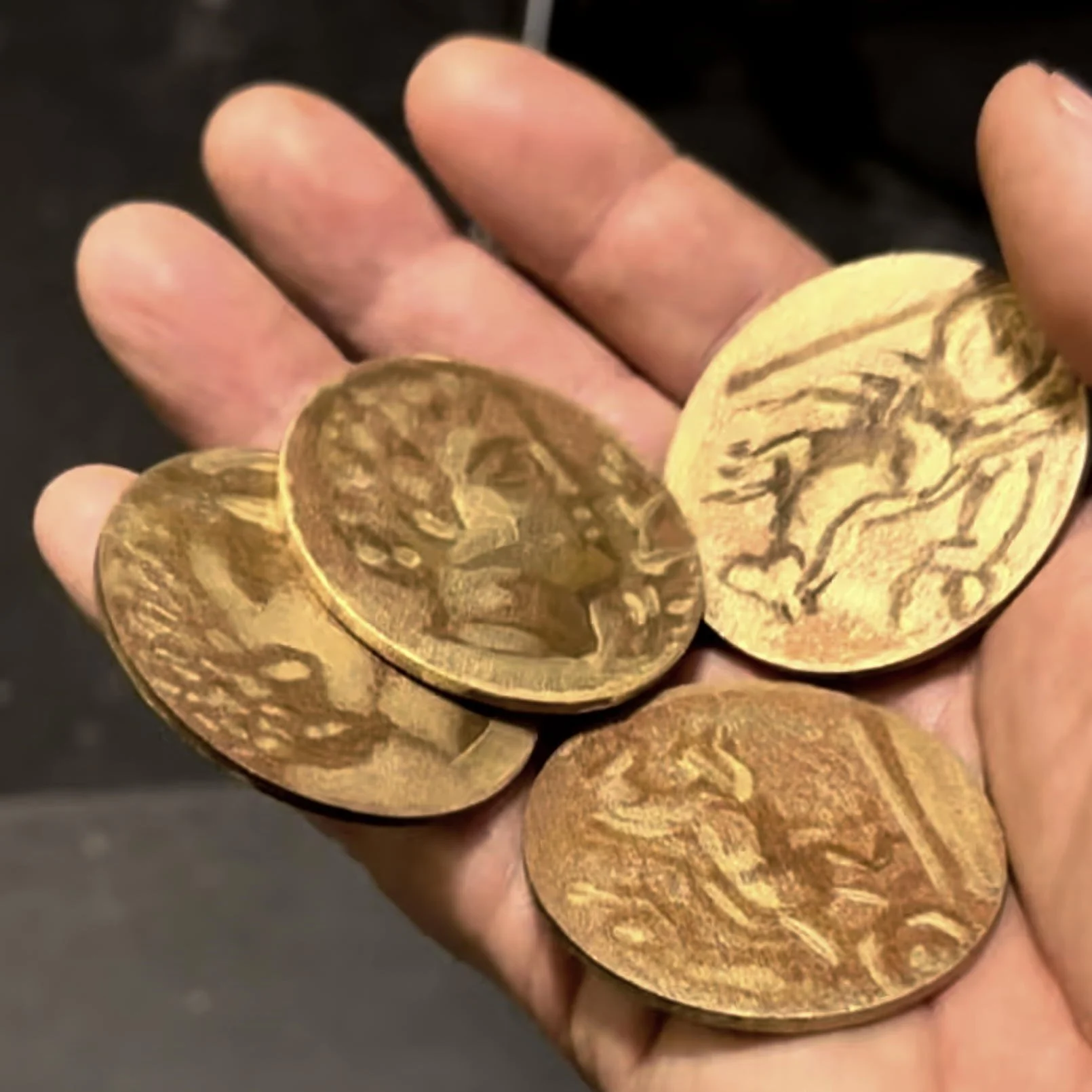
A mock-historical installation based on a fictional scenario where stashes of hidden artifacts and ephemera related to a mystery cult were discovered under floorboards and behind wall paneling during renovations at the Gold Bug Gallery in Pasadena, California. The exhibition was accompanied by a facsimile offprint of a scholarly journal paper from 1947, documenting the finds. “Artifacts” related to the F.S.O.S.T. (Fraternal Society of Supplicants to Trophonios) included festooned banners with oil-painted emblematic imagery, typed oracular messages on cut strips of paper, ceremonial blindfolds comprised of pairs of trompe l’oeil painted golden coins and ribbon ties, ceremonial garb, divination tools, and more.
c. 2008 - Present
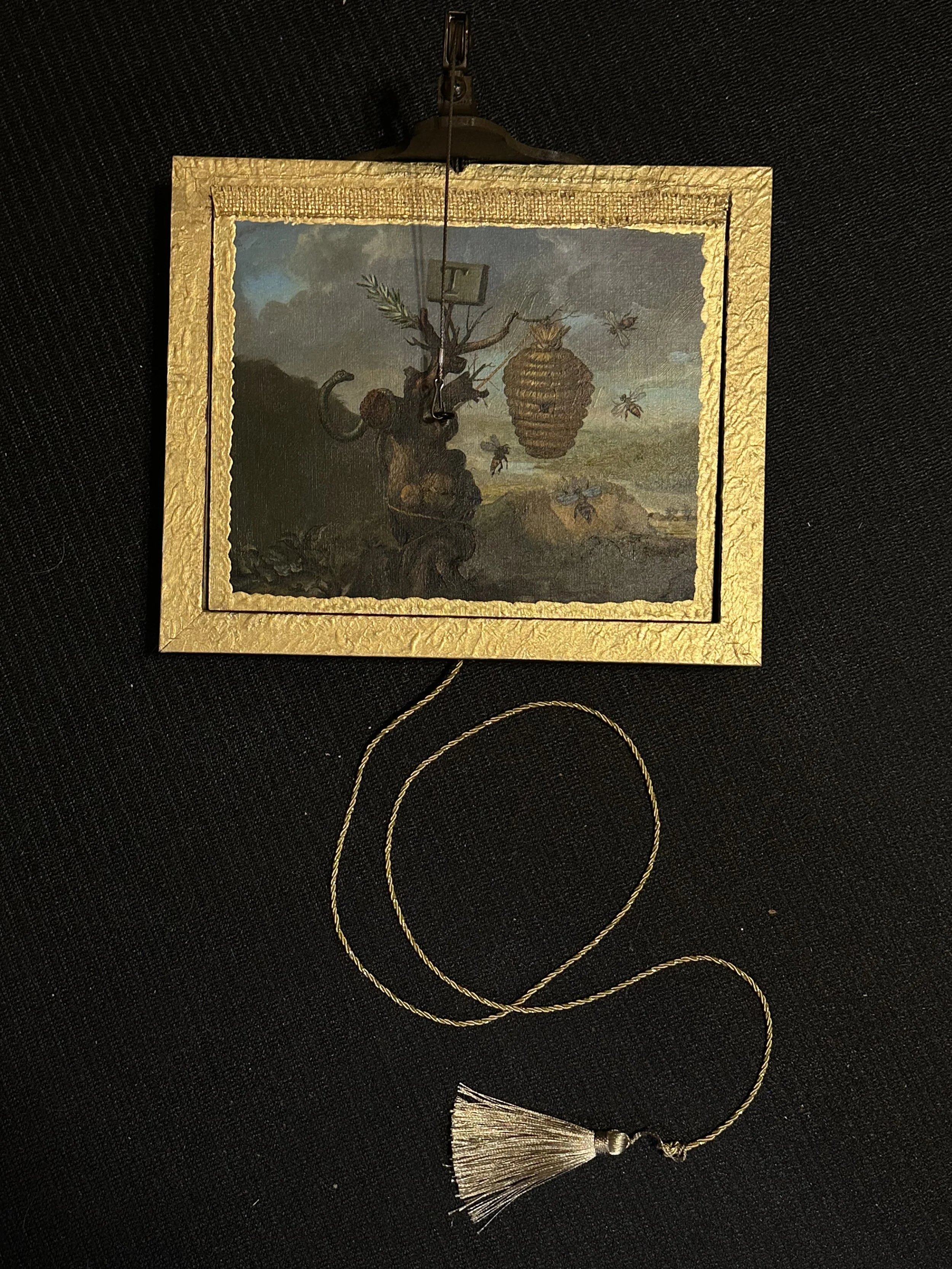
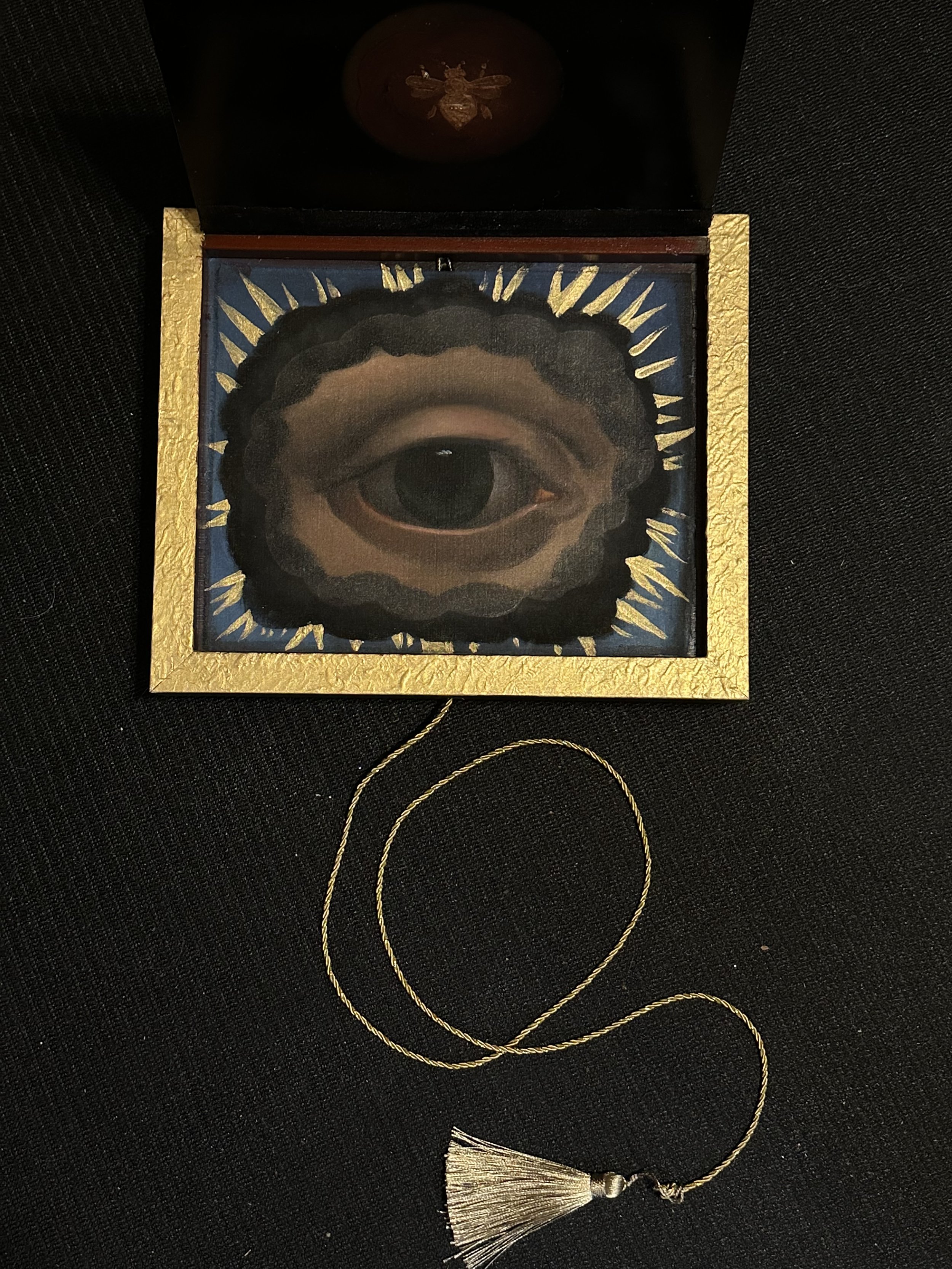
Physical props, whether archaeological artifacts used in rituals of Greco-Roman mystery cults, paraphernalia of modern secret societies, or “hero props” from major motion pictures, are objects designed to enhance the suspension of disbelief within the specific context of a carefully orchestrated liminal space. They are designed to evoke specific emotional states within that context, such as awe, wonder, foreboding or even terror.
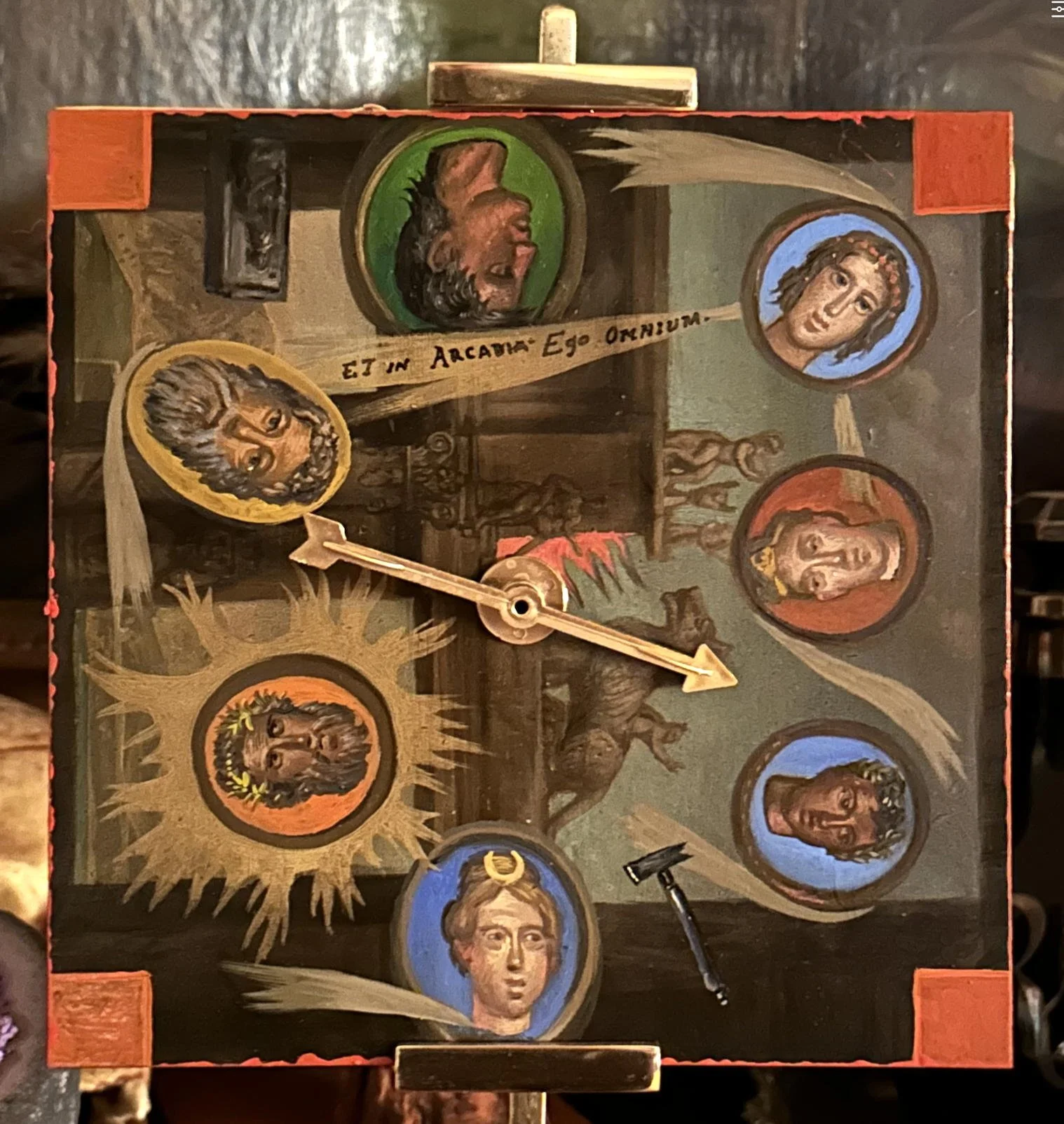
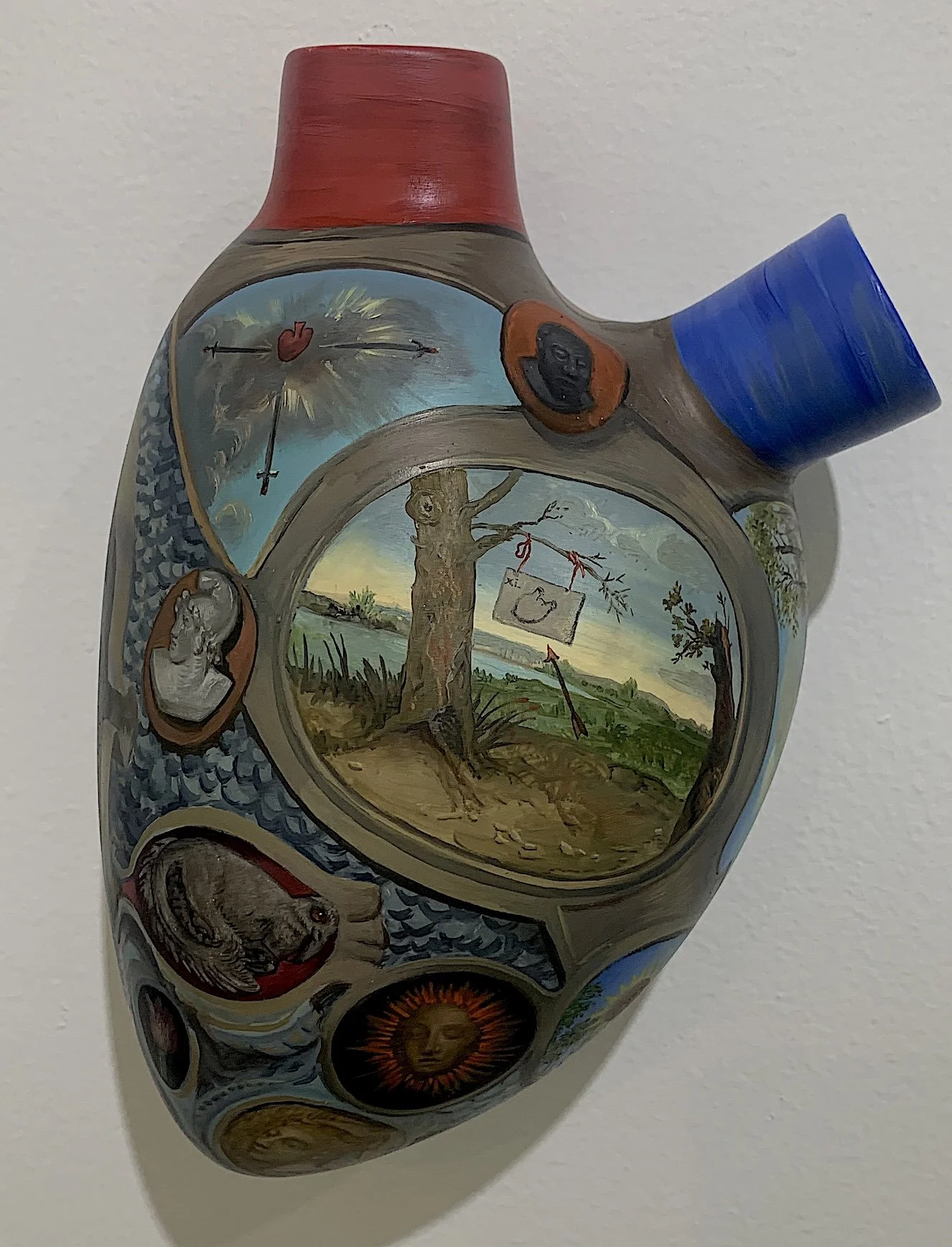
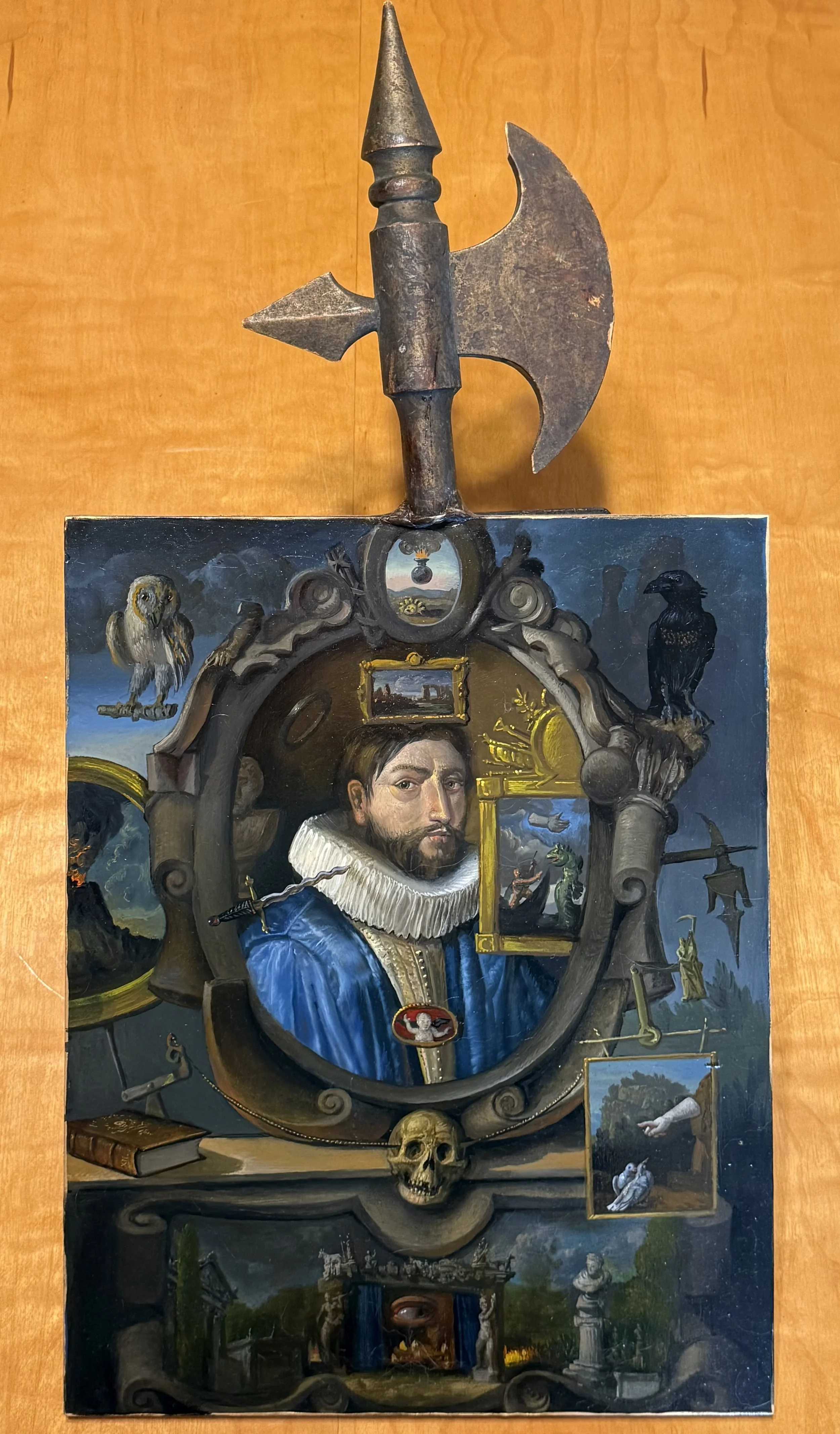
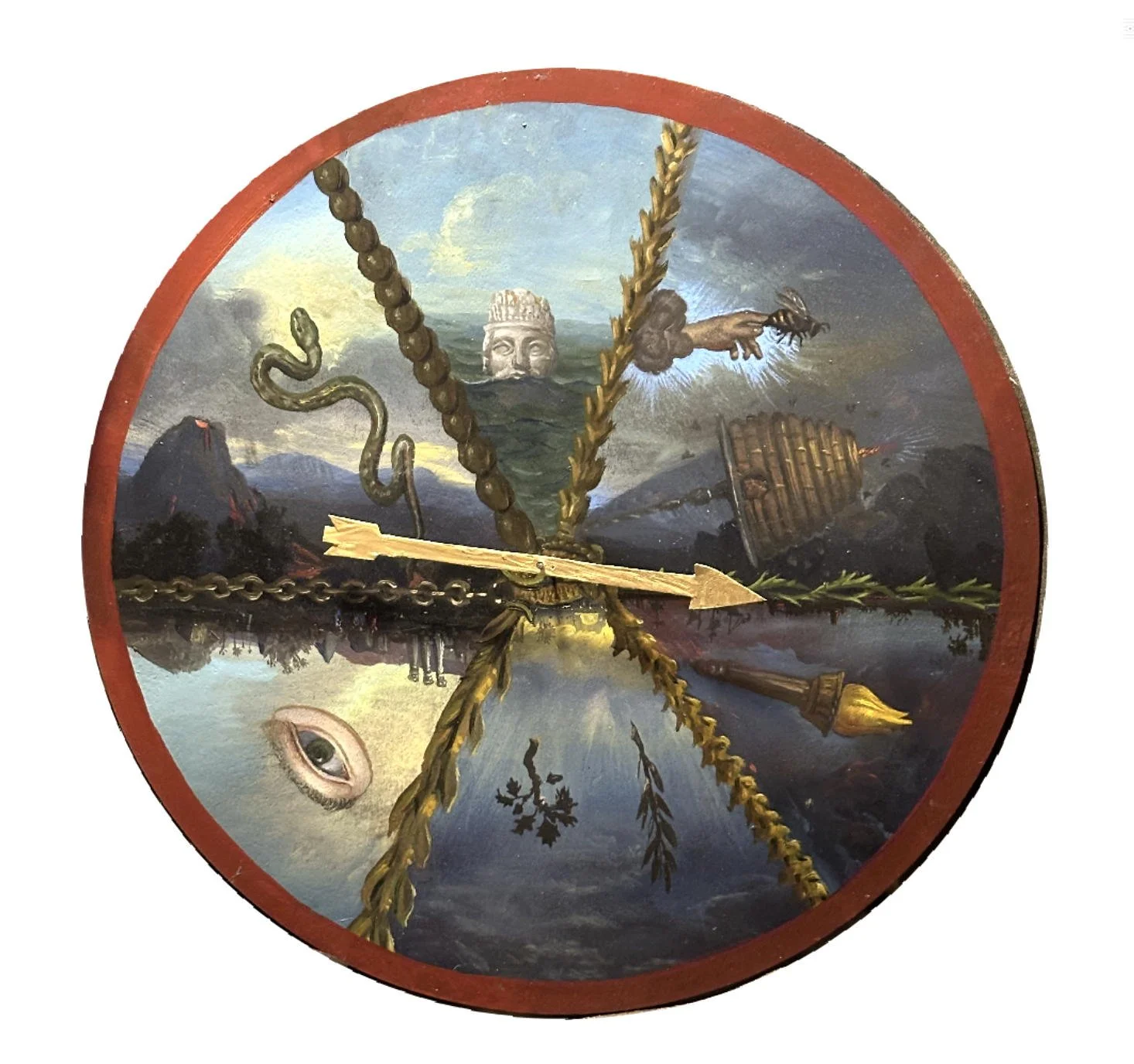
Coupling painted symbolic images and with physical objects can result in psychologically powerful transformation. Griswold explores connections between alchemical and symbolic esoteric imagery, the boards, spinners and avatar pieces that guide a player’s progress through 19th century parlor games, ritual ceremonial objects, and divination aids.
The complex illusory mechanisms and settings designed to induce transformational experiences, whether for theatrical stage audiences or suppliants in initiation ceremonies of mystery cults and secret societies, have derived their potency from the touch of the artist’s brush since ancient times.
Special Collections II, 515 Gallery, Los Angeles, curated by Danny Shain, August 2025
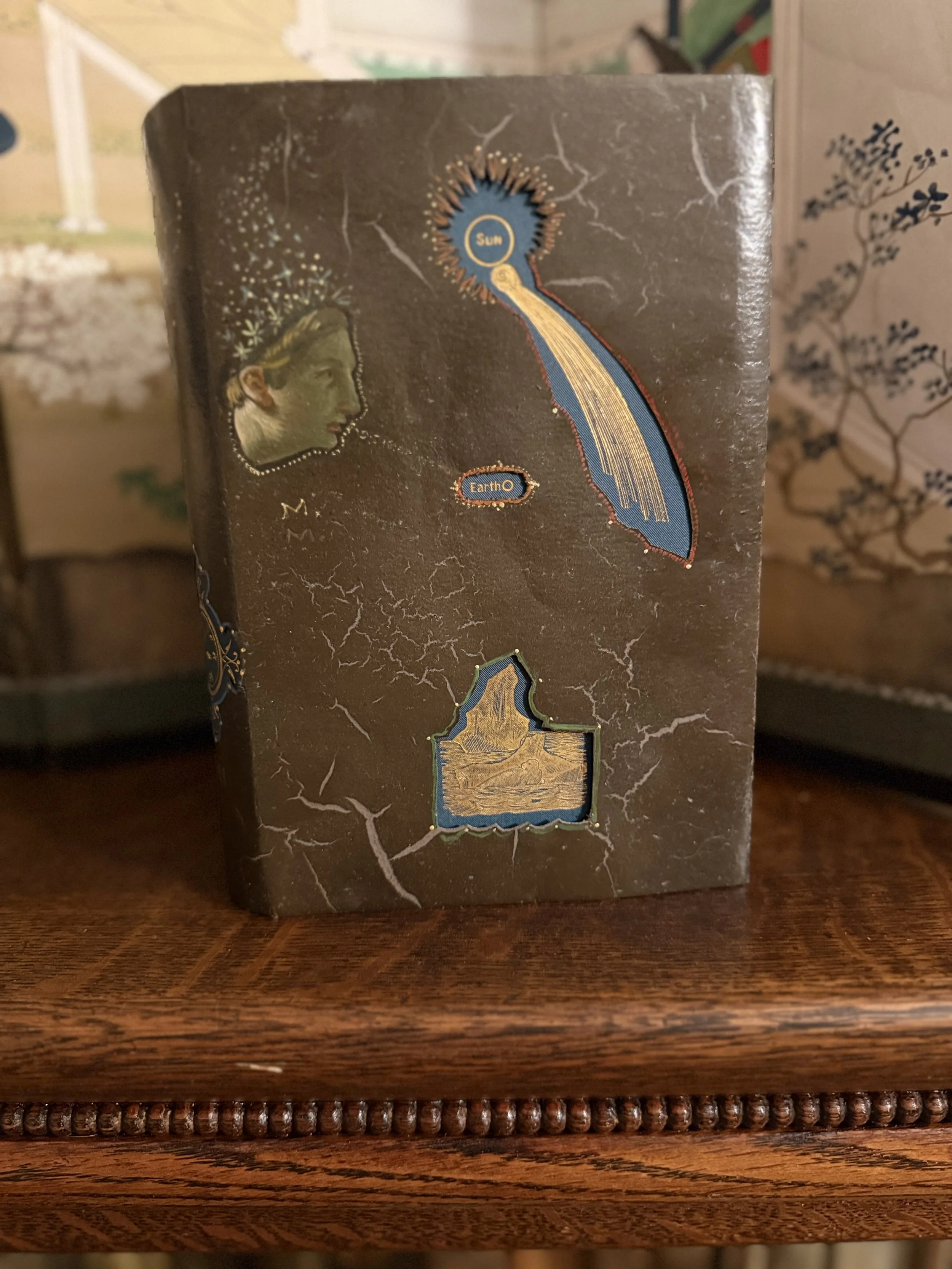
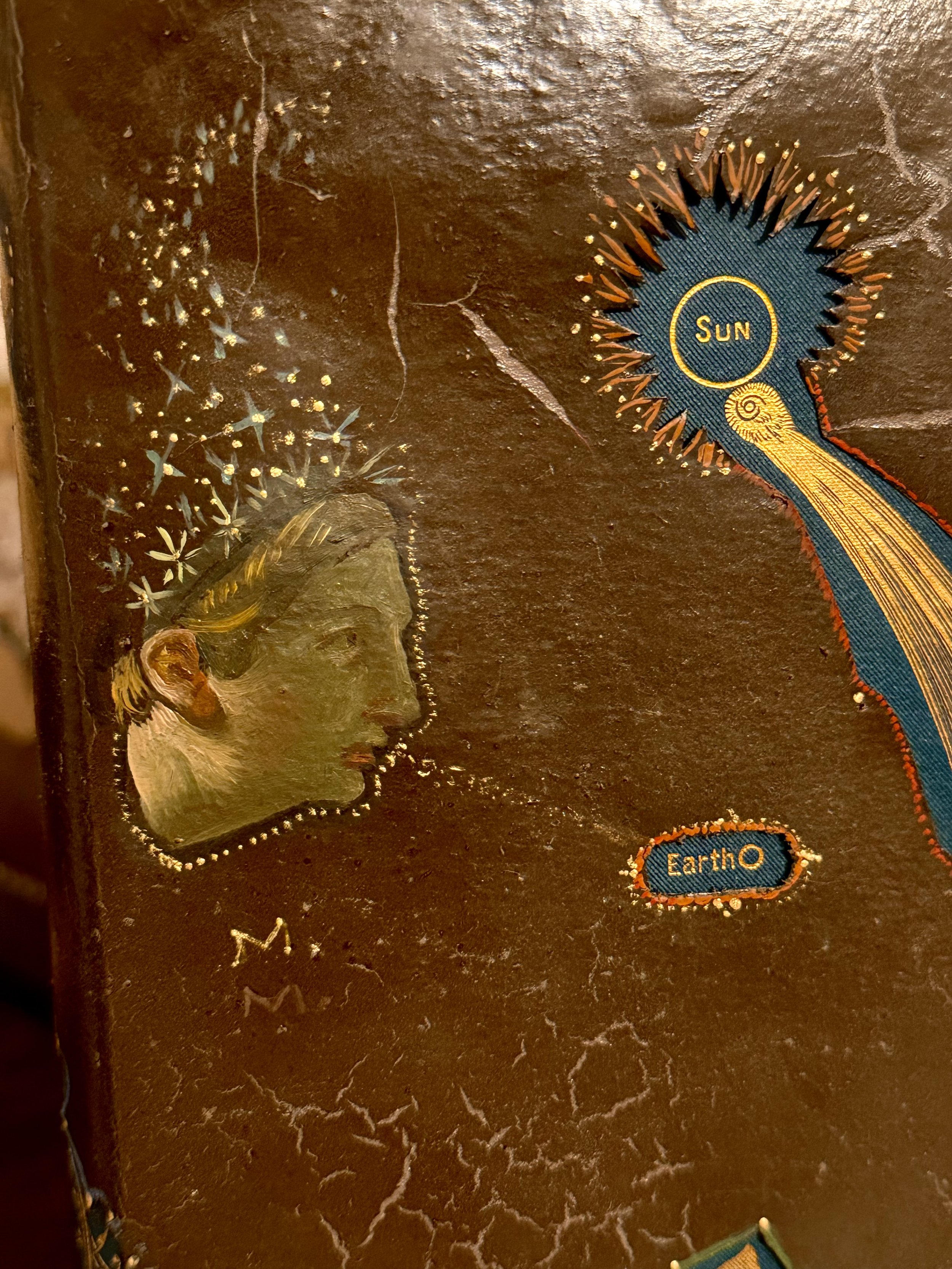
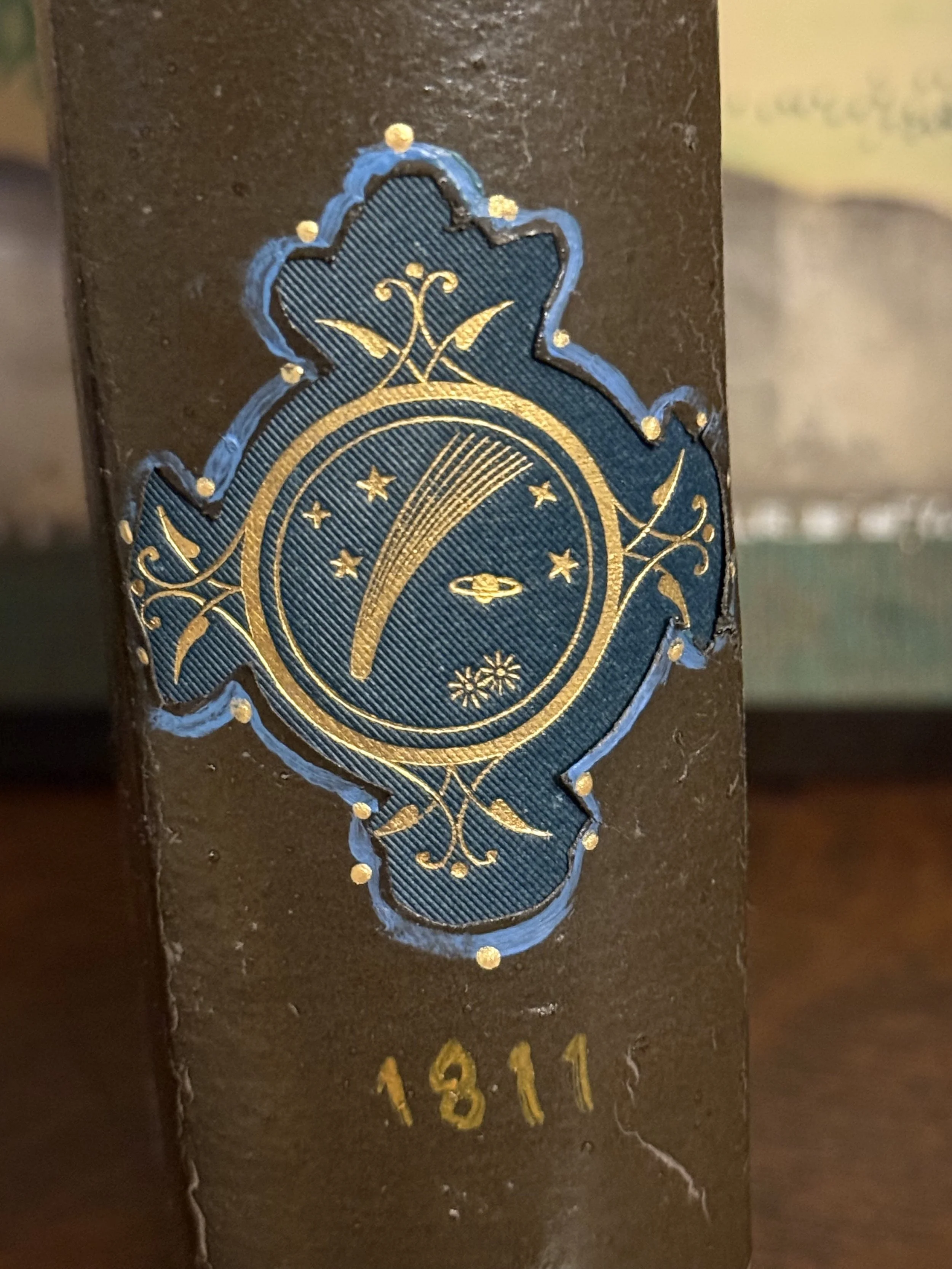
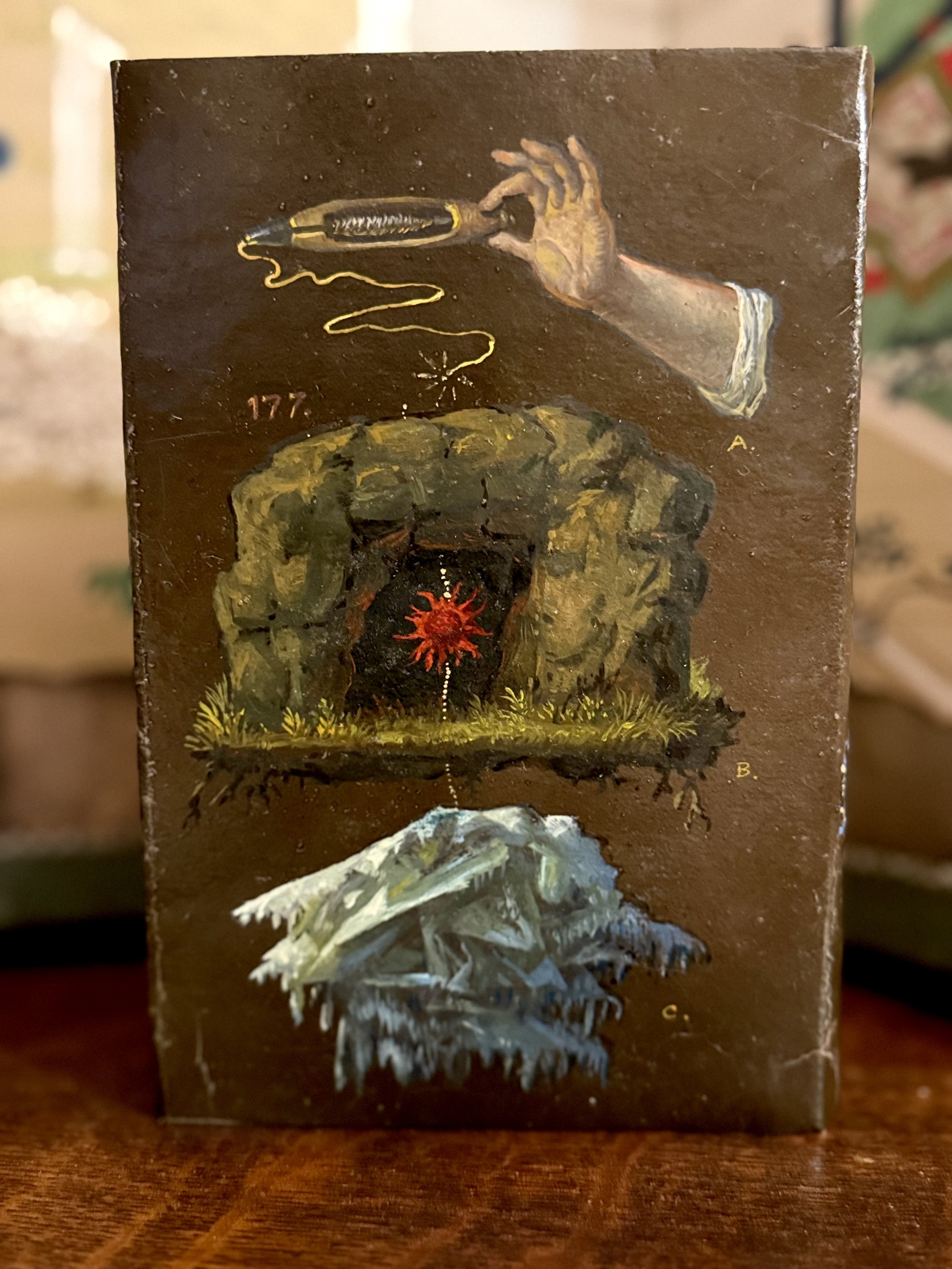
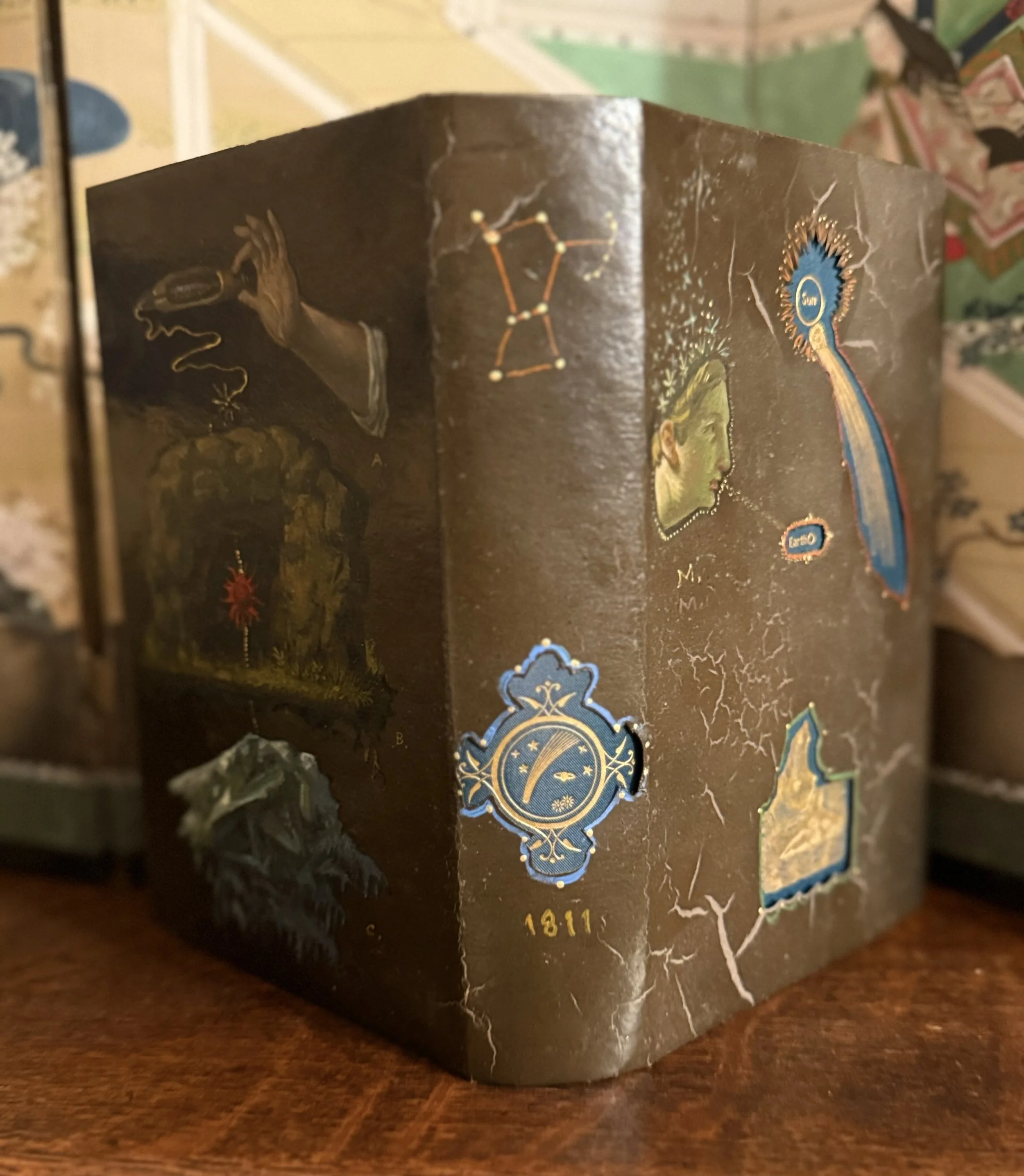
A group exhibition wherein artists were invited to create an original cover for a favorite book. Here, the selection was the 1887 edition of Ragnarok: The Age of Fire and Gravel by Ignatius Donnely. Shaped windows in the cover featured selected areas of the gold foil stamped decoration on the binding.
MOVEMENT+NARRATIVE, sp[a]ce Gallery, Pasadena, California, curated by Mark Todd and F. Scott Hess, February 4 - March 11, 2018
An exhibition dedicated to the memory of legendary gallerist and co-founder of Juxtapoz, Greg Escalante, who originally conceived of this exhibition. Griswold’s contribution was a small group of oil paintings exhibited with a video installation of his moving picture tableaux.
Carrie Anne Baade (solo) / Maryrose Crook, John Griswold (tandem) surrealist painting show, La Luz de Jesus Gallery, Los Angeles, California, curated by Matthew Gardocki, September 10 - October 1, 2022
A selection of 22 oil on panel paintings, intimately scaled.
2012 - 2022
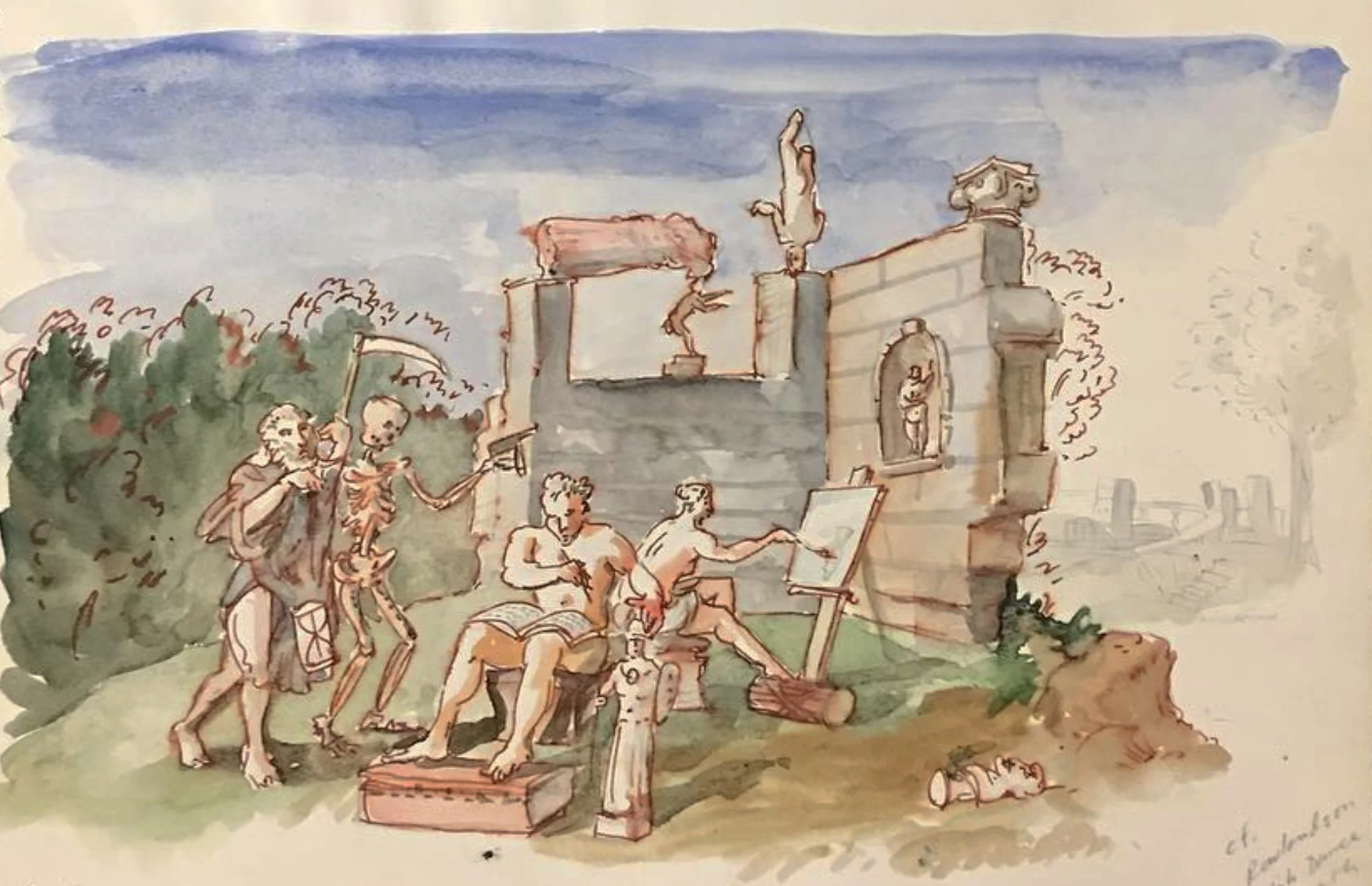
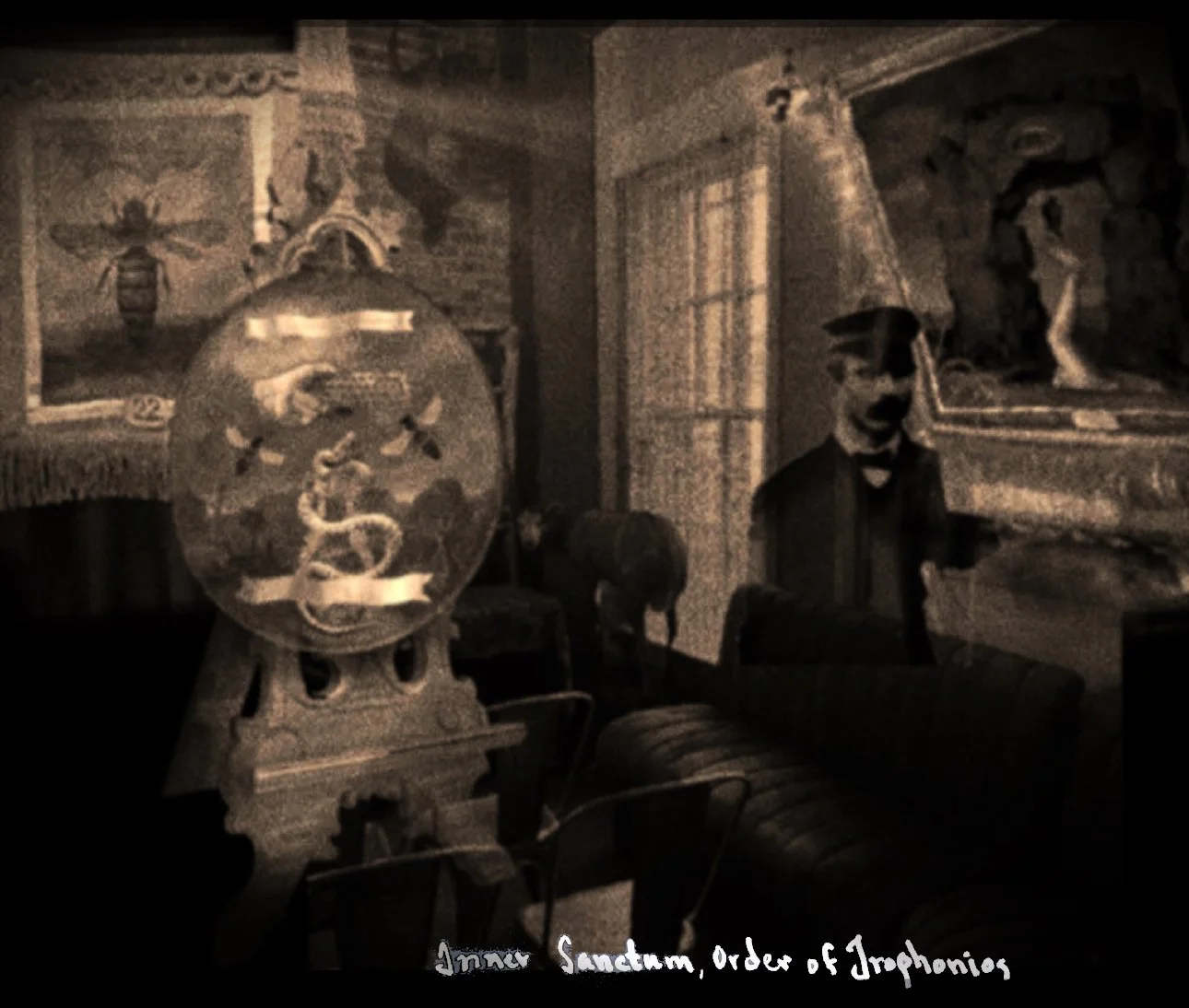
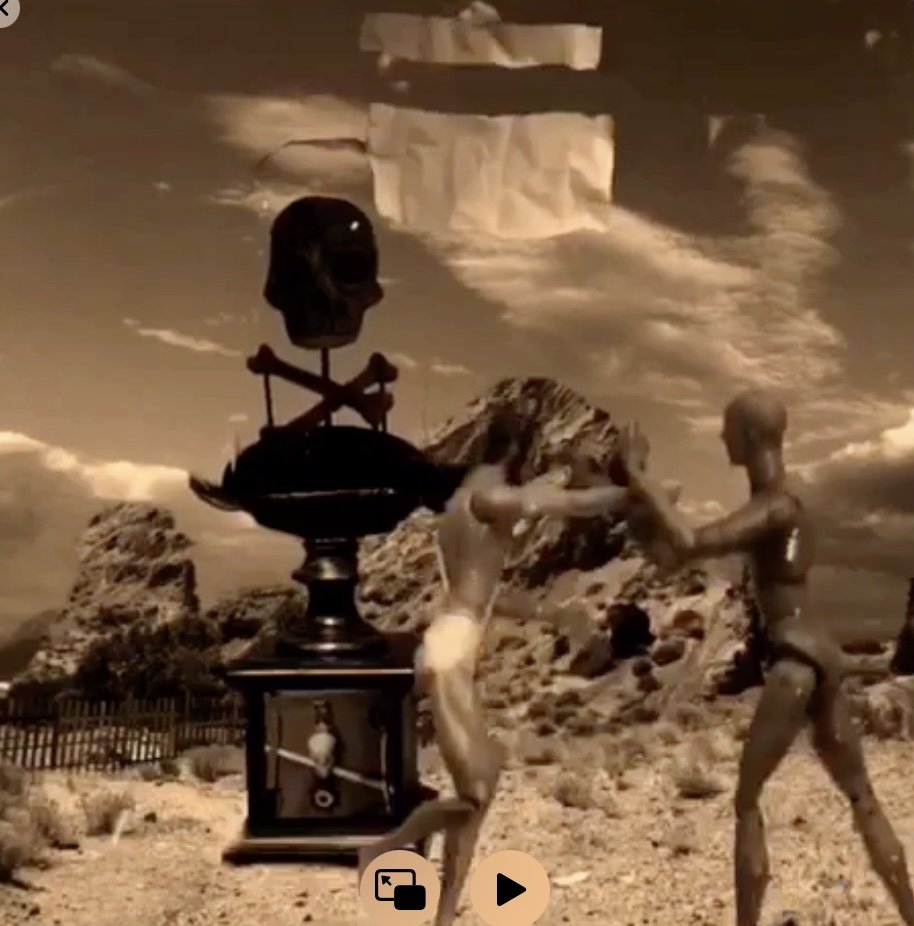
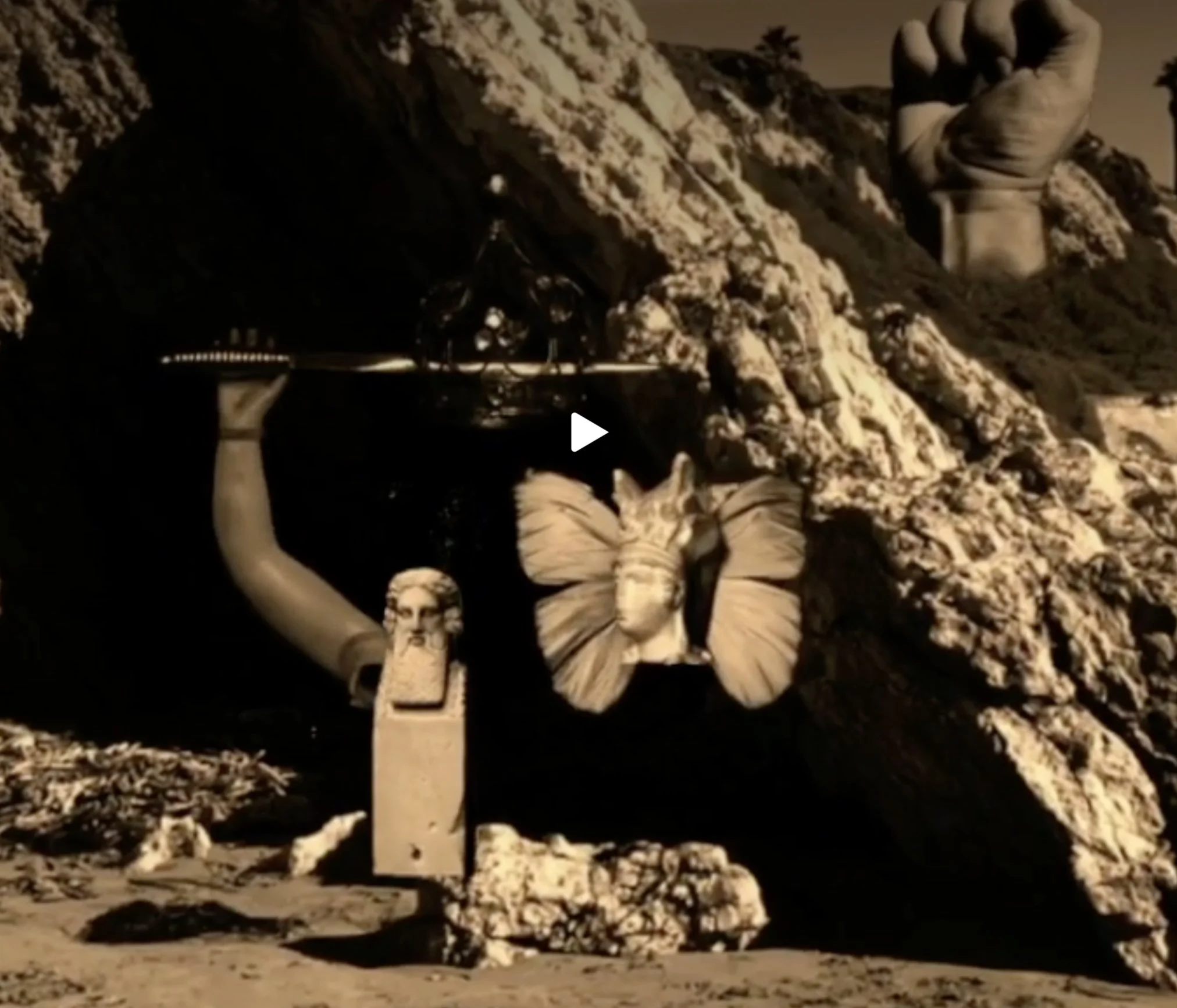
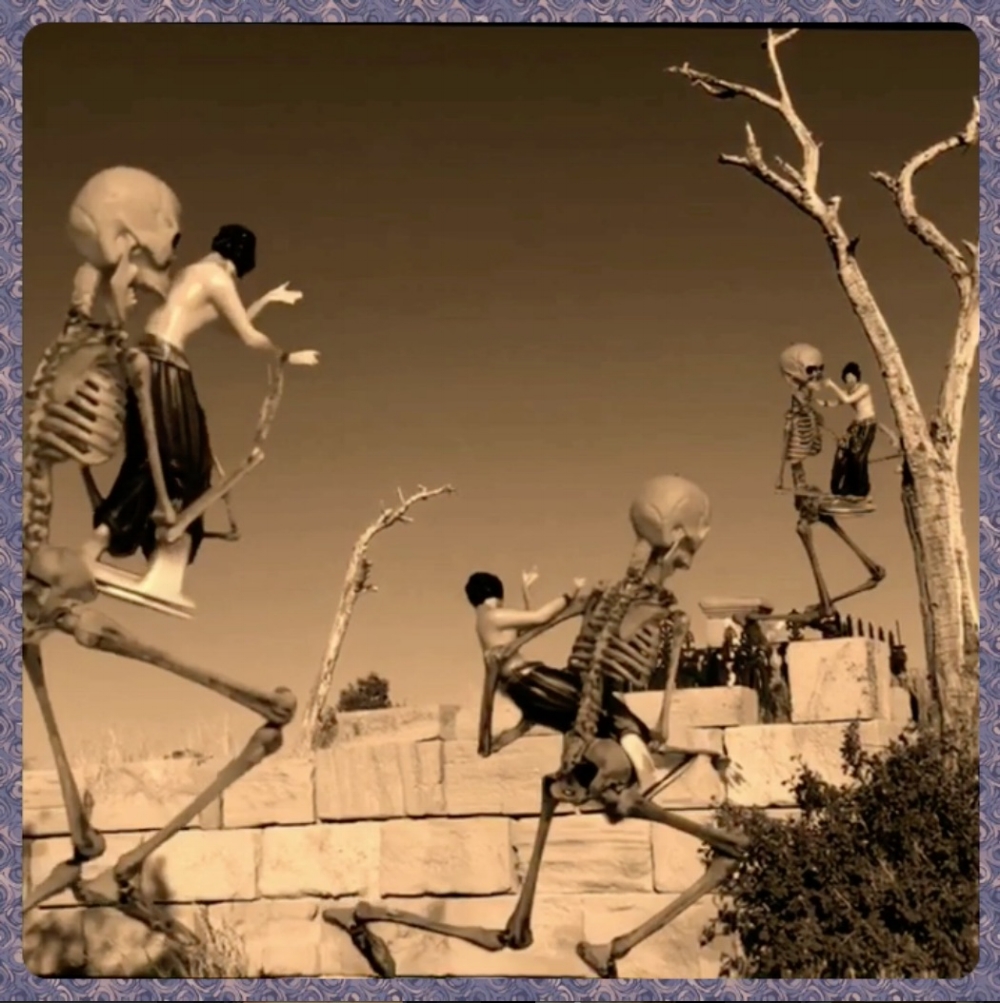
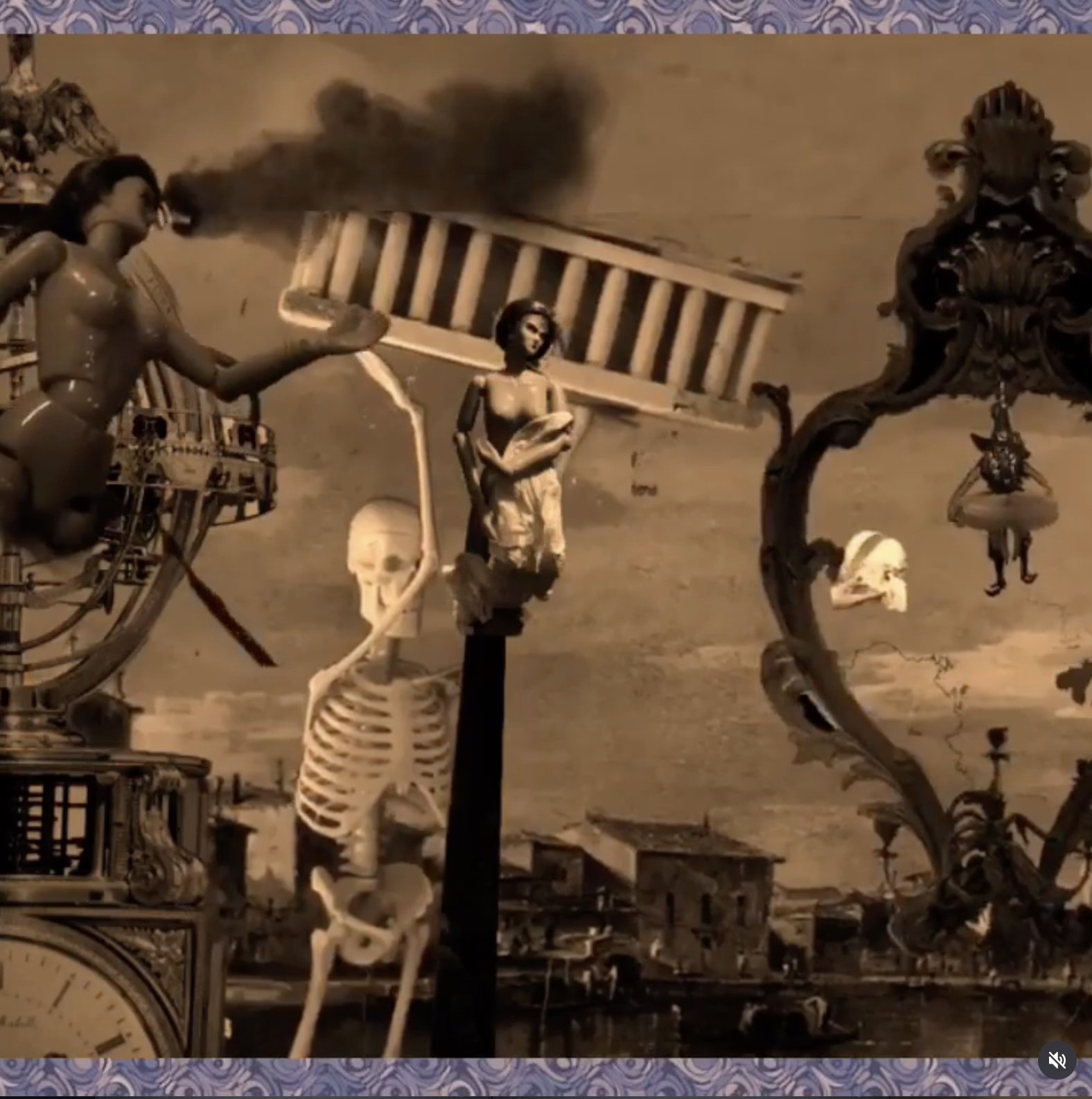
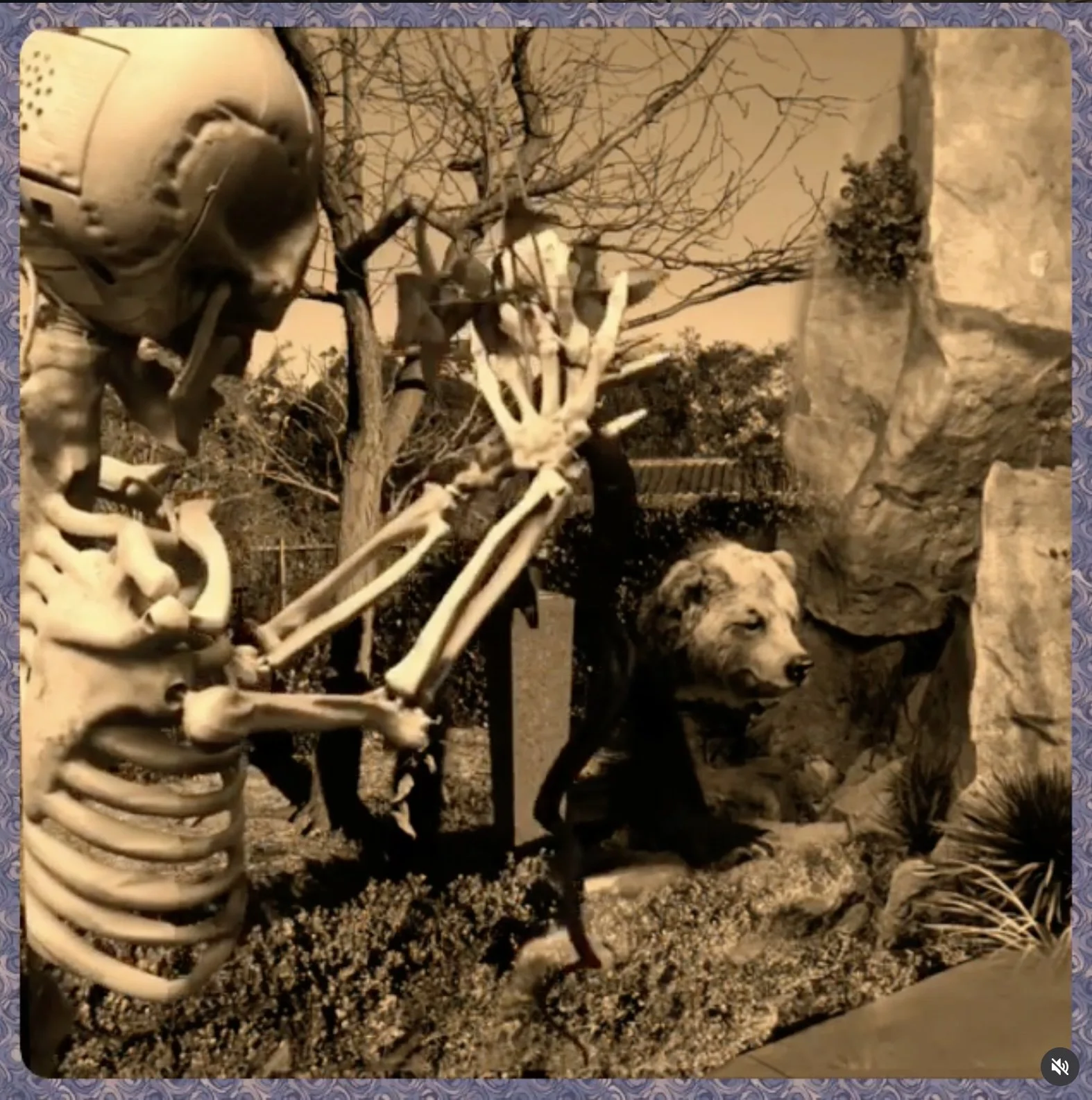
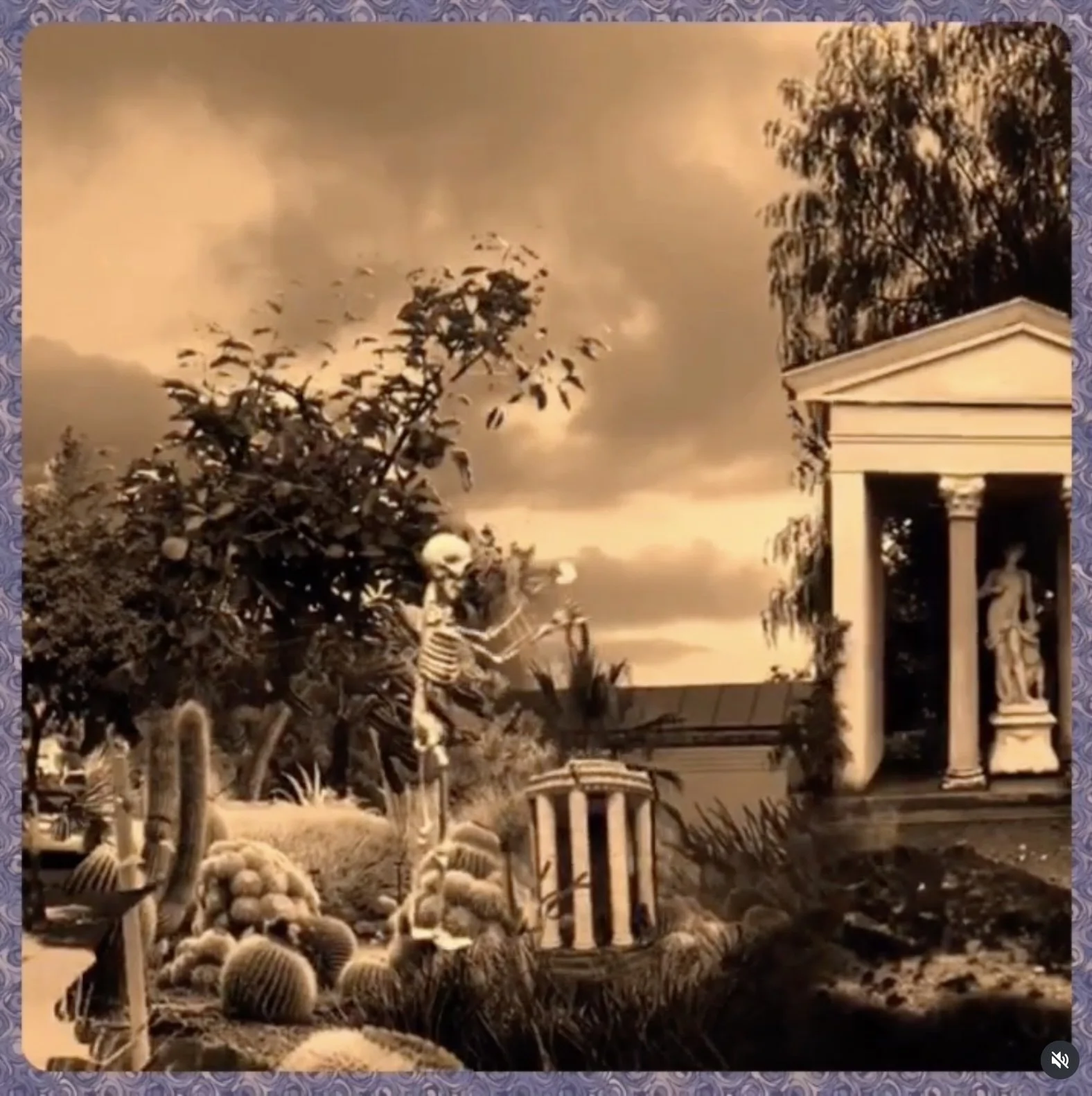
A recurring inspiration throughout Griswold’s work is la danse macabre, or Dance of Death, populated with lively skeletons among the living in all walks of life. Examples by Holbein and Rowlandson are favorites. The allegorical theme of the all-conquering and equalizing power of death serves as a launching point for addressing complex layers of implied meaning, often framed with a frenetic energy. Animating these visions by use of layered video collage, incorporating stop motion and live action puppetry techniques, adds the critical time-based element.
Still frames from some of these “moving picture tableaux” are seen here.
Modern Myths : Classical Renewal, Boise Gallery of Art, curated by Sandy Harthorn, Boise, Idaho, April 18-January 4, 1987; Yellowstone Art Center, Billings, Montana July 11-August 23, 1987; Museum of Art, Washington State University, Pullman, Washington, September 4-September 27, 1987; Mills College Art Gallery, Oakland, California, November 1-December 15, 1987
This show and catalog featured painters working throughout north America and Europe under the informal aegis of Postmodern Classicism in the 1980’s, including David Ligare, Martha Mayer Erlebacher, Carlo Maria Mariani, John Griswold, Jon Swihart, Milet Andrejevic, John Nava, Elsie Russell Harrington, Lincoln Perry, Earl Staley, and others.